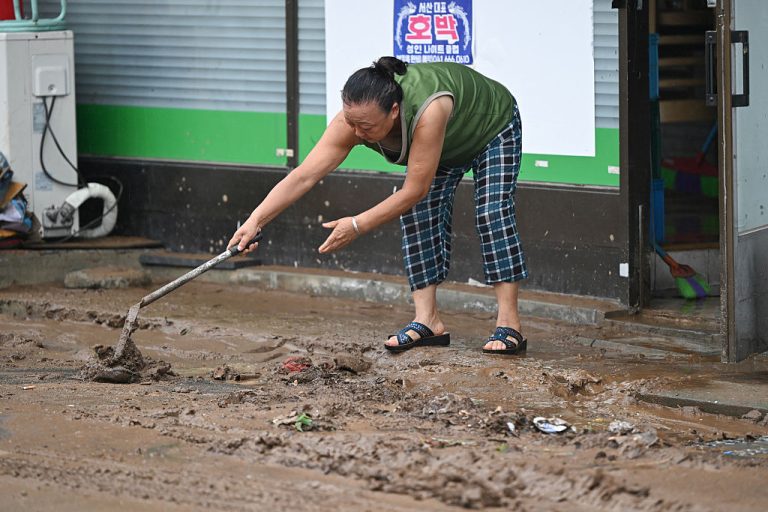
In South Korea, heavy rainfall since July 16 has triggered floods and landslides in parts of the nation. As of July 24, 23 people have been reported dead, along with five now missing.
Among the first reported casualties, the BBC wrote, were two men in their 80s; one of them reportedly tried to flush out the floodwaters from his basement.
A third victim in his car called his wife as he was “being swept away,” before he lost his life when his vehicle crashed into a wall, authorities claimed. A fourth victim succumbed to a cardiac arrest.
By July 20, the death toll across the nation rose to 14. According to Agence France-Presse (AFP), citing government officials, houses in the town of Gapyeong were torn down and more vehicles drifted away. In the chaos, two people were killed, with another four missing.
A woman in her 70s died after her house collapsed during a landslide, and a man in his 40s was found dead near a bridge after drowning, according to South Korea’s official news agency, Yonhap.
Success
You are now signed up for our newsletter
Success
Check your email to complete sign up
Two more bodies were found that Sunday as rescuers searched for more signs of life in the southern county of Sancheong. Around 800 millimeters (31.5 inches) of rain was recorded to have fallen in that area.
By July 24, the number of deaths increased to 23, the interior ministry said. Three more bodies were found in Sancheong, and one more in Gapyeong.
So far, 13 people have been killed in South Gyeongsang Province, six in Gyeonggi Province, three in South Chungcheong Province and one in the city of Gwangju.
READ MORE:
- Naturally Green Grass: How to Keep a Healthy Lawn Without Chemicals
- Mount Lewotobi Laki-laki Erupts Twice Producing Giant Ash Cloud
- China’s Guangxi Deluged By Flood-Waters From Upstream Province
Surging torrents and rescue efforts
Since July 16, torrential rainfall has impacted South Korea, causing floods in many populated areas. Officials had warned citizens nationwide to exercise extreme caution in the face of landslides and floods.
Citizens have begun to lose both homes and places of work to the floods.
On July 17, the city of Gwangju suffered 426 millimeters (16.77 inches) of rain. Cafe owner Kim Ha-min was frightened, having “never seen a flood here before, since there is no stream or river in this neighborhood.” She had to shut her cafe after the place was struck by the floods. “I drained the water, but the smell from the sewers is so bad that I can’t open for business.”
On July 19, the city of Seosan—one of the hardest-hit areas—was drenched with over 400 millimeters (15,75 inches) of rain, an event described as a “once-in-a-century” downpour.
Another resident in another affected area wrote online that their house was “covered by water except the roof.”
As of July 19, more than 641 buildings, 388 roads and 59 farms were destroyed by the floods, the interior ministry said. Yonhap reported that more than 14,000 people have been evacuated since the heavy rains began, with 2,549 people still unable to return to their homes.
On July 21, South Korean President Lee Jae-myung ordered officials to promptly declare flood-hit areas as special disaster zones to enhance rescue and recovery operations and deliver aid to those impacted.
The president ordered Interior and Safety Minister Yun Ho-jung to deploy all available resources and administrative support for the victims, and to swiftly designate the flood-affected areas as special disaster zones, presidential spokesperson Kang Yu-jung told reporters.
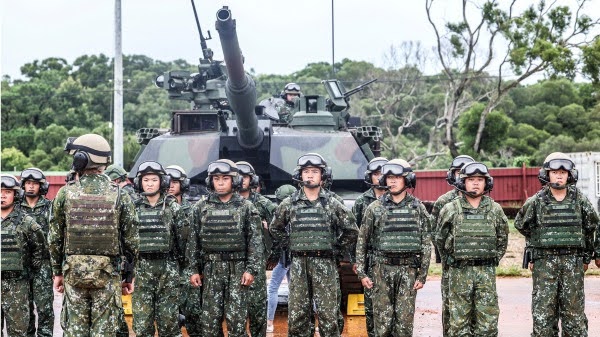
Around 2,500 military personnel and equipment were sent by the South Korean Army to the areas heavily affected by the rain.
According to the South China Morning Post, President Lee had rebuked officials for “drinking and dancing” during the rainfalls, imposing a “strict crackdown” on those who had acted recklessly.