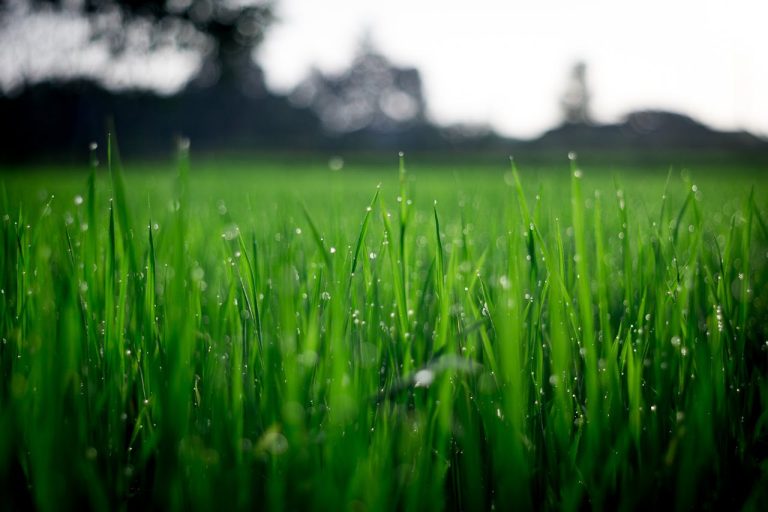
While I will always advocate for going grass-free in favor of a lush and diverse garden, perfect green lawns tend to be the standard that many Americans subscribe to. Unfortunately, maintaining this trend supports a growing industry for chemical products that damage the environment — upsetting ecosystems, poisoning wildlife and threatening human health.
What many lawn lovers don’t realize is that, while chemical pesticides, herbicides and fertilizers address certain issues, they create more serious problems in their wake. But if you’re really keen on a sea of green, now’s your chance to learn about keeping a healthy lawn without chemicals.
Negative impact of chemically treated lawns

- Toxins in herbicides, fungicides and pesticides can kill fish and harm aquatic ecosystems when they enter waterways through runoff.
- Broad-spectrum pesticides kill pollinators along with the targeted pest.
- In addition, herbicides eliminate key plants that pollinators depend on for food and shelter. Because honeybees are especially sensitive, trace amounts of chemicals brought back to the hive can weaken entire colonies.
- Insecticides lead to destruction of many beneficial insects that feed on pests, thus artificially creating a need for more pesticides.
- The vast majority of bird species feed on insects. When insecticides are used, bird populations suffer from secondary poisoning, reduced food supplies, and reproductive complications — as some chemicals are known to weaken egg shells.
- Some of these chemicals are considered carcinogenic, and exposure can contribute to severe health problems for humans, pets and other mammals.
- Eliminating active members of an ecosystem creates an imbalance that invites new pests.
- Due to bioaccumulation and biomagnification, the impact of chemicals on the ecosystem can be far-reaching and long-lasting.
Fortunately, there are many ways to achieve a beautiful lawn without chemicals, ranging from your method of management to the products you apply. It might require a little extra on your part, but the rewards will outweigh the effort, for sure.
Natural lawn management
A lot of lawn problems stem from improper management. For a beautiful lawn, you need to have healthy soil and healthy plants. Compacted, dry, impoverished soil will not support good growth, so these need to be corrected.
- Loosen your soil with annual aeration. An aerator is a hand-pushed or gas-powered tool that pops lots of little holes into the ground. This increases air circulation and improves growing conditions for grass roots.
- To encourage a well-established root system, water thoroughly, yet infrequently. Watering a little every day will yield weak roots and plants with poor resilience. Wait until the top three inches of the soil are dry before giving your lawn a good inch of water.
- Chemical fertilizers pose many of the same threats as pesticides, and have a lasting negative impact on soil health. Choose natural fertilizers like compost, compost tea or a balanced organic formula to promote living soil with a healthy biome.
- When you remove your grass clippings, you are taking away important nutrients that could be used to feed the soil. Use a mulching mower to disperse them instead. Grass clippings add organic matter to the soil, improve its health and biodiversity, and reduce the need for fertilizer.

Mowing
While it may be a tempting way to save time, cutting your grass too short can dry the soil and expose surface roots to heat and stress. Setting your mower blades to the proper height will improve your lawn’s heat and draught tolerance. The optimal height varies depending on the predominant grass species:
- Kentucky bluegrass: 2½ to 3½ inches
- Perennial ryegrass: 2½ to 3½ inches
- Tall fescue: 3 to 4 inches
Success
You are now signed up for our newsletter
Success
Check your email to complete sign up
Avoid mowing wet grass, as this can damage both your machinery and your lawn.
Grass alternatives
Even better, look beyond the conventional parameters to reduce maintenance and improve stability of your lawn. Low-growing ground covers can be used in conjunction with — or instead of — grasses for a more environmentally-friendly green carpet. White clover, in particular, adds nitrogen to the soil, while its flowers provide important feed for foraging honeybees.
Native groundcovers like blue violets, wild ginger and wild strawberries offer no-mow options with appealing texture and color; and moss will thrive in wet, shady areas where grass is hard to establish.
Natural alternatives to pesticides

Just because we perceive something as a pest, doesn’t mean it is useless. Almost every pest is good food for a predator, and many times they serve as indicators of a deeper problem. Before you start spraying, consider why your pest has come and how you can address the problem at the root.
Oftentimes, improving the soil with increased organic matter and building plant diversity will attract just what is needed to bring things back into balance naturally. You can also:
- Install bird and bat houses to control insects like mosquitoes and grubs.
- Introduce predatory insects like mantises and ladybugs to control a variety of pests.
- Apply beneficial nematodes like Heterorhabditis bacteriophora and Steinernema scarabaei to control grubs in the soil.
- Choose organic botanicals or essential oil-based pesticides to minimize toxic impact.
Natural alternatives to herbicides (weed killers)

Can you learn to be more lenient with what is allowed in your lawn? Many common “weeds” attract beneficial insects like ladybugs, praying mantises and predatory wasps that prey on insect pests. Basically, as your plant diversity increases, your pest problems will decrease; yet weeds have other benefits as well.
Dandelions have deep taproots that help loosen and aerate the soil naturally; their bright, cheery flowers help feed pollinators; and, unsprayed, the plant is both edible and medicinal. Plantain, a low-growing, native perennial, is incredibly useful and resilient. Let it fill in some dry patches and you will always have a quick remedy for bug bites.
If you can’t wrap your mind around weed tolerance, at least opt for non-toxic removal methods.
- Physical removal: For individual weeds, hand pulling or digging is a great way to get rid of them for good. Pulling weeds from dry soil is especially hard, so do it directly after the lawn has had a drink. Get them before they go to seed if you don’t want your problem to spread. Toss them in your compost pile and bring them back as free fertilizer! Too much work? Give a neighborhood kid $20 and he’ll probably tackle them with pleasure.
- Plant-based products like neem oil, clove oil, garlic extract contain natural compounds that act as bioherbicides to control weeds. A diluted extract repeatedly sprayed on undesirable plants will kill them.
- A solution of one part vinegar to one part water sprayed on weeds during the hottest part of the day is a safe and effective way to kill them.
In short, although every situation is different, each step you take closer to nature will bring greater health and harmony to the verdant environment that you call your lawn.