On July 30, the Political Bureau of the CPC Central Committee held a meeting to officially announce that the Fourth Plenary Session will be held in October this year. The meeting unusually mentioned the ideologies of several former party leaders, including Hu Jintao, placing them before Xi’s ideology.
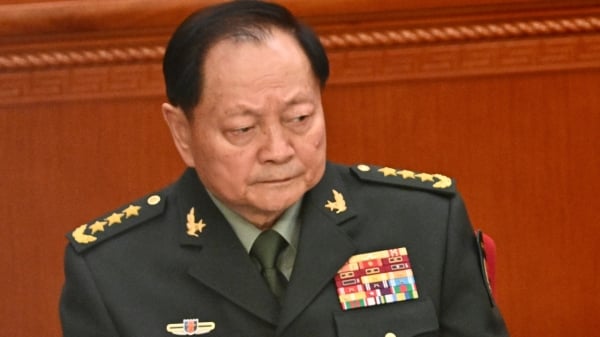
Analysts now suggest that the confirmation of the Fourth Plenary Session’s date indicates that the Beidaihe meeting has already taken place and reached some consensus. It is said that insider details of some meetings have surfaced, with elders authorizing Zhang Youxia to form a “Special Operations Team” to use unconventional means to prevent Xi Jinping from staging a comeback.
Fourth Plenary Session slated for October
State media Xinhua reported that on July 30, the Political Bureau of the CPC Central Committee held a meeting, officially announcing that the Fourth Plenary Session of the 20th Central Committee will be held in Beijing in October this year. The main agenda includes the Political Bureau reporting its work to the Central Committee and discussing proposals for formulating the 15th Five-Year Plan for National Economic and Social Development.
RELATED: Power, Scandal, and Distraction: Peng Liyuan Falters as Shi Yongxin Faces Arrest
The meeting also analyzed the current economic situation and made arrangements for economic work in the second half of the year. CPC leader Xi Jinping presided over the meeting.
Success
You are now signed up for our newsletter
Success
Check your email to complete sign up
The meeting emphasized adherence to Marxism-Leninism, Mao Zedong Thought, Deng Xiaoping Theory, the “Three Represents” Important Thought, the Scientific Outlook on Development, and finally mentioned the thorough implementation of Xi Jinping Thought on Socialism with Chinese Characteristics for a New Era.
Suppressing Xi’s faction
Commentator Li Dayu believes that the party media’s report is noteworthy because it rarely lists the ideologies of party leaders before Xi Jinping so comprehensively, typically emphasizing Xi’s thought above all. Secondly, the ideologies of the party leaders before Xi are largely reduced to mere words, as most of them are no longer alive, with the exception of former General Secretary Hu Jintao. Rumors about Hu Jintao’s health crises have surfaced multiple times but have never been verified.
“Now, Hu Jintao is the biggest counterforce to Xi Jinping among the elders. Therefore, previous rumors about threats to Hu’s life cannot be ruled out as disinformation spread by rival factions to undermine the morale of Hu’s side,” said Li.
Li Dayu believes, “The rare mention of Hu Jintao’s Scientific Outlook on Development by party media, placed ahead of Xi’s thought, is an implicit suppression of Xi’s faction. It also sends a clear signal that the top leadership is returning to collective leadership and no longer allowing Xi to dominate alone.” This report reflects a new reality within the CPC’s top echelons.
The party media’s report concluded by noting, “The meeting also discussed other matters.” Li Dayu pointed out that this is a tactic used by authorities to gloss over some important issues without disclosing them.
What was discussed?
Regarding the Beidaihe meeting, there are two narratives online: One suggesting the meeting will be held in August, and another claiming it has already been held earlier, with some insider information leaking out.
Commentator Xiao Shuojia believes that since the date for the Fourth Plenary Session has been set, it indicates that the personnel struggles at the Beidaihe meeting have already produced results, specifically “Wang Yang and Hu Chunhua as successors.” He pointed out that the main agenda of the Fourth Plenary Session is for the Political Bureau to report its work to the Central Committee and discuss proposals for formulating the 15th Five-Year Plan for National Economic and Social Development.
This suggests the meeting announcement used a “smokescreen,” as “in reality, besides major issues, the Political Bureau meeting also ‘discusses other matters.’ It won’t openly state that the Fourth Plenary Session is primarily about personnel issues, as that would cause political instability.”
Rumored Beidaihe insider details
Xiao Shuojia noted that the Beidaihe meeting is likely nearing its conclusion, and some insider details have emerged. It is said that elders, including Hu Jintao, Wen Jiabao, and Li Ruihuan, have put forward suggestions to prevent Xi Jinping from continuing to employ political tactics and maneuvers.
Among them, Hu Jintao reportedly proposed a critical suggestion for the first time: “If Xi Jinping refuses to proceed with the political transition, the Party should activate a crisis management mechanism, with members who hold military authority and orthodox revolutionary legitimacy carrying out emergency actions to ensure the timely transfer of the Party’s highest power.”
Wen Jiabao stated that Xi Jinping has long violated Party rules, including amending the constitution to remove term limits, fostering a cult of personality, arbitrarily promoting loyalists, and altering the leadership list at the 20th Party Congress, which constitutes both constitutional and disciplinary violations.
Additionally, Li Ruihuan made a rare statement, saying, “We cannot allow one person’s mistakes to continue unchecked. It’s not about whether he steps down or not—it’s about whether the Party can continue to survive.”
Special Ops team will oversee power shift
According to reports, a consensus was reached among three senior figures and most retired elders during a meeting to establish a special operations team composed of influential military figures and second-generation reds to oversee Xi Jinping’s power transition. “The elders unanimously authorized this team to respond to and handle any resistance or delay in the power transition by Xi Jinping using unconventional measures.”
It is said that these unconventional measures include five key points:
1. Restricting Xi Jinping’s Freedom of Movement: This will involve Zhang Youxia and Liu Yuan taking control of Xi’s security detail through the military, effectively limiting his personal freedom.
2. Severing Xi’s Command Chain: After restricting Xi’s freedom, the next step is to cut off his communication with the outside world to prevent him from issuing orders or mobilizing forces.
3. Military Takeover of State Media: The military will assume control of official media outlets such as CCTV, Xinhua, and People’s Daily to announce the transition of the General Secretary’s role through these channels.
4. Convening an Expanded Politburo Meeting: A swift meeting will be held, citing organizational considerations, to declare Xi Jinping as having voluntarily resigned due to worsening health issues.
5. Suppressing Potential Resistance: Immediate disciplinary investigations and personal isolation will be initiated against Xi’s core loyalists, such as Li Qiang, Cai Qi, and Ding Xuexiang, to prevent Xi from organizing a counteroffensive through his trusted allies.
Analysts note that whether Xi will resort to tactics to stage a comeback remains uncertain. However, with Zhang Youxia and Liu Yuan providing support, the special operations team is poised to ensure a smooth power transition even if Xi attempts to resist. This is reportedly the most significant consensus reached at the Beidaihe meeting.