China is pressing ahead with a sweeping upgrade of its nuclear forces alongside its conventional military build-up, according to U.S. officials and independent arms experts.
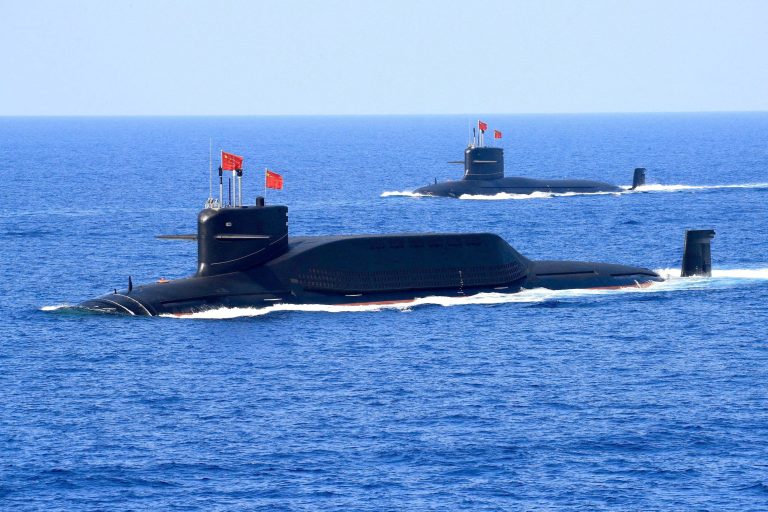
Beijing’s focuses for nuclear expansion now include land-based missiles, submarine-launched weapons, and long-range bombers capable of carrying nuclear arms in what is not merely a numerical increase but also a strengthening of the communist regime’s all-round nuclear capabilities.
Despite the growing arsenal, the People’s Republic of China (PRC) continues to stress its adherence to a “no first use” nuclear pledge. Its 2023 defense white paper reaffirmed the commitment not to launch nuclear weapons first under any circumstances, and not to threaten non-nuclear states.
The PRC defense ministry reiterated that “a nuclear war cannot be won and must not be waged,” portraying its posture as strictly defensive.
U.S. officials are skeptical of this position. In its most recent annual assessment of Chinese military power, the Pentagon suggested that Beijing’s real policy may be more flexible than its public declarations.
Success
You are now signed up for our newsletter
Success
Check your email to complete sign up
The report said Chinese leaders could consider a first strike in scenarios where large-scale conventional attacks jeopardized the country’s nuclear command structure, or if defeat in a Taiwan conflict put Communist Party rule at risk.
General Anthony Cotton, commander of the U.S. Strategic Command, told Congress this March that China’s nuclear expansion reflects Chinese leader Xi Jinping’s directive that the People’s Liberation Army (PLA) be prepared to take Taiwan by 2027.
The PRC defense ministry condemned what it called attempts to “hype up the so-called ‘Chinese nuclear threat’ in an effort to smear and defame China and deliberately mislead the international community.”
Arms researchers point to the pace of the build-up as unprecedented. The Bulletin of the Atomic Scientists estimates China now has about 600 warheads, up sharply from previous years. It noted that Beijing is constructing roughly 350 new missile silos and several bases for mobile launchers, alongside an arsenal of around 712 land-based launchers in total.
Not all of these carry nuclear weapons, but the Bulletin reported that 462 of China’s mobile launchers are capable of being fitted with missiles able to reach the continental United States. Many of the PLA’s delivery systems are still short-range, intended particularly for potential conflicts around Taiwan or other neighboring countries in Asia.
In many cases, missiles that could be fitted with nuclear weapons would be armed with conventional payloads instead, the Buletin noted.
Meanwhile, the Pentagon’s annual report projected that China’s nuclear expansion program means it could possess more than 1,000 operational warheads by 2030, ranging from precision low-yield missiles to intercontinental ballistic missiles with multi-megaton destructive power.
Reuters contributed to this report.