Cai Siyun, Vision Times
The mystery surrounding the death of mainland Chinese actor Yu Menglong has taken a much darker, sinister turn. Now, evidence and leaked documents from a whistleblower link the prime suspect — Ji Guangguang (alias Li Ming) — to China’s forced organ harvesting network, with deep connections reportedly reaching into Xiangya No. 2 Hospital, one of Hunan’s most prominent medical institutions.
Sources allege that Ji oversees an empire of more than 677 companies in Hunan Province and that Xiangya’s transplant system — complete with a rooftop helipad — has been optimized for “organ logistics” in order to accelerate the transport of “freshly-harvested human organs.”
RELATED: ‘State Organs’ Screening Exposes China’s Industrialized Murder System
Elite ties, hidden wealth
Political commentator Li Muyang recently cited a confidential source claiming that Ji Guangguang is the grandson of former Premier Li Peng, widely condemned for his role in the 1989 Tiananmen Square Massacre, and the son of Li Xiaoyong. Leaked files reportedly contain Ji’s national ID number, date of birth, and phone records — tying him to Boshan District, Zibo, Shandong Province.
Success
You are now signed up for our newsletter
Success
Check your email to complete sign up
Ji allegedly owns multiple high-end apartments in Beijing’s Sunshine Upper East Side residential complex, including Apartment 601 in Building 18, where Yu Menglong was reportedly thrown to his death, as well as Unit 701 in Building 15.
The more disturbing claim, however, is Ji’s direct influence over Xiangya Hospital, which multiple sources accuse of being complicit in large-scale organ trafficking under the guise of legitimate transplant operations and medical care.
A whistleblower silenced
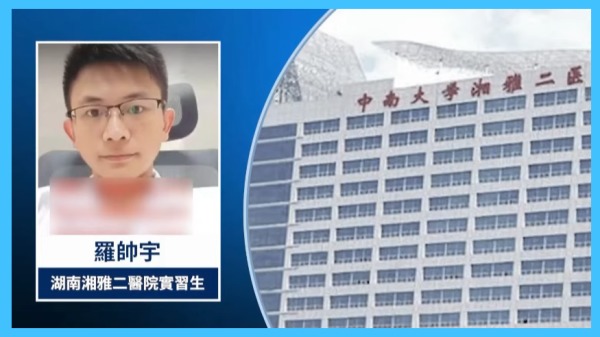
On May 8, 2024, intern doctor Luo Shuaiyu fell to his death near the Xiangya No. 2 Hospital dormitory. Authorities ruled the case a suicide, but Luo’s family insists he was murdered for exposing illicit transplant practices inside the facility.
Hospital officials allegedly forced his father, Luo Fuxiang, to sign a non-disclosure agreement, offering ¥853,000 (approximately USD $117,000) in “compensation” and the return of Luo’s belongings. When the family later examined Luo’s recovered laptop, they discovered over 11,000 pages of documents, weighing more than 8 kilograms (16 pounds), detailing:
- Artificially maintained ICU “waitlists”
- Forced brain-death declarations for viable patients
- Sedative injections to prevent awakening before extraction
- Organ removal from living donors
- Vast profits from illegal transplants.
Luo had spent three years collecting this evidence. Among the findings were suspicious bank transfers tied to a hospital surgeon, Dr. Liu Xiangfeng, whom Luo had repeatedly reported. During the investigation, the hospital wired ¥400,000 (approximately USD $54,800) to Luo’s account — widely believed to be a bribe to buy his silence.
A leaked audio file posted to Douyin revealed that Luo’s family submitted 59 flagged transplant cases to China’s National Health Commission. Among them: An 11-year-old girl named Wu Mouhong, brought in by a man surnamed Xie who claimed to be her father. She was declared “brain-dead” within hours, but her surname mismatch and unclear circumstances raised alarms.
Another pediatric donor was registered with a police station as a home address, fueling suspicions of law enforcement complicity. “They forced Luo to supervise 12 transplant operations to implicate him,” said one user on social media. “When he refused, they eliminated him.”
RELATED: Fan Shiqi Allegedly Confesses to Killing Yu Menglong—Voiceprint Matches
Data collection via the school system
Luo’s files also implicated schools in the organ supply chain. Under the pretense of routine “health screenings,” schools allegedly collected students’ blood types and medical data, later used for potential organ matching. “I never understood why schools were so insistent on free health checks,” one Weibo user wrote. “Now I see — they were grooming data for a darker system.”
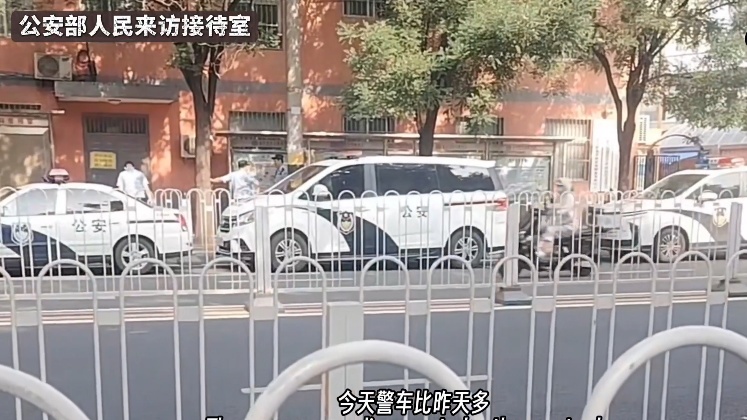
After Luo’s family submitted the evidence to Beijing, they were reportedly approached by security officials from Hunan and Sichuan. One senior officer from the Changsha National Security Bureau allegedly offered ¥15 million (≈ US$2 million) to buy their silence. The family refused.
Soon after, police demanded they delete online posts, take down YouTube videos, and disclose whether any materials had been shared with any foreign media entities.
A moral reckoning
Chinese social media has erupted with outrage:
- “Hospitals meant to save lives have become slaughterhouses.”
- “These monsters harvest children’s organs alive.”
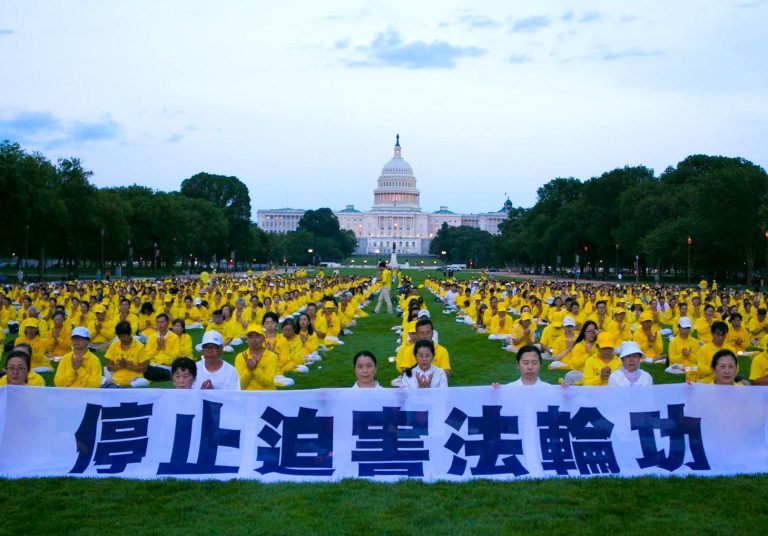
- “Everything Falun Gong said is being proven true.”
With mounting evidence of forced organ harvesting and alleged ties between elite families, Xiangya Hospital, and state institutions, public ire is reaching a boiling point. This is no longer whispered speculation, analysts note. It is a portrait of systemic, state-enabled brutality — and a reminder that when medicine becomes a tool of oppression, every life in its path is in peril.