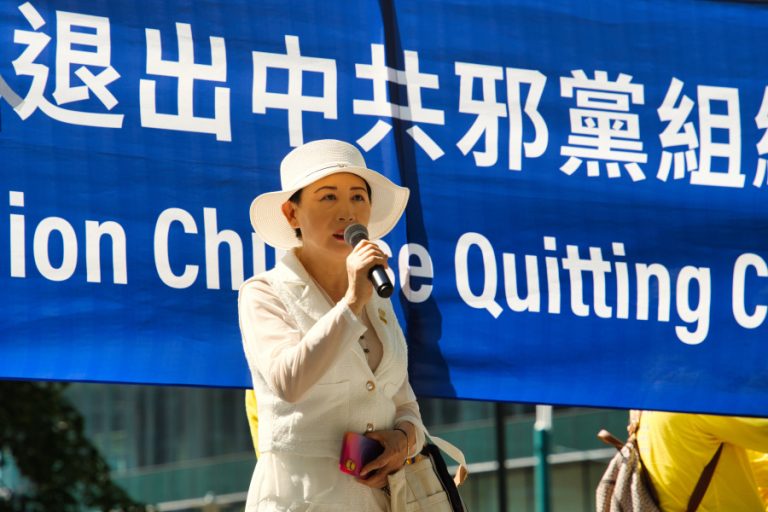
The Chinese Communist Party’s (CCP) campaign of transnational repression has drawn renewed scrutiny after Chinese-Canadian democracy activist Sheng Xue revealed that her identity had been stolen to send bomb threats in Taiwan — part of a wider intimidation effort against dissidents and Falun Gong practitioners worldwide.
Sheng, a long-time advocate for democracy and human rights, says the CCP’s harassment has become more sophisticated, combining hacking, impersonation, and defamation to smear its critics.
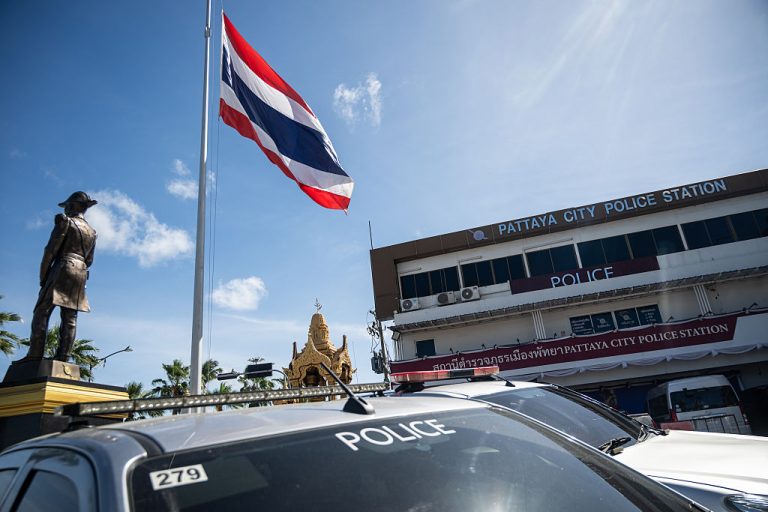
On Sep. 16, 2025, Sheng said she received confirmation from Taiwan’s National Police Agency that her email address had been used to send a false bomb threat to the Taiwanese government.
The message, written under the alias “Huang Wanqing,” impersonated a Falun Gong practitioner, claiming that explosives had been planted at Taoyuan and Songshan airports and would detonate the next day.
Sheng said this was not the first such attempt. Similar hoaxes, she explained, had previously been sent to foreign governments — including the White House — to portray Falun Gong as violent and discredit Chinese dissidents.
Success
You are now signed up for our newsletter
Success
Check your email to complete sign up
Comparable incidents have appeared repeatedly:
- In February 2025, an email impersonating the Federation for a Democratic China threatened Taiwan’s Presidential Office.
- Since May 2024, The Epoch Times has received at least 47 threat emails, including fake claims of livestreamed attacks on the White House.
All incidents were reported to police and remain under investigation.
“These are acts of terrorism,” Sheng said. “They waste my time, damage my reputation, and reveal the CCP’s growing desperation.”
A veteran advocate faces digital terrorism
A participant in the 1989 Tiananmen Square movement, Sheng fled to Canada that same year and has since faced continuous cross-border harassment.
Her X (Twitter) account has been flooded with abuse from pro-CCP trolls. Since 2022, she has blocked more than 10,000 accounts. That year, after she spoke at a human rights rally in Ottawa, she was targeted by a coordinated wave of online attacks lasting several months.
Hackers later breached her Telegram and X accounts. This year, impostors even used her name in fake property and car purchases, forcing her to repeatedly verify her identity.
Other impersonators posed as Japanese scholars or human rights NGOs, sending her phishing links, fake insurance policies, and employment documents.
Sheng described these tactics as “psychological warfare designed to exhaust and isolate dissidents.”
Falun Gong, also known as Falun Dafa, is a spiritual discipline based on the principles of Truthfulness, Compassion, and Forbearance. First introduced in China in 1992, it attracted tens of millions of adherents before being banned in 1999 under then-CCP leader Jiang Zemin.
Since then, the CCP has used state-run propaganda, torture, and cyber warfare to persecute Falun Gong both inside and outside China. Embassies and consulates abroad have coordinated disinformation campaigns to stigmatize practitioners as extremists.
Analysts say the impersonation of Sheng Xue is part of this pattern — an effort not only to silence her, but also to undermine Falun Gong’s peaceful reputation and erode trust in overseas Chinese democracy groups.
The global threat of the CCP’s transnational repression
The Chinese Communist Party’s campaign of transnational repression extends far beyond its pursuit of Sheng Xue and Falun Gong practitioners. It now targets Tibetan, Uyghur, and Hong Kong dissident communities around the world.
International watchdogs report that the CCP’s United Front Work Department has built vast overseas networks by co-opting Chinese hometown associations, student groups, and business councils — transforming them into proxy organizations that advance Beijing’s political agenda abroad.
As early as 2005, former Chinese diplomat Chen Yonglin defected to Australia and exposed the CCP’s global espionage and surveillance operations. Two decades later, those activities have only expanded and become more sophisticated.
According to Human Rights Watch, the regime has established so-called “overseas police stations” in at least 36 countries, using them to monitor, harass, and coerce members of the Chinese diaspora. These operations often involve cyberattacks, identity theft, and intimidation letters that have disrupted public institutions — including airports and government offices — in several democratic nations.
In an interview with Vision Times, Sheng Xue described the CCP’s campaign as a “war of attrition” designed to destroy the credibility of its critics through sustained defamation and psychological pressure.
“Although these tactics have failed,” she said, “they expose the regime’s weakness — wasting enormous resources on a campaign of persecution that achieves nothing.”
Sheng warned that the expanding presence of CCP proxies in free societies already constitutes a direct erosion of democratic institutions, calling for stronger vigilance and accountability.
Commentators: Xi Jinping escalates global persecution
Political commentator Gongzi Shen told Vision Times that under Xi Jinping, the CCP’s campaign of transnational repression has intensified since 2022.
He said the CCP has expanded harassment and interference targeting Falun Gong practitioners and the Shen Yun Performing Arts company, especially in North America.
Documented incidents include:
- Bribery attempts against U.S. officials to discredit Shen Yun.
- Anonymous bomb threats sent to theaters hosting Shen Yun performances.
- Media manipulation and online smear operations.
In 2025 alone, theaters in four Canadian cities received anonymous threats of bombings and mass shootings.
“Condemnation is not enough,” Shen said. “Democratic governments must take real action to defend citizens and counter Beijing’s intimidation.”
So far, 65 Canadian federal lawmakers, including members of the House of Commons and Senate, have signed a joint statement condemning the CCP’s 26-year persecution of Falun Gong and its interference with Shen Yun performances.
MP Judy Sgro, chair of Parliamentary Friends of Falun Gong, said Canada “must not tolerate intimidation or threats.”
“The harassment of Shen Yun artists is unacceptable,” she said. “We must stand together against fear and violence. Justice will prevail.”
Senator Michael L. MacDonald urged vigilance against foreign subversion, while former MP Stéphane Bergeron said Ottawa should learn from Taiwan’s experience in countering disinformation and foreign interference.
Expanding legal measures
Western democracies are increasingly treating CCP interference as a national security threat.
In the United States, the Foreign Agents Registration Act (FARA) has been used to prosecute Chinese operatives. The Department of Justice and FBI have launched multiple investigations into United Front-linked individuals.
Notable cases include:
- Chen Jun and Lin Feng, convicted in 2024 for participating in a CCP campaign to “eliminate Falun Gong.”
- Wang Yibing, arrested in 2025 for ties to China’s consulate in New York.
- Lu Jianwang and Chen Jinping, arrested in 2023 for running an illegal CCP police station in Manhattan.
In Canada, the Foreign Interference Act (C-70) passed in 2024 established a foreign-agent registry and harsher criminal penalties for interference, modeled on U.S. and Australian laws.
Five measures proposed by Sheng Xue
Sheng outlined five urgent steps for democracies to counter CCP repression:
- Mandatory Registration – Require all pro-CCP organizations to register as foreign agents and disclose funding sources.
- Criminal Accountability – Treat identity theft, cyberattacks, and intimidation as serious crimes with prison terms.
- Economic Sanctions – Freeze assets and restrict activities of CCP-linked individuals and entities.
- International Cooperation – Strengthen intelligence-sharing and joint investigations among democratic allies.
- Protection Mechanisms – Provide legal and emergency assistance to dissidents facing threats.
“These measures,” Sheng said, “can protect victims and uphold the rule of law in democratic nations.”
Both Sheng and Shen warned that ignoring the CCP’s global repression would erode democracy from within.
“The CCP’s tyranny has committed crimes against humanity,” Shen said. “Those who serve it — knowingly or not — become complicit in its abuses.”
Sheng added that the struggle is no longer just about China’s dissidents:
“This is a test for every democracy. The question is whether we defend freedom — or watch it disappear.”