By Emmanuel Goldstein.
As someone who criticizes socialism, writes movie reviews and loves Frank Sinatra, I must have watched the original 1962 “The Manchurian Candidate” more than five times and it’s one of my favorite movies and each time I watch it, I discover something new. It is highly accurate in it’s portrayal of brainwashing; a term and method basically coined and invented by Mao.
It shows how someone can be controlled and manipulated on an individual level and how that then can be used to control and manipulate politics and by extension manipulate the masses.
What also struck me is that (spoiler alert) the communist conspiracy in the movie is carried out by far-right politicians that overtly oppose communists, while secretly working with them and actually being compromised communist assets trained in the Soviet Union.
In Germany we have a saying. When 10 people come running out of a jewellery store and everyone yells, “stop the thief!” How can you tell which one is the thief? It’s the one who yells the loudest.
Success
You are now signed up for our newsletter
Success
Check your email to complete sign up
Which brings me to the AfD – Germany’s far right political party that took Germany and right winged activists the world over by storm.
Agitprop, a portmanteau of “agitation” and “propaganda,” was invented by Lenin but perfected by the AfD. They have elevated it into an art – the art of capitalizing on people’s fear. Their fear of refugees, of other cultures and of religious minorities (in Germany). We fear what we do not know and what is foreign to us.
So every migrant committing a crime or even just misbehaving or even just any foreigner marrying a German, is a godsend to them as they know how to portray it as “proof” that the old Nazi propaganda about the alleged “Karlegi Plan” and the “planned replacement of the white race” would actually be true. And they know how to utilize all that to get people to burst into outrage and make them join the AfD in droves. As I pointed out in one of my previous articles, this specific tactic actually comes directly from Hitler and his sequel to “Mein Kampf” and was used back then to justify the Holocaust. But hey, why fix what isn’t broken?
And of course when riling up people, the AfD isn’t too picky about facts. Like after the incident were a terrorist intentionally drove his car at high speed through a crowded Christmas market in Magdeburg last Christmas; killing six people and injuring 320!! Making it the biggest terrorist attack in Germany, ever.
The AfD was quick to utilize it to hold countless rallies allegedly in support of the victims, but in reality the rallies consisted of little more than constant shouts demanding all Muslims be deported. What they of course conveniently forgot to mention at their rallies, was that the perpetrator wasn’t only not a Muslim, but actually was a far right activist himself and actually a relatively well known and outspoken opponent of Islam.
And then just days after the AfD successfully utilized that incident to rile people up and right before the German election, Elon Musk went all out in his support for the AfD and even algorithmically boosted the posts of all AfD politicians on X by a factor of 8 (source Humboldt Institute) increasing their reach and impact to previously unseen levels. Right at the same time, the AfD just so happened to change their logo to include a big X. Leading many to wonder if Elon just bought the AfD and renamed it X as he does with all the companies he buys.
Anyway, that’s probably the extend to which an international audience knows the AfD. As they (unlike Germans) might not even be familiar with the AfD’s main demand which is as they call it, a policy for a forced “re-migration” (aka deportation) of anyone who isn’t ethically German and especially of all, refugees. Here it’s important to understand that Germany basically has no borders with countries outside the E.U. (except with Switzerland). So unlike the U.S., we basically have no illegal or “undocumented” migrants.
And while we do have many refugees coming here, they come legally and are actually very well documented and then their cases are heard and their asylum either gets granted or they get deported (at least eventually). And actually only about 12 percent of applicants have their refugee status granted.
But that’s still too much for the AfD. Basically they don’t want any refugees. But not just refugees, they basically don’t want anyone who isn’t ethnically German, even if he was born here and/or has citizenship. A policy they initially drafted in a secret meeting with Martin Sellner and other Neo-Nazis (Source BBC, Wikipedia and DW).
This is important because not only was this policy of “re-migration” actually coined and designed by Martin Sellner who actually is a full fledged Neo-Nazi leader, it also really couldn’t have come from anyone but a Neo-Nazi because it is a National Socialist policy that only makes sense when you have a National Socialist frame of mind.
Part 2 -The AfD is ‘only’ national socialist in so far as they adopted the national socialist’s core ‘spiritual’ principle
The core idea behind the core demand of both the AfD and the NSDAP (National Socialist German Worker’s Party) is that Germany would need to be freed of anyone who isn’t ethnically German. Why? Because they would basically pollute both our culture and our “pure Aryan” blood if they stay here as they would eventually and inevitably intermarry.
Why would that be bad? Because National Socialists really equate Germans with Aryans. But what are Aryans? Because this term and concept is actually NOT something found in traditional German culture at all, rather it comes from occult New Age cults such as Ariosophy and was (in this form) coined by Madame Blavatsky who described it as a kind of idealized super-race as they are regarded as superior to all other current races as they would have a divine spark (which other races would not have).
And it’s when contemplating this that I first started to wonder if (national) socialism might have occult elements. Because actually this is an entirely Gnostic concept. I already explained in some of my other articles how basically the various forms of socialism have an occult esoteric sect behind them and are essentially an attempt by Gnostics to put their occult teachings into practice and apply them to society.
In mainstream socialism the focus is on human classes and in National Socialism the focus is on human races. But in both cases there are (supposedly) inherently bad and exploiting classes and races (usually capitalists and Jews) that in Gnostic terminology are seen as being under the control of what they call the Archons (who serve Jehovah whom they see as extremely bad – that’s why the people that worship Jehovah often get persecuted the most).
And then there are supposedly inherently good classes and races (usually the proletariat and the mystical “Aryans”) that are seen as superior and are seen as being connected with the Gnostic Monad and possessing his divine spark that supposedly makes them superior to all others.
So by implementing this policy by Martin Sellner that essentially serves to rid the “Aryans” of the polluting races, the AfD is actually not just implementing the core policy of the National Socialist German Worker’s Party, but also putting into practice something deeply Gnostic and occult. And seen from that perspective, there is no rivalry between socialism and national socialism anymore as they are both Gnostic and above all have the same occult goal of transforming society by removing the groups (in reality mainly religious and ethnic minorities) that they deem to be harmful and then creating a “new man” an “Übermensch” that will inherit the cleansed earth and create a man made “paradise on earth”, a “golden age” and a “1000 year Reich” in the coming “New Age”.
And maybe that’s why Martin Sellner and his Identitarian Movement rely almost entirely on Alexander Dugin for their ideology. In addition to being dubbed Putin’s right hand man, Dugin is the founder of the National Bolshevik movement and of course also an occultist.
And maybe that’s why the AfD doesn’t just have national socialist ties, but also outright socialist ones, but we’ll get to that. Let’s focus on the Russian connections for a bit longer.
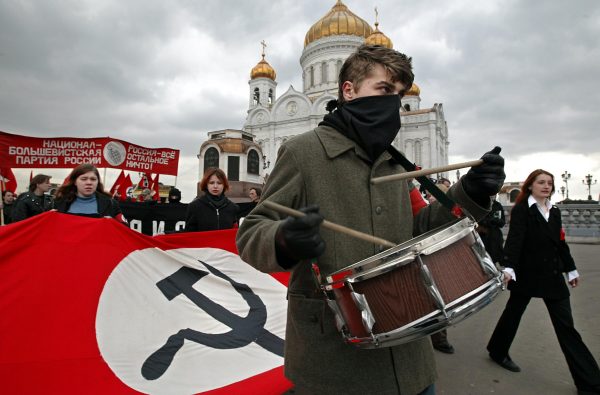
Part 3 – Russia, Russia, Russia (except for real)
A 2024 report by Der Spiegel, based on Western intelligence documents, revealed that a Russian presidential administration unit headed by Tatyana Matveyeva developed a “manifesto” for the AfD in 2022. This document outlined political messaging intended to reshape the party’s platform, suggesting repositioning under names like “United Germany” or “German Unity” (which is reminicent of the Soviet controlled “Socialist Unity Party” – the ruling party of East Germany).
Their Kremlin meeting reportedly directed the AfD to emphasize defending Russian Germans (Russlanddeutsche). These are people born in Russia who are ethnically German and then immigrated to Germany. So even though they are immigrants, they are cool even if they originally did not have German citizenship – again what matters to the AfD is the ethnicity, not the citizenship or place of birth.
Russia further directed the AfD to push anti-Western narratives, and consider cooperating with other extremist groups such as the Left Party (which used to be the PDS – Party of Democratic Socialism which used to be the SED – Socialist Unity Party – the ruling party in East Germany). Again showing that the AfD isn’t actually opposed to communism in the least.
The manifesto to be used by the AfD and presented to them by Sergey Kiriyenko, Putin’s deputy chief of staff for foreign influence operations — reads like a blueprint for AfD propaganda. It described Germany as a “nation betrayed by illiterate politicians” and portrayed Russia as its “natural ally,” mirroring subsequent AfD rhetoric and media lines.
The AfD’s platform and messaging have since aligned with Russian strategic goals:
- The AfD now demands closer cooperation with Russia and withdrawal from EU sanctions.
- Its 2024 European election manifesto included Moscow’s “multipolar world order” concept and advocated joining Russian-led blocs like the Eurasian Economic Union.
- Russian state outlets such as RT and Voice of Europe have amplified AfD content while channeling funds through intermediaries tied to AfD figures Maximilian Krah and Petr Bystron.
There are well-documented connections between the AfD (Alternative für Deutschland) and Alexander Dugin, the aforementioned Russian ultranationalist, occultist and founder of the National Bolshevik Party. Several AfD politicians have either met with Dugin, praised his ideas, or actively incorporated his worldview into their rhetoric.
For example, Alexander Gauland, the AfD’s honorary chairman, met with Dugin in Russia in 2016. Dugin has openly described the AfD as a future governing party in Germany and a key ally against the “liberal, bourgeois Europe” he opposes. This reflects an ideological alignment around anti-liberalism, anti-globalism, and opposition to Western democratic norms. AfD figures often echo Dugin’s rhetoric about the civilizational clash and multipolar world order (sources: Spiegel and WDR).
Manuel Ochsenreiter, a far-right adviser closely linked to AfD MP Markus Frohnmaier, was a direct bridge between the AfD and Russian nationalist circles including Dugin. Ochsenreiter founded the “German Center for Eurasian Studies” with connections to Dugin and was involved in organizing trips to Russian-occupied territories in Ukraine. After allegations related to extremist activities, he fled to Moscow, where Dugin praised him as an ally in pushing Russia’s Eurasian vision.
Other AfD-affiliated intellectuals, such as Dimitrios Kisoudis, have published works inspired by Dugin’s Third Political Theory and Eurasianist ideas, advocating for a new geopolitical and cultural alliance under Russian leadership. The AfD’s rhetoric and positions on Russia, Ukraine, and European geopolitics often reflect this ideological influence.
In summary, there is a significant ideological and personal link between key AfD politicians and Alexander Dugin, marked by shared anti-Western worldview, active cooperation, and mutual endorsement. This connection represents one dimension of the AfD’s broader engagement with Russian nationalist and Eurasianist currents.
Maximilian Krah, is one of the most prominent AfD politicians after Alice Weidel and the European Parliamentary list leader and is also one of the key figures linked to Russia (and China, but we’ll get to that). Investigations revealed that Krah received funds and support traced back to Russia and participated in lobbying efforts aligned with Kremlin goals. His activities led to legal and parliamentary probes, including stripping his immunity over suspected violations related to foreign influence and funding. Krah’s public statements often echo Russian messaging, advocating for ending any and all sanctions and closer trade relations (Wikipedia, Ridl).
Broader AfD-Russia ties
- Many AfD MPs have openly praised Russia’s actions or questioned Western narratives on Ukraine. Some served as international observers in Russian-controlled regions of Ukraine in sham elections. (Ridl)
- Russian state media like RT amplify AfD voices, helping spread pro-Russian propaganda within German-speaking audiences skeptical of mainstream outlets. (Ridl)
- The AfD has been identified as a vector in Russian hybrid warfare by German intelligence services, which warn that these ties undermine Germany’s democratic stability. (Reuters, Wikipedia)
- Key AfD leaders, including Alexander Gauland, have met with Russian politicians and ideologues like Alexander Dugin, cementing ideological and operational links. (Kai Arzheimer)
Voter base
The AfD draws significant support from the Russian-German community in Germany, where pro-Russian sentiment is strong. This voter base has helped maintain the party’s pro-Moscow orientation despite broader German skepticism of Russia, especially after the Ukraine war began. (DW)
In summary, the AfD’s connections to Russia, especially through figures like Maximilian Krah, involve ideological alignment, financial backing, media cooperation, and policy coordination, positioning the party as a crucial part of Russia’s influence strategy within Germany and the EU (Wikipedia, Kai Arzheimer, Ridl).
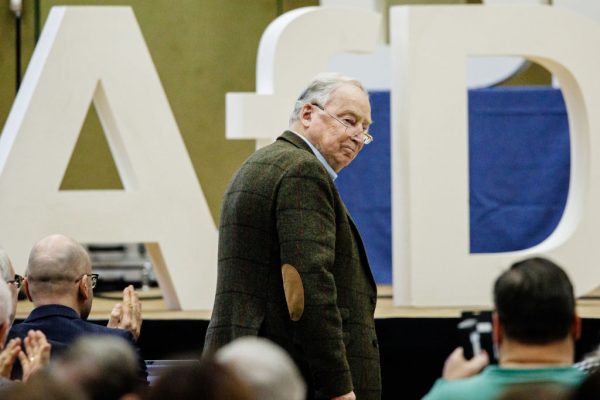
Part 4 – The AfD’s leading (Manchurian) candidates
The aforementioned AfD leader Maximilian Krah, has been linked to the Chinese Communist Party (CCP) through his parliamentary aide, Jian Guo, who was arrested and convicted for spying for China. Jian Guo, who served as Krah’s assistant at the European Parliament, had access to sensitive and classified documents, some marked as “particularly sensitive,” which he illegally collected and passed on to Chinese intelligence, including proposed resolutions against human rights violations in China – which both Jian and Krah then actively opposed and undermined. Jian also spied on and infiltrated Chinese dissidents and refugees living in Germany, especially those belonging to the Falun Gong spiritual group.
As mentioned, Krah himself has also echoed pro-CCP positions, like defending Huawei against Western criticisms and claiming that Chinese technology would be safe and that claims about it containing spyware would be Western propaganda and fear mongering and promoting a softer stance on the CCP within the AfD. After visits to China, he publicly praised Chinese policies, including controversial ones such as those in Tibet, enhancing CCP narratives and alleging that there would be no human right violations in Tibet and no genocide in Xinjiang and that China would have religious freedom. There are allegations that Krah received more than €50,000 from companies connected to Jian between 2019 and 2022, which is under investigation and his office was searched by authorities.
The espionage case involving Jian highlights CCP intelligence operations penetrating European political institutions via assistants close to politicians like Krah. This is part of wider CCP influence efforts within Europe, seeking to cultivate political allies and gather intelligence without resorting to the more aggressive tactics seen in Russian espionage.
In sum, Krah’s ties to China involve both ideological alignment with CCP goals and practical connections through his assistant’s espionage activities, raising significant security concerns about CCP infiltration in European politics through individuals close to him.
I am making a whole list of sources for Krah and his spy, instead of just having them as footnotes, cause there are so many:
- Germany: Former AfD aide arrested on suspicion of espionage – DW, 2025-04-29
- Germany: AfD politician Krah testifies in Chinese spy case – DW, 2025-09-02
- Germany’s arrest of a suspected MSS agent and the CCP’s cultivation of business associations – Sinopsis, 2024-04-27
- Former German MP Aide Sentenced for Spying for China – Chinascope, 2025-10-07
- Foreign interference: Chinese espionage in the European Parliament – Freiheit, 2024-04-25
- The AfD and China’s Marriage of Convenience – Geopolitical Monitor, 2025-01-07
- German spy trial of far-right MP’s former aide begins – BBC, 2025-08-05
- Germany: Ex-AfD aide convicted of spying for China – DW, 2025-09-30
- Former aide to far-right German politician jailed for spying – BBC, 2025-09-30
- Maximilian Krah – Wikipedia, 2019-12-01
- Ex-aide to top AfD politician jailed for spying for China – Reuters, 2025-09-30
Alice Weidel
Alice Weidel, the current main leader of the AfD, has herself longstanding, direct and significant connections to China that have attracted growing scrutiny from media and political observers.
Her early life and professional background in China
Weidel spent more than six years living in China after leaving Goldman Sachs, completing her doctorate on the Chinese pension system (which she praised and applauded) and working for the state-owned Bank of China in Shanghai. She is fluent in Mandarin and has frequently described this period as formative to her economic worldview. Her familiarity with China’s economic model has reportedly shaped her political positions. (Economist, Reuters, Table-Briefings)
Meetings with Chinese officials
Recent investigative reports revealed that Weidel met once a month with China’s then ambassador to Germany, Wu Ken, from 2019 to 2024. These meetings, often held at Wu’s secluded private residence rather than the embassy, were not included in Weidel’s official calendar and coincided with espionage allegations against members of her party. (Table-Briefings, Firstpost)
Weidel admitted that she met Wu “occasionally” to understand China’s stance on global issues such as the war in Ukraine but denied that the meetings were frequent or secretive. (DW)
Chinese media and public perception in China
Weidel has become a minor celebrity in China, where Chinese media and commentators praise her as a “pragmatic politician” who resists Western ideological hostility toward China and who instead is sympathetic to cooperation with the Chinese government.
On Chinese social media platforms like Weibo, Tencent and Xiaohongshu, she is celebrated as a politician with a “great understanding of the Chinese model who calls for deeper cooperation rather than confrontation” with China. Some state-linked commentators portray her as a model for “rational Western leadership” amid growing decoupling debates. (Table-Briefings, Rosalux)
Political caution and public silence
Despite her fluency in Mandarin and deep familiarity with China, Weidel herself rarely discusses her time there publicly, likely aware that overt association with a foreign power would not resonate with AfD’s nationalist base. Her strategic silence and efforts to frame her stance as “realistic but non-ideological” toward China reflect this tension.(Table-Briefings)
Political and security concerns in Germany
Her China ties have alarmed German intelligence and political figures, who warn of potential influence operations targeting AfD leadership. Critics argue that Weidel’s pattern of undisclosed meetings with Chinese diplomats and her pro-engagement rhetoric risk aligning AfD closer to Beijing’s interests.
In summary, Weidel’s connection to China is both personal and political: fluent in Mandarin, professionally active in Shanghai, frequently meeting Chinese diplomats, and admired by Chinese media for her friendly stance toward Beijing. These ties, however, have become a growing source of controversy within Germany due to concerns about transparency and foreign influence.
The views expressed in this content are those of the author and do not necessarily reflect the views of Vision Times.