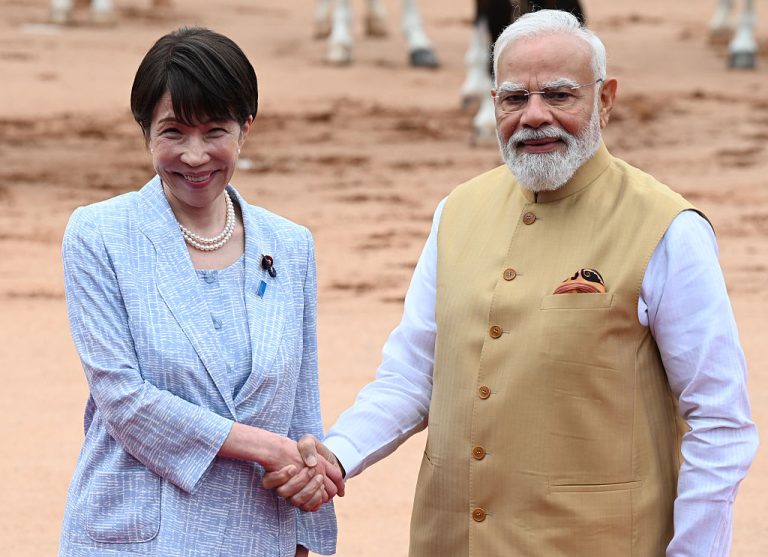
As night fell over Tokyo’s Akasaka Palace on Oct. 28, 2025, the grand halls glowed brightly for a historic meeting between U.S. President Donald Trump and Japan’s new Prime Minister, Sanae Takaichi.
More than a ceremonial encounter, their first summit signaled a strategic realignment — the dawn of what observers are calling a “new golden age” of the U.S.–Japan alliance.
Often described as Shinzo Abe’s political heir, Takaichi has embraced her predecessor’s strategic doctrine of a Free and Open Indo-Pacific.
Japanese media framed her meeting with Trump as “a continuation of Abe’s legacy,” noting the chemistry between the two leaders and their shared resolve to expand cooperation across political, economic, and defense fronts.
This partnership rekindled the momentum of the “Golden Decade” seven years ago, when Abe and Trump elevated the bilateral relationship to historic levels and co-launched the Indo-Pacific framework that now defines regional geopolitics. With Trump back in the White House and Takaichi in office, Washington and Tokyo appear ready to lead a new era of strategic coordination.
Success
You are now signed up for our newsletter
Success
Check your email to complete sign up
Three pillars of cooperation: Supply chains, investment, and defense
At the heart of the summit were three interlinked commitments designed to reinforce resilience and counter China’s growing assertiveness.
1. Supply Chain Security:
Amid the ongoing U.S.–China “rare earth war,” both leaders signed a Critical Minerals and Rare Earth Cooperation Agreement to build a supply network independent of Beijing’s control. Japan pledged to co-develop rare earth projects in Southeast Asia and Australia, forming an “Indo-Pacific Rare Earth Security Network.”
The agreement is not merely about trade—it represents a strategic decoupling from China’s dominance in critical minerals.
2. Reciprocal investment and trade:
Japan announced plans to boost investment in the U.S. by up to $550 billion, targeting energy, artificial intelligence, and high-tech manufacturing. In return, the Trump administration committed to lowering tariffs on Japanese goods and encouraging U.S. companies to build new facilities in Japan.
Analysts say the deal cements a mutually beneficial shift from consumer manufacturing to shared technological and resource security.
3. Defense upgrades:
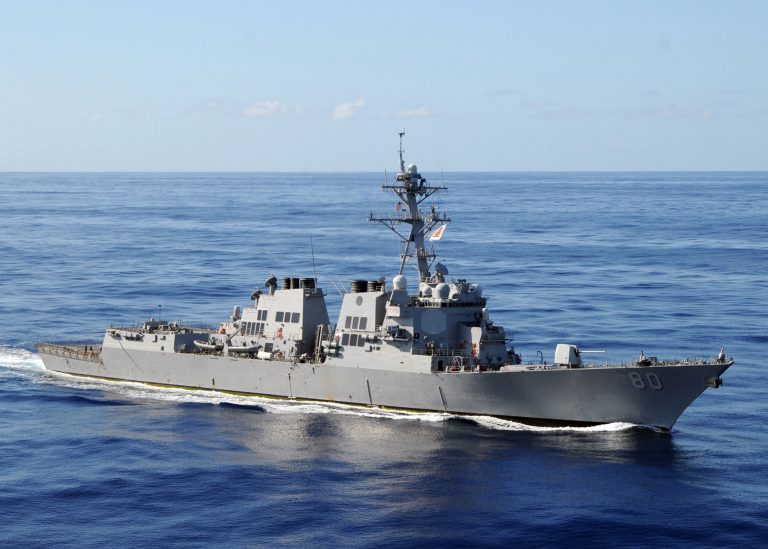
Takaichi’s government confirmed it will accelerate Japan’s defense spending to 2 percent of GDP, deepening the military partnership. In a symbolic gesture, Trump and Takaichi jointly boarded a helicopter to the U.S. Navy’s Yokosuka base, where they inspected the USS George Washington aircraft carrier.
Addressing more than 6,000 U.S. troops, Trump declared, “America will no longer be shackled by political correctness. Peace comes through strength.”
Takaichi echoed: “Peace cannot rely on prayer alone—it must be safeguarded by resolve and action.”
From Abe to Takaichi: Continuity and strategic foresight
During the talks, Trump paid tribute to the late Shinzo Abe, calling him “America’s most trusted ally in Asia.”
As early as 2016, Abe had warned Trump about the threat of Chinese military expansion and introduced the Indo-Pacific concept—a move that helped shape Washington’s long-term strategic outlook.
By advancing that legacy, Takaichi has demonstrated not only alignment with the U.S. but also a readiness to shoulder broader international responsibilities. Within her first month in office, she has positioned Japan as an indispensable pillar of the free world.
Economic and military decoupling from China
Trump’s ongoing Asia tour reveals a coordinated U.S. strategy: rebuilding an Indo-Pacific order anchored by free democracies, with Washington and Tokyo as dual centers of gravity.
- Economic front:
Cooperation in semiconductors, AI, and rare earths will gradually dismantle China’s leverage over global supply chains. - Military front:
The leaders’ joint appearance aboard a carrier underscored deterrence — a message that the free world is both capable and prepared to defend regional peace. - Diplomatic front:
Trump also met ASEAN leaders, signing parallel supply chain and investment agreements, while Takaichi reaffirmed the Free and Open Indo-Pacific vision at the ASEAN Summit.
Together, these moves signal a recalibration of Asia’s geopolitical architecture — one rooted in economic resilience, collective defense, and shared democratic values.
A golden alliance in the new cold war
This summit marks not just a deepening of bilateral cooperation, but a broader strategic shift in the emerging New Cold War.
On one side stands the democratic alliance led by the United States, prioritizing openness, security, and supply chain freedom. On the other is the authoritarian bloc of China, Russia, and North Korea, attempting to challenge the West through coercion and resource control.
The Trump–Takaichi partnership effectively revives the “U.S.–Japan Golden Era” of the late 20th century—this time as a cornerstone of global realignment against authoritarian expansion.
With Trump’s next stop in Seoul for the APEC summit and a possible meeting with Xi Jinping, the new Asian chessboard is only beginning to take shape.