What was once considered an internal party affair has now become a national security alarm. Taiwan’s Kuomintang (KMT) chairman election, typically a “family matter,” has reportedly been infiltrated by Chinese online forces conducting a large-scale cognitive warfare campaign worth more than NT$100 million (US$3 million).
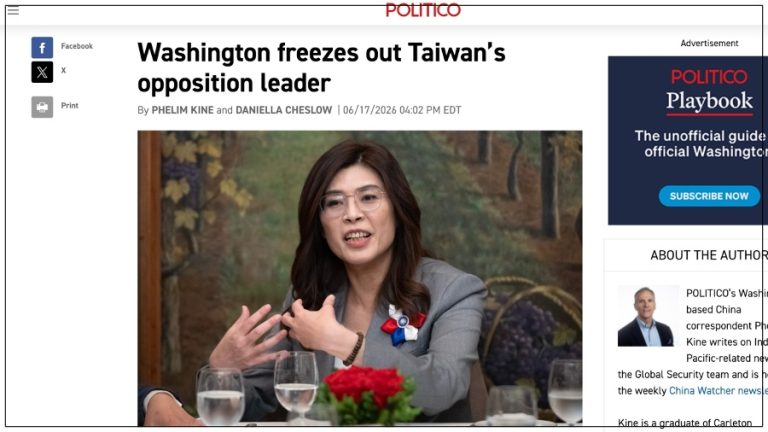
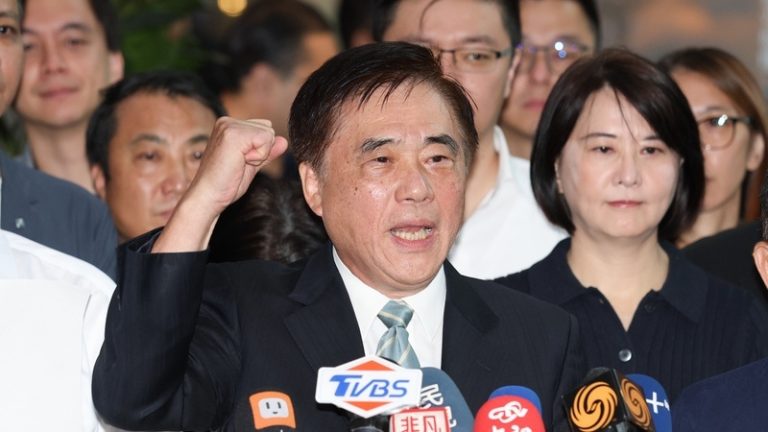
Prominent KMT figures, including former Broadcasting Corporation of China chairman Zhao Shaokang and candidate Hau Lung-bin, have accused the Chinese Communist Party (CCP) of deploying an army of online accounts and fake news networks to manipulate the race—promoting candidate Cheng Li-wen while smearing her rivals. The revelations have reignited debate over Beijing’s covert influence and the vulnerabilities of Taiwan’s democratic institutions.
During his campaign, KMT chairman candidate Zhao Shaokang released data suggesting unprecedented levels of foreign interference. He described the attack as a “large-scale cognitive warfare operation” requiring “over one hundred million NT dollars” in funding.
According to Zhao’s data, over the past month, TikTok hosted 1,790 short videos related to the KMT chair race. Of these, 900 praised Cheng Li-wen, 400 mentioned Zhao himself, and only 250 featured Hau Lung-bin—most of them critical.
As TikTok is owned by China’s ByteDance, Taiwan’s national security officials have long warned about its potential role as a CCP propaganda platform. The pattern of selective promotion and suppression, Zhao said, represents “a textbook example of precision cognitive warfare.”
Success
You are now signed up for our newsletter
Success
Check your email to complete sign up
Zhao’s campaign team also uncovered evidence of systemic manipulation on YouTube. Nine channels—mostly created in September—released 151 videos with a combined 1.82 million views. The videos were largely pro-Cheng and hostile toward Hau and Zhao, using AI-generated virtual hosts to deliver synchronized messages.
One especially egregious case involved a deepfake clip falsely depicting Hau Lung-bin kissing Taipei city councilor Liu Tsai-wei. Analysts described it as a hybrid “information-flow plus money-flow” operation designed to destroy reputations and sway internal votes.
‘If the Chairman is controlled, the Party will be, too’
Zhao warned that if hidden external forces were allowed to influence the election, “how can the KMT ever win again?” He emphasized that exposing the infiltration was not a personal attack but a defense of the party’s autonomy:
“If the chairman is controlled by external powers, then the entire party’s direction will no longer be its own.”
Why Beijing reportedly targeted Hau Lung-bin
Security analysts and DPP strategists believe Beijing identified Hau Lung-bin—a traditional “pro-blue but not pro-CCP” figure—as its main opponent. His long-standing positions have repeatedly clashed with Beijing’s line:
- “Engage with China but don’t grovel.”
Hau insists on dialogue “with dignity and equality,” rejecting one-sided concessions. - Acknowledging the KMT’s leadership in the Anti-Japanese War.
His emphasis on the KMT’s wartime role challenges the CCP’s official narrative. - Refusal to attend CCP military parades.
Hau’s late father, former premier Hau Pei-tsun, declined multiple invitations to Beijing’s parades and urged fellow officers to do the same.
These stances, analysts said, led Beijing to reclassify Hau as a “primary adversary” within the KMT while cultivating candidates more willing to align with the CCP’s political goals.
Cheng Li-wen: Beijing’s preferred candidate?
By contrast, Cheng Li-wen has taken positions that appear far more conciliatory toward Beijing.
- Willing to Meet Xi Jinping:
Cheng stated publicly that if elected, she would be open to visiting Beijing for dialogue with Xi to discuss “issues affecting both sides of the Strait.” - Opposing Taiwan’s Defense Budget Increase:
Cheng criticized the DPP government’s plan to raise defense spending to 5% of GDP, calling it “unsustainable” and harmful to social welfare.
Reports from Taiwan’s security community suggest that, after internal consultations in late September, the CCP’s Taiwan Affairs system formally decided to back Cheng. Three channels of support were allegedly activated—organizational, media, and financial.
- Organizational Pressure:
Senior KMT figures with ties to China were told to avoid supporting Hau. Retired generals linked to the CCP-friendly Huang Fuxing faction reportedly coordinated mobilization. - Media Influence:
Taiwan-based media outlets known for pro-Beijing coverage increased favorable reports about Cheng. - Online Warfare:
Networks managed by China’s Propaganda Department, United Front Work Department, and PLA cyber divisions were activated to spread disinformation and anti-Hau narratives.
PLA cyber force allegedly directs operation
According to Taiwan’s Mirror Weekly, the scale of the election interference far exceeded previous United Front operations and was “upgraded to a military-level campaign.”
The report claimed the PLA’s “Cyberspace Force Formation Unit,” which answers directly to the Central Military Commission, orchestrated the AI-driven information warfare—from content creation to performance assessment.
Three-phase cognitive warfare model
Security experts describe Beijing’s approach as a “three-stage dissemination system” combining AI, social media amplification, and narrative entrenchment:
- Generation Stage:
AI tools and virtual anchors mass-produce false content to attract viewers. - Distribution Stage:
TikTok and YouTube serve as accelerators, enabling remixes and reposts that multiply reach. - Consolidation Stage:
Influencers and “collaborating media” transform fake news into mainstream commentary, embedding it in public discourse.
Researchers further categorize the CCP’s Taiwan operations into information flow, money flow, and personnel flow:
- Information Flow: Creating viral disinformation nodes (e.g., AI videos, memes, and “grandparent images”).
- Money Flow: Using Chinese state-linked funding to sustain fake accounts, advertising, and influencer collaborations—reportedly exceeding NT$100 million.
- Personnel Flow: Mobilizing “volunteer brigades” indoctrinated through United Front networks to amplify content organically.
The ultimate objective, experts say, is “unrestricted disruption”—not persuasion, but division. By deepening political polarization, the CCP seeks to erode trust in Taiwan’s democracy and make the island more dependent on China economically and psychologically.
‘KMT is the biggest victim,’ scholar warned in advance
After the scandal broke, social media users rediscovered remarks by DPP legislator and cybersecurity expert Shen Bo-yang, who had predicted in 2023 that the KMT—not the DPP—would become Beijing’s prime target.
“The KMT is more familiar to China, and its members’ openness to exchanges makes it more vulnerable to manipulation,” Shen said then.
The latest incident, he argued, confirms that the CCP’s strategy is not only to promote pro-Beijing politicians but to fracture Taiwan’s opposition party from within, fostering infighting and ideological radicalization.
Legal gray zone: No law governs party chair elections
Taiwan’s National Security Bureau chief Tsai Ming-yen acknowledged that current laws offer limited tools against such interference.
Because the KMT chair race is an internal party election, it is not covered by the Election and Recall Act or the Anti-Infiltration Act.
Shen Bo-yang proposed two legislative fixes:
- Expand the Anti-Infiltration Act to cover the deliberate spread of CCP-directed disinformation.
- Include party chair elections in national security legislation due to their potential impact on the political system.
Civic groups have also urged lawmakers to revive the long-stalled Foreign Influence Transparency Act, which would require full disclosure of foreign-linked funding and political contacts.
DPP’s response: ‘National security laws target the CCP, not the opposition’
Facing accusations that proposed reforms are aimed at suppressing opposition, DPP officials countered that “national security laws are to counter the Communist Party, not to persecute rivals.”
Policy committee director Wu Si-yao and spokesman Wu Cheng said that if the KMT now recognizes China’s interference, it should prioritize national defense over party politics.
DPP whip Chung Chia-pin added that the KMT and People’s Party (TPP) had jointly blocked national security bills over 600 times in committee:
“The CCP’s interference targets any democratic force in Taiwan that refuses to be bought. This is not about party colors—it’s about survival.”
Taiwan’s democracy under fire
The KMT chairman election scandal has become more than an internal party crisis—it is a stark warning for Taiwan’s democracy.
From Zhao Shaokang’s data to Hau Lung-bin’s targeting, from Cheng Li-wen’s pro-Beijing stances to Shen Bo-yang’s prophetic warnings, all signs point to a growing, state-backed digital offensive against Taiwan’s political system.
Safeguarding Taiwan’s democratic future will require bipartisan unity: opposition parties must recognize that CCP interference threatens all sides, while the government must close legal loopholes to ensure national security agencies have the authority to act.
Whether Taiwan can defend its democracy amid this new era of cognitive warfare will depend on vigilance—and collective resolve.