By Cai Siyun, Vision Times
For two months, the death of Chinese actor Yu Menglong has continued to cast a long shadow over China’s entertainment industry. The newest controversy, involving allegations of coercion, money laundering, and live organ harvesting, has now widened to include several veteran celebrities whose recent “miraculous rejuvenation” has sparked intense scrutiny from netizens.
Online videos circulating in recent days show Jet Li, Sammo Hung, and Ni Ping — all previously in fragile health — suddenly appearing younger, energetic, and physically robust. The footage ignited explosive speculation: Have these celebrities undergone secret organ transplants or even blood-replacement procedures to “rejuvenate” themselves?
RELATED: How Yu Menglong’s Death Exposes Beijing’s Fragile Grip on Power
From frail to reborn
In these clips, elderly stars who once struggled to walk now move with striking vigor. As the videos spread, social media lit up with discussions about the legality and ethics of the procedures, as well as growing fears about where the organs could have come from.
Success
You are now signed up for our newsletter
Success
Check your email to complete sign up
Jet Li, once visibly frail to the point of being warned he might spend the rest of his life in a wheelchair, now appears dramatically rejuvenated. Attempting to dispel rumors, he released a video baring his torso to “prove” the absence of surgical scars — a move that backfired when viewers accused him of wearing a skin-tight bodysuit.
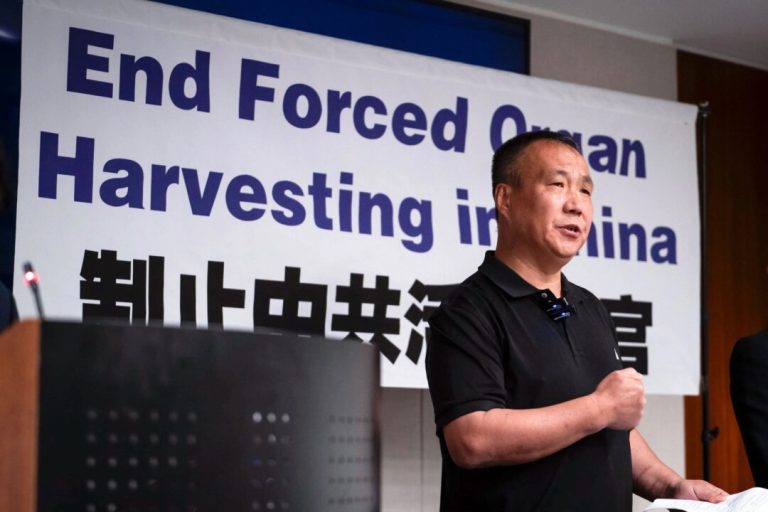
RELATED: Hospitals in China Admit to Live Organ Harvesting of Falun Gong Practitioners
Similar scrutiny fell on 73-year-old martial arts legend Sammo Hung. Long dependent on a wheelchair after decades of stunt injuries, he recently appeared in Xi’an walking unassisted and even performing tai chi.
Actress Ni Ping, 66, who had struggled with chronic health issues and mobility problems, likewise surprised the public when she climbed Mount Lushan and appeared unusually youthful. She insisted that she ascended the mountain herself.
Dubious source of procured organs
The sudden, collective “return to youth” among these high-profile figures triggered widespread speculation about transplant surgeries, particularly illicit organ harvesting from young donors. Others suggested the celebrities may have participated in elite CCP “longevity programs” involving blood replacement, bone marrow stem-cell infusion, or transfusions from young male donors.
Adding to the controversy, a 2024 study from Nanjing University’s School of Life Sciences found that small extracellular vesicles (sEVs) in the blood of young mice significantly extended lifespan and reversed aging symptoms.
The study showed that weekly injections of young sEVs increased median lifespan by 22.7%, with the oldest mouse living the human equivalent of 120–130 years. sEVs also improved tissue function in the hippocampus, muscles, heart, testes, and bones.
Because sEVs circulate naturally and pose no toxicity or immunological risk, the research concluded that “injecting young sEVs could serve as a multifunctional tool against aging.” For many Chinese netizens, this scientific breakthrough seemed uncomfortably aligned with the sudden rejuvenation of aging celebrities.
‘A dystopian nightmare’
Further fueling the storm, Chinese beauty-industry entrepreneur Yu Wenhong went viral on Douyin (a popular video-sharing app similar to TikTok) after claiming the rejuvenation technique used in China does not involve full blood replacement, but rather extracting micro-vesicles and youth proteins from the blood of 16- to 21-year-old boys. She noted:
- “It takes the blood of many people to treat just one person.”
- “This is an Austrian patented technology.”
- “I bought a pharmaceutical factory specifically to access these resources.”
Her remarks set off panic from netizens concerned about the ethical repercussions of such treatments:
- “This blood was supposed to save lives in hospitals — not to be used for anti-aging treatments.”
- “If the rich can drain the blood of the young, what future is left for normal people?”
- “The missing-person cases suddenly make sense.”
‘Young men are becoming blood banks’
China’s rising number of missing persons deepened the unease. One comment read, “They say over a hundred people vanished in just 22 days in October — none found. This is terrifying.” Another wrote, “The rich get new organs and new blood; the poor simply disappear.”
Many posts urged parents to take caution if they have teens at home:
- “Micro-vesicles exist only in boys aged 16–21. Parents must protect their sons.”
- “Don’t walk alone at night, don’t donate blood casually, avoid unnecessary medical checkups.”
Others connected the phenomenon to broader corruption involving elites in China:
- “Jet Li is the propaganda sample — proof that China now has a live organ and blood supply system.”
- “Ordinary people must stay vigilant. This is a dystopian nightmare.”
Editor’s Note: This article reports on ongoing public discussions and unverified claims circulating on social media.