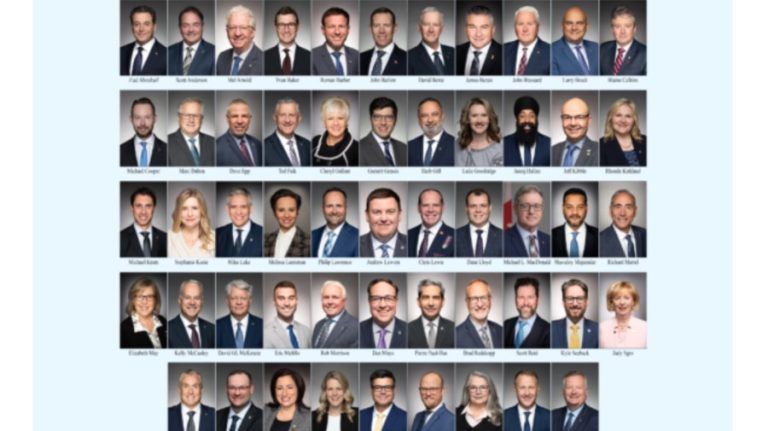
According to the latest data from the Falun Dafa Information Center, from March 2024 to Oct. 16, 2025, a total of 193 anonymous death threat incidents targeting Falun Gong practitioners or impersonating them have been recorded. In response, 65 Canadian federal MPs and senators issued a joint statement condemning the Chinese Communist Party’s (CCP) 26-year persecution of Falun Gong and its escalating transnational repression, including interference with Shen Yun Performing Arts. Several MPs called for unified government action to strengthen legal mechanisms and firmly counter these threats to Canadian sovereignty and democracy. Meanwhile, Conservative MP James Bezan’s private member’s bill, C-219, represents a key legislative effort to address transnational repression.
The Falun Dafa Information Center reported that from Oct. 1 to 16, 2025, Falun Gong practitioners, related organizations, and even the U.S. President’s residence were targeted in a series of intense global harassment and cyberattacks, highlighting the CCP’s escalating transnational persecution of Falun Gong. These acts include violent threats, identity impersonation, and cyberattacks. Piero Tozzi, deputy staff director of the U.S. Congressional-Executive Commission on China (CECC), described these as typical CCP transnational repression tactics, particularly targeting Falun Gong, amounting to state-sponsored terrorism. These incidents not only affect Falun Gong but also impact Shen Yun Performing Arts and related entities, underscoring the global threat of the CCP’s “unrestricted warfare.”
MP Judy Sgro: Stand firm, don’t yield to intimidation
Senior Canadian MP, former Immigration Minister, and chair of the Parliamentary Friends of Falun Gong, Judy Sgro, recently condemned the CCP’s suppression of Shen Yun as “terrorism” that must be resolutely countered. “Shen Yun, such a beautiful artistic performance, is being intimidated and suppressed to prevent Canadians from enjoying a spectacular show. We absolutely cannot tolerate this,” Sgro said.
Since 2022, under Xi Jinping’s directives, the CCP has escalated transnational repression, including overseas intimidation, threats, and suppression targeting Falun Gong and Shen Yun. In the U.S., evidence shows the CCP attempted to bribe officials to attack Shen Yun, manipulate media and legal systems, orchestrate over 100 anonymous bomb threats, and engage in social media manipulation. In Canada, Shen Yun theaters in Vancouver, Montreal, Mississauga, and Kitchener received bomb or mass shooting threat emails this year, while Calgary faced performance disruptions. These incidents align with the 193 global anonymous death threats, indicating a systematic CCP campaign.
Having attended Shen Yun multiple times, Sgro urged resilience: “This is a significant challenge, whether it’s targeting Shen Yun or other forms of exploitation and intimidation occurring in many communities. I hope everyone stays strong and doesn’t yield to such intimidation and violence.” She called for unified government action: “We continue to see transnational repression in multiple countries, orchestrated by China (the CCP). Canada must stand united and firmly confront it.”
Success
You are now signed up for our newsletter
Success
Check your email to complete sign up
Conservative Deputy Leader: Eradicate CCP infiltration
Conservative Deputy Leader Melissa Lantsman criticized the Liberal government’s inadequate response: “Transnational repression has long existed in Canada, and the Liberals have failed to address it substantively.” She highlighted CCP tactics like bomb threats and legal warfare: “These are tools of a brutal communist dictatorship reaching globally to suppress free voices.” A supporter of Hong Kong and Falun Gong human rights, Lantsman joined Hong Kong Watch in 2022 and has long advocated alongside Falun Gong against the CCP’s brutal dictatorship. “Even before joining, I supported Falun Gong in resisting the CCP’s tyranny.”
According to a 2021 Canadian Security Intelligence Service (CSIS) report, the CCP is Canada’s largest foreign influence actor, targeting government, media, academia, dissidents, and Chinese communities, with attempts to interfere in the 2019 and 2021 elections. “Beijing’s elements are too close to our government and MPs. We will root out systemic corruption,” Lantsman emphasized.
Senator MacDonald: Sovereignty must be respected
Canadian Senator Michael L. MacDonald addressed the issue from a sovereignty perspective: “Canada is a sovereign nation, and that sovereignty must be respected. We are open and inclusive, but we will not tolerate any government interfering in our democratic system. We will remain vigilant and fight back resolutely… I believe we will ultimately prevail.” His words respond to the global nature of CCP transnational repression, from incidents at the Kennedy Center in the U.S. to theater threats in Canada. The CCP’s “unrestricted warfare” tactics include diplomatic pressure, media campaigns, legal battles, and violent intimidation. Shen Yun, dedicated to reviving Chinese culture destroyed by the CCP, has performed hundreds of shows annually since 2006, reaching over 10 million audience members, yet it remains a target for exposing CCP persecution. In October’s latest threats, messages impersonating Falun Gong founder Li Hongzhi threatened to shoot Shen Yun headquarters staff, sent from fake Epoch Times email addresses, signaling an escalation in CCP impersonation tactics.
Bill C-219: Defining transnational repression, expanding sanctions
On the legislative front, Conservative MP James Bezan’s private member’s bill, C-219, is a core tool to counter transnational repression. The bill amends the *Special Economic Measures Act* and the *Magnitsky Act* to strengthen sanctions against foreign human rights violators, particularly those conducting transnational repression in Canada. At an Oct. 22 roundtable, Bezan explained: “C-219 is unique in defining ‘transnational repression’ in Canadian law for the first time, targeting foreign individuals committing crimes through interference and intimidation.” The bill addresses CCP monitoring and threats against Falun Gong, Hong Kongers, Taiwanese, and other diaspora communities via illegal “police stations,” consulates, and united front organizations. It expands sanctions to abusers’ immediate family members to prevent asset concealment, with public sanction lists and regular reports from the Royal Canadian Mounted Police (RCMP) and the Financial Transactions and Reports Analysis Centre of Canada (FINTRAC). “We want to ban their families from entering Canada to prevent hiding illicit wealth,” Bezan said.
C-219 grants greater authority to the House Foreign Affairs Committee, allowing diaspora and human rights advocates to submit sanction recommendations and evidence, establishing transparent accountability mechanisms and aligning with allies. Falun Gong groups have submitted lists for years, with Bezan presenting 150 CCP officials in 2021. In December 2024, Canada sanctioned eight senior officials involved in Xinjiang, Tibet, and Falun Gong persecution. Bezan hopes to name the bill the “Global Magnitsky Sanctions Act,” applicable to Iran, North Korea, Russia, and others. “We’ll ensure those persecuting Falun Gong, Uyghurs, and Christians are held accountable,” he said. On Shen Yun interference, he condemned the CCP’s paranoia: “Threatening theaters just for their Falun Gong connection shows how paranoid Xi’s regime is. C-219 will strengthen sanctions to ensure Canada isn’t a safe haven for corrupt officials.” This aligns with an Oct. 5 fake bomb threat targeting U.S. President Trump’s residence, which was falsely linked to Falun Gong media to frame them.
MP Menegakis: Shen Yun is a top cultural performance, intimidation unacceptable
Conservative MP Costas Menegakis condemned violent threatsby the CCP against Shen Yun: “The Shen Yun I saw is a beautiful multicultural performance with exquisite music and stunning dance. There’s no reason to prevent people from enjoying Chinese culture.” Having attended Shen Yun in Toronto in 2013 with his wife, Menegakis, a Greek-Canadian entrepreneur honored with Queen’s Golden and Diamond Jubilee Medals, expressed alarm at fear in the Chinese community: “People are afraid to speak publicly, fearing retaliation against family. This shouldn’t exist in Canada.” He cited an Oct. 2 Toronto incident where a Chinese man in his 50s, wielding a CCP flag and stick, smashed Falun Gong signs outside the Chinese Consulate’s visa office, hurled insults, and threw the stick at practitioners before being restrained and reported to police. This highlights risks faced by Falun Gong practitioners conducting peaceful activities overseas. “The Canadian government should focus on eliminating foreign interference and ensuring freedom to live. Freedom, democracy, and the rule of law are Canada’s core values,” he said.
Menegakis called for improved immigration policies to prioritize persecuted groups. While Parliament passed the Foreign Interference Registry Act (Bill C-70) earlier this year, he deemed it insufficient: “People come to Canada to escape oppression but still live in fear. We must work to eradicate transnational repression and CCP infiltration.”
Former MP Bergeron: Learn from Taiwan to counter disinformation
Former MP Stéphane Bergeron emphasized Taiwan’s experience in countering CCP disinformation and political infiltration as a valuable lesson for Canada. He advocated for federal reviews of foreign interference, particularly Chinese influence. “This is a new field for us, and we must learn from those most familiar with this reality,” Bergeron said. During a Canadian delegation’s visit to Taiwan, they studied Taiwan’s strategies for countering disinformation, misinformation, and foreign interference. “We learned a lot and must implement it in Canada,” he said, noting Canadians’ long-held optimism but facing a “harsh wake-up call”: “We’re under disinformation attacks and targeted by foreign interference.” Bergeron urged decisive action: “Taiwan knows best how to counter China (the CCP). We must learn from them.” This applies not only to Shen Yun threats but also broader interference, like election manipulation and community infiltration. Taiwan’s National Police recently received threats impersonating Shen Yun performers, warning that screenings of “State Organs,” a documentary exposing CCP organ harvesting, would be attacked, highlighting the global coordination of disinformation campaigns.
Global perspective: CCP’s escalating ‘unrestricted warfare’ and international response
The CCP’s transnational repression of Falun Gong extends beyond Canada. From Oct. 1 to 16, global harassment included impersonation-based violent threats, in-person intimidation, and DDoS attacks. On Oct. 15, the Falun Dafa Information Center website (faluninfo.net) faced a massive DDoS attack, with over 3.38 million requests from two IPs, preliminarily traced to Australian servers, though attackers used VPNs to conceal their identity. Other incidents include an Oct. 7 threat impersonating dissidents targeting Longquan Temple with gunfire and gas bombs; an Oct. 9 threat impersonating Falun Gong practitioners warning of random killings at Taiwan’s Double Tenth celebration; and Oct. 15-16 fake bomb threats prompting Taiwan police to evacuate Epoch Times offices. Legal scholar Yuan Hongbing revealed that Xi Jinping ordered an escalation of overseas Falun Gong persecution in 2022, using “public opinion warfare” and “legal warfare.”
Texas led the U.S. in May by passing the *Anti-Transnational Repression Act*, criminalizing such acts, the first state to do so. In July, U.S. Representatives Chris Smith and Jeff Merkley introduced the “Transnational Repression Policy Act” (H.R.4829/S.2525), targeting CCP persecution of Falun Gong, Shen Yun, and other overseas dissidents. The bill mandates asset freezes, entry bans for implicated foreign officials, annual State Department reports, and enhanced FBI mechanisms. The House version is under review by the Foreign Affairs and Judiciary Committees, while the Senate version, introduced in late July, has bipartisan support. Lawmakers noted the CCP’s lead in 160 transnational repression cases over a decade, with accelerated review expected this fall.
By Meng Hao