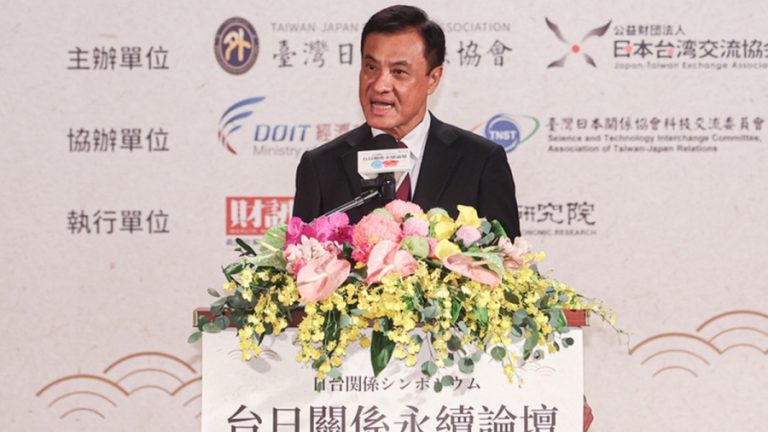
On Monday, Nov. 17, amid rising tensions between Beijing and Japan, Beijing began live-fire drills in the central Yellow Sea a move that observers say directly responds to Tokyo’s recent comments regarding a potential “Taiwan contingency.” Su Jia-chyuan, head of the Taiwan–Japan Relations Association, said Japanese society is “extremely angry” over China’s latest show of force and warned that such provocation may backfire diplomatically.
Japan’s ‘Taiwan contingency’ remarks trigger Beijing’s reaction
The confrontation intensified after Japanese Prime Minister Sanae Takaichi referred to a potential “Taiwan contingency” in parliament—remarks that drew a sharp response from Beijing.
On Nov. 15, the Yancheng Maritime Safety Administration under China’s Maritime Safety Administration issued a navigational alert, announcing three days of live-fire drills from Nov. 17 to 19, running 24 hours a day, in designated areas of the central Yellow Sea.
The restricted zone was defined by the following coordinates:
34°08.00′N 120°18.00′E /
34°08.00′N 120°27.00′E /
34°04.00′N 120°31.00′E /
33°58.00′N 120°31.00′E /
33°55.00′N 120°26.20′E.
China has not only issued travel warnings urging its citizens to avoid Japan but has also escalated military and maritime control measures, further straining bilateral relations.
Success
You are now signed up for our newsletter
Success
Check your email to complete sign up
Japan issues safety advisory to its citizens in China
Japan’s Embassy in China issued a safety notice to Japanese nationals on Monday, citing recent Chinese media coverage of bilateral tensions. The advisory urged Japanese residents in China to stay alert while outdoors, remain aware of suspicious individuals, and travel in groups when possible.
In Taipei, Presidential Office spokesperson Karen Kuo warned that China’s recent actions toward Japan and the region constitute a “composite threat” to Indo-Pacific security. She said Taiwan will continue coordinating with Japan and other regional partners to uphold a free and open Indo-Pacific order.
Strategic analysts noted that the drills are not merely routine training but carry strong political messaging—an action with “recoil effects” across the interconnected security dynamics of China, Japan, South Korea, and Taiwan.
Su Jia-chyuan: Japan is ‘extremely angry’
Speaking before the opening of the 35th Taiwan–Japan Engineering and Technology Conference, Su Jia-chyuan told reporters that China routinely protests any Taiwan-related issue—from Foreign Minister Lin Chia-lung’s recent trip to Japan to former envoy Frank Hsieh’s reception of a Japanese imperial honor.
“For Beijing, protesting is a daily habit,” Su said. “But for international relations, it is abnormal—an act of hegemonic behavior. In the end, their protests achieve nothing. And Japan’s public is extremely angry at China’s provocations. Beijing is unlikely to gain any advantage in international relations from this.”
Key takeaways from China’s drill announcement
- Location: China selected the central Yellow Sea rather than waters near Taiwan, indicating a targeted message linked to Japan.
- Timing: The drills closely followed Takaichi’s “Taiwan contingency” remarks, suggesting synchronized diplomatic and military pressure.
- Regional Impact: While not occurring near Taiwan, the announcement adds uncertainty to the broader Indo-Pacific security environment.
Analysts say that future developments to watch include China–Japan interactions, Taiwan’s growing security cooperation with Japan, South Korea, and the United States, and whether Beijing escalates further military activities in the region.