From Nov. 16 to 18, East Asia witnessed a rapid and dramatic escalation that spread from the sea to diplomacy, public opinion, tourism, and trade. What began as a maritime confrontation between China and Japan quickly expanded into a multi-front clash. On Nov. 16, four armed Chinese Coast Guard ships forced their way into Japanese territorial waters around the Senkaku Islands (Diaoyu Islands), triggering an immediate protest from Tokyo. The next day, Japan dispatched Masaki Kanai—Director-General of the Ministry of Foreign Affairs’ Asian and Oceanian Affairs Bureau—to Beijing, where he delivered an unmistakably firm message: Japan would not withdraw Prime Minister Sanae Takaichi’s statement that “a Taiwan contingency is a contingency for Japan.”
Beijing had assumed Japan was coming to “cool things down” or even apologize. It was wrong. What it received instead was a tougher stance that caught China’s wolf-warrior diplomats off guard.
China responded with travel warnings, diplomatic protests, and online denunciations, amplifying the confrontation in mere days. The speed of escalation revealed deep structural tensions in China–Japan relations and suggested East Asia may be entering a more dangerous—and irreversible—new phase, one that exposes the collapse of Beijing’s wolf-warrior diplomacy.
Armed Chinese coast guard ships breach Japan’s territorial waters
Tensions flared on the morning of Nov. 16.
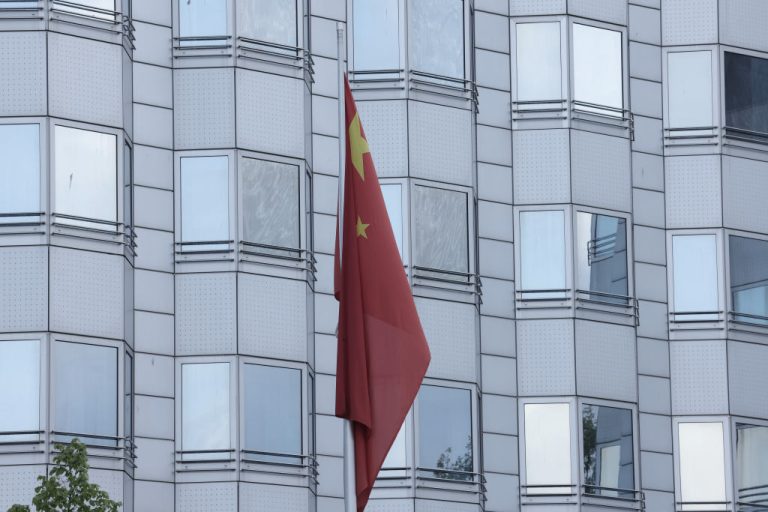
Four Chinese Coast Guard vessels, flying PRC flags and equipped with deck guns, crossed into Japan’s territorial waters—an unmistakable act of armed provocation rather than a patrol or navigational error.
Success
You are now signed up for our newsletter
Success
Check your email to complete sign up
Almost simultaneously, the Japan Maritime Self-Defense Force posted a striking video: missile launches, naval gunfire, and anti-submarine helicopter operations. The footage ended with a stark English caption: “Ships ready. Weapons ready. Solutions ready. All ready. Set fire.”
A message far from symbolic—this was a direct, unambiguous warning. A breach equivalent to “walking into someone’s home with a gun”
Japan’s 11th Regional Coast Guard Headquarters in Naha reported that between 10:14 and 10:30 a.m., four armed Chinese Coast Guard vessels entered waters near Minamikojima in Ishigaki, Okinawa Prefecture.
This was territorial waters, not the contiguous zone. In practical terms, it was: “A stranger stepping into your living room, putting his boots on your table, and flashing a gun.”
For years, China typically sent two vessels to conduct gray-zone harassment. Sending four—fully armed—was an escalation from harassment to testing Japan’s military response.
Japan’s answer was clear: The Self-Defense Forces were prepared to open fire.
Beijing’s trigger: Takaichi’s historic declaration on Taiwan
The immediate spark was a statement from Japan’s new prime minister, Sanae Takaichi.
On Nov. 7, she told Parliament: “If China uses force against Taiwan, it constitutes a survival-threatening situation for Japan. Japan may exercise collective self-defense.”
Meaning: if China invades Taiwan, Japan will join the war. This was the first time since World War II that a sitting Japanese leader made such an explicit commitment.
Beijing reacted with fury. China’s Consul General in Osaka, Xue Jian, went as far as publicly threatening: “We should behead the Japanese prime minister.”
This moved beyond diplomacy and into the realm of gangster-style intimidation.
In Japan, lawmakers demanded an apology and the expulsion of Chinese diplomats. Instead, Beijing escalated:
- accusing Japan of “reviving militarism,”
- warning Japan would “become a battlefield,”
- summoning Japan’s ambassador,
- issuing travel advisories,
- and warning Chinese students against studying in Japan.
Japan’s response was firm: no retreat, no apology.
Public support for Takaichi surged above 80 percent, with commentators noting a societal awakening: “This is the strong prime minister Japan has waited decades for.”
With diplomatic tactics failing, Beijing turned to armed intimidation.
The JMSDF video released as Chinese vessels entered territorial waters was not coincidental. Foreign media called it: “Japan’s military red-line reminder.”
The message: Japan is ready, willing, and prepared to fight.
It was one of the strongest signals Japan has issued in decades.
Japan Sends a Top Diplomat to Beijing
The next day, Kanai flew to Beijing without warning—a highly unusual diplomatic move.
Diplomats normally arrive with room for discussion. This time, Japan arrived with none.
Observers likened the visit to someone walking into a house, dropping a document on the table, and saying: “This is our stance. Deal with it.” Then leaving.
The talks lasted less than two hours. Chinese officials were visibly frustrated.
Liu Jinsong, Director-General of the Asian Affairs Department, was filmed escorting Kanai out with hands in his pockets—widely interpreted as diplomatic collapse.
When asked whether the talks were satisfactory, Liu replied: “Of course not.”
And the atmosphere? “Serious.”
A diplomatic admission that Japan had yielded nothing.
Japan presented four hardline positions
According to NHK and comments by Foreign Minister Yoshimasa Hayashi, Japan raised four points:
1. Condemn the ‘beheading’ remark
Japan demanded China immediately address the consul general’s threat, calling it equivalent to a terrorist statement.
2. Withdraw China’s travel warning against Japan
Japan rejected China’s advisory as baseless.
3. Guarantee safety for Japanese citizens in China
Tokyo warned that Beijing’s nationalism could endanger its nationals.
4. Reaffirm its Taiwan policy without apology or revision
Japan refused to retract, clarify, or soften Takaichi’s remarks.
Kanai reportedly even produced official Diet records: “This is our national policy. Do you want to see it?”
Beijing was stunned; expectations of Japanese contrition vanished.
Why is Japan this firm?
Tokyo has made the deepest strategic judgment in seven decades:
If Taiwan falls, Japan faces existential danger.
Taiwan is only 110 km from Yonaguni Island.
If China controls Taiwan:
- Japan’s southern defense line collapses
- its energy lifelines could be severed
- Japan becomes Beijing’s next target
Thus, Japan openly tied its national survival to defending Taiwan.
Japan did not come to Beijing to negotiate. It came to notify, not discuss.
On Nov. 18, Taiwan’s Newtalk cited Sankei Shimbun reporting that Japan’s Defense Ministry has internally assessed that: If the Fujian carrier attempts to block U.S. intervention in a Taiwan conflict, Japan will cooperate with U.S. forces to sink it.
This was Japan’s first explicit internal consensus naming a specific Chinese warship as a wartime target.
China showcases the Fujian Carrier, but Japan’s signal overshadows It
Around the same time, Chinese state media publicized the Fujian carrier’s first live-training deployment:
- electromagnetic catapults,
- J-35 takeoffs,
- KJ-600 sorties,
- far-sea maneuvers.
But Japan’s political and military message overshadowed the display entirely.
Japan’s message carries three strategic layers
1. ‘Taiwan’s security is Japan’s survival.’
Not sentiment—existential reality.
2. Fujian is identified as a priority target.
Not vague rhetoric—specific planning.
3. Japan must intervene at the ‘first minute’ of war.
A break from decades of strategic restraint.
The US backed it openly
On the same day, U.S. Chief of Naval Operations Adm. Darryl Caudle, speaking in Tokyo, responded to Takaichi’s “survival-threat” statement: “I’m not surprised. It’s exactly what I expected.”
This was not merely support—it was confirmation of a shared U.S.–Japan view.
Caudle added: “Japan’s 2 percent defense spending is not a ceiling.”
Washington was publicly encouraging Japan to arm rapidly in preparation for a joint defense of Taiwan.
Why the US, Japan, and Taiwan are aligning now
Because Taiwan is the anchor of the First Island Chain. Whoever controls Taiwan controls the Western Pacific.
If Taiwan falls:
- Japan becomes vulnerable
- U.S. Indo-Pacific strategy collapses
- China advances toward the Second Island Chain
The U.S. has shifted decisively toward an “Indo-Pacific first” posture in Trump’s second term.
Japan sees no more U.S. ambiguity—and will not risk standing alone.
Public opinion in Japan now overwhelmingly supports helping defend Taiwan.
For many Japanese citizens, a Taiwan conflict is no longer “someone else’s war,” but the front line of Japan’s own future.
China’s Fujian carrier: Impressive on TV, vulnerable in reality
Despite China’s efforts to promote the Fujian as a game-changing asset, its real combat readiness remains questionable:
- newly commissioned
- limited pilot training hours
- immature KJ-600 platform
- weaker anti-submarine capability compared to U.S.–Japan
- facing a mature U.S.–Japan anti-carrier kill chain
Japan’s willingness to target the Fujian is not bluster—it reflects a sober assessment.
Nov. 18: The birth of a new US–Japan–Taiwan strategic alignment
The events of Nov. 18 were not about tough talk from Japan, formal statements from the U.S., Chinese outrage, or the Fujian carrier’s displays.
They marked the formation of a strategic alignment capable of reshaping East Asia for the next 50 years.
Japan throws down the challenge; the US publicly endorses it
For Beijing, this is a nightmare.
For democratic nations, this is a turning point.
Taiwan is no longer alone.
Japan is no longer hesitant.
The United States is no longer wavering.
China’s intimidation is losing its potency.
When democracies stand together, authoritarian regimes have fewer tools to coerce their neighbors.
This article reflects the author’s personal views and does not necessarily reflect the views of Vision Times.