As 2025 draws to a close, the war in Ukraine appears to be entering another pivotal phase. After months of quiet talks between Washington and Moscow, the Trump administration has delivered a 28-point peace framework to Kyiv—one that would require sweeping concessions from Ukraine in exchange for ending the conflict and restoring Russia’s place in major international forums.
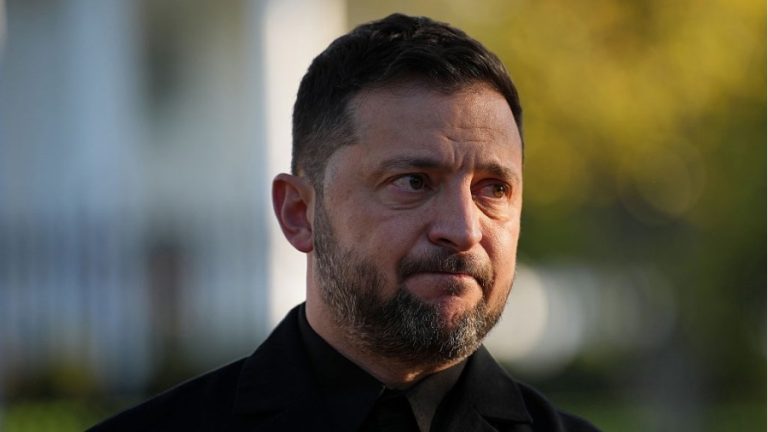
President Volodymyr Zelensky, facing mounting pressure at home and on the battlefield, said he is ready to engage in “honest work” with the United States on the proposal. His office issued a cautious statement noting that Ukraine agrees to move forward on the plan “in a just manner,” signaling that Kyiv sees little room to maneuver. A Western official familiar with the situation said Zelensky has “almost no choice” given the deteriorating military situation and a wave of domestic corruption scandals.
Ukraine pressured to abandon NATO path
Details reported by the Financial Times, Wall Street Journal, and Axios describe a proposal heavily favorable to Russia. It touches the core of Ukraine’s sovereignty, security, and political identity.
The plan calls for Ukraine to relinquish full sovereignty over the entire Donbas region—both the territories now under Russian control and those still held by Ukraine. For a government that has promised to restore all occupied land, the concession would be extraordinary.
Ukraine’s armed forces would face strict limits, with reports suggesting a cap of roughly 600,000 troops or even a force reduced by half. Kyiv would also be barred from acquiring Western long-range strike systems capable of hitting Russian territory, and no international peacekeeping troops would be allowed on Ukrainian soil, leaving the country without an external security buffer.
Success
You are now signed up for our newsletter
Success
Check your email to complete sign up
Perhaps the most sensitive point: Ukraine would be required to forgo NATO membership—either permanently or for several years—directly meeting one of Moscow’s longstanding demands. Additional provisions would require recognizing Russian as an official language and granting legal status to the Moscow-aligned Orthodox Church in Ukraine, steps that would significantly shape Ukraine’s cultural and national identity.
In return, the plan offers broad references to “reliable security guarantees” for Ukraine, though without meaningful detail. One element would allow European fighter jets to be deployed in neighboring Poland, a gesture aimed more at reassuring NATO allies than protecting Ukrainian territory.
Negotiations led by a small Trump–Putin channel
Ukraine played almost no role in crafting the proposal. According to sources, the framework was developed by a small group of senior U.S. officials: Vice President J.D. Vance, Secretary of State Marco Rubio, senior adviser Jared Kushner, and Middle East envoy Richard Wilcox, who handled operational coordination. On the Russian side, the key interlocutor was Kirill Dmitriev, President Vladimir Putin’s investment envoy and head of the Russian Direct Investment Fund.
Wilcox met with Ukrainian National Security Adviser Rustem Umerov in Miami last weekend to brief him on the plan. He acknowledged that the framework crosses many of Kyiv’s “red lines” but made clear Washington wants Zelensky to accept it. Ukraine was not consulted during the drafting process and learned of the details only after the plan was nearly complete.
A senior U.S. official told Politico that President Trump does not believe the United States is obligated to help Ukraine reclaim all territory seized by Russia. His priority is to secure a ceasefire quickly and draw Washington out of what he views as an expensive proxy conflict.
RELATED: Ukraine faces Perilous Winter Amid Corruption, Funding, and Battlefield Crises
Zelensky cornered by war losses and corruption scandals
For Zelensky, the proposal may be the most consequential political test of his presidency. Ukrainian forces in the east are under sustained Russian pressure, with significant losses in both manpower and ammunition. Western support has weakened substantially since Trump took office.
At the same time, Zelensky’s government has been rattled by corruption allegations. On the day the peace plan surfaced, Ukraine’s parliament dismissed Energy Minister German Galushchenko and Justice Minister Denis Maliuska over graft accusations—an episode that further eroded public confidence.
Rejecting the U.S. proposal could leave Ukraine isolated against Russian forces, a reality that weighs heavily on the Zelensky administration. Kyiv’s statement emphasizing a “just” conclusion to the war reflects both the limits of its bargaining power and the need to reassure a skeptical public.
A strategic win for Moscow
If enacted, the framework would hand Russian President Vladimir Putin a major strategic victory. It would freeze Ukraine out of NATO, codify Russian control over Donbas, and permanently weaken Ukraine’s military capabilities.
Just as consequential, the plan would begin lifting Western economic sanctions on Russia. One of the draft’s most symbolic elements is an invitation for Russia to rejoin the Group of Seven—restoring the G8 format and signaling the end of Moscow’s diplomatic isolation. The move would mark a significant geopolitical shift and bolster Putin’s standing at home.
In return, Russia would commit not to attack Ukraine or any other European state, with the pledge written into domestic law. But given Moscow’s record of breaking past agreements, European governments remain deeply doubtful.
Politico, citing senior White House officials, reports that final negotiations over the ceasefire framework could conclude within days—possibly this week or by the end of November. The future of Ukraine may be decided imminently.