By Muzi Li
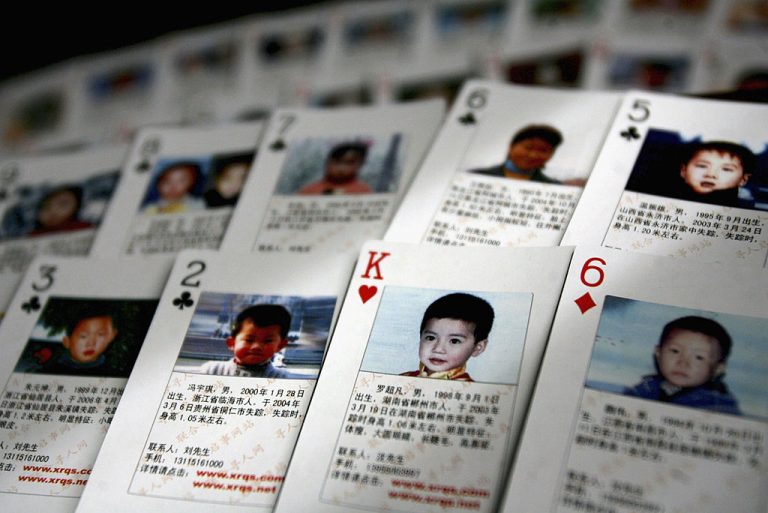
A Douyin blogger known as “Hongchen Zhuxun” shared a list on Nov. 22 titled “Partial Missing Persons from November 11–19.” According to the list, 79 people disappeared over a nine-day span, including a two-year-old child. The blogger noted that two cases involved mothers and daughters disappearing together.
The first case occurred on Nov. 11, when Zhang Aihua and her daughter went missing in Suixi, Anhui. On Nov. 14, a mother and daughter surnamed Jiao disappeared in Anyang, Hebei. The list also reported that three boys from Liangshan, Sichuan, went missing on Nov. 11.
Screenshots circulating online show multiple consecutive “missing” notices posted across social platforms.
On Nov. 22, Douyin user “Xixian Dongge” reported that three middle school students from Xianyang, Shaanxi, disappeared at the same time.
Success
You are now signed up for our newsletter
Success
Check your email to complete sign up
According to the blogger, 12-year-old Li Yishun from Zhaoren Middle School went missing on Nov. 19 along with classmates Li Fuhao and Wang Size. None had been found after more than three days.
Another blogger, “Tengfei Shuo,” said 15-year-old Wang Shasha from Guandu District in Kunming, Yunnan, has been missing since Oct. 29 without any updates.
A video posted by “Jingying Shuo” reported that 18-year-old Cao Xuan from Fangchenggang, Guangxi, had been missing for 68 days as of Nov. 21.
Earlier, on Nov. 12, the blogger “Lao Cunzhang Huage Keliandian” released a list titled “Missing Persons from November 1–11,” reporting 57 disappearances, most of them teenagers.
On Nov. 5, another user known as “Niu Ge [Spreading Positive Energy]” published a “Partial Missing Persons List from October 2–17,” listing 107 disappearances. The blogger wrote: “In just one month, so many children have gone missing. Once they disappear, they are almost impossible to find.”
Observers question why so many missing persons are never found
According to Minsheng Observation, citing the China Lost Population White Paper (2020), China recorded one million disappearances in 2020.
Unverified online claims suggest that 3.09 million people went missing in 2024.
A 2013 China National Radio report stated that around 200,000 children disappear each year, with a recovery rate of only 0.1 percent.
Observers note the apparent contradiction between these figures and China’s extensive surveillance network of approximately 700 million cameras, yet the majority of missing individuals remain unaccounted for.
A whistleblower known as Eric MY, described as a former member of a public security enforcement center in Jiangsu, told The Epoch Times in July that authorities often choose not to investigate. He claimed the issue is not an inability to locate missing persons but a refusal to file or pursue cases.
Eric alleged that police frequently focused on managing or detaining the parents rather than searching for the missing child. According to him, families who persisted in reporting cases or petitioning were sometimes held in the enforcement center.
He said: “Under normal procedures, we would report to the legal affairs office and use big data to check. With China’s surveillance system, even if a child were taken far away, we could find them. As long as we have a photo or a name, the Sky Eye system can automatically locate the person. It only takes five seconds.”
Eric added: “So why can’t they ‘find’ them? I’m telling you—they were taken for their organs. This is real.”
He claimed that internal approval was required to use the system and that “leadership would refuse,” leaving investigators unable to proceed without authorization.
Eric alleged that the organ harvesting network is state-directed, which is why searches for young and healthy individuals were blocked. According to him, police were permitted to search for older or mentally ill individuals but not for children or young people “because their organs are the healthiest and most valuable.”
The article notes that large-scale organ harvesting of Falun Gong practitioners has been documented internationally for years. According to Wang Zhi-yuan, chairman of the World Organization to Investigate the Persecution of Falun Gong (WOIPFG), the Chinese Communist Party began systematic organ harvesting after 1999, initially targeting Falun Gong practitioners and later extending to other detainees, ordinary citizens, and even infants.