By the Global Center for Quitting the CCP
At a pivotal moment in U.S.–China relations, former U.S. Ambassador-at-Large for International Religious Freedom Sam Brownback issued an unusually direct statement to Congress: the Chinese Communist Party (CCP) fears genuine religious freedom more than it fears American aircraft carriers or nuclear weapons. He also emphasized why Washington must elevate China’s religious-freedom crisis into the core of its national-security strategy.
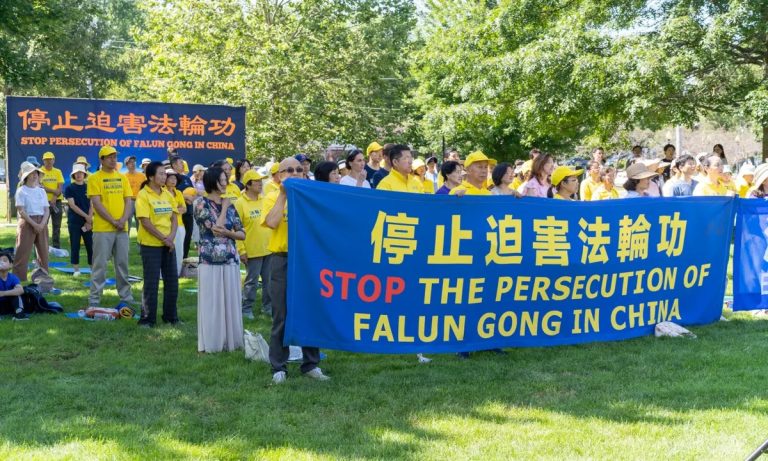
Speaking at a Nov. 20 hearing of the Congressional-Executive Commission on China (CECC), Brownback described Beijing’s persecution campaign, particularly against Falun Gong, as so systematic and brutal that it constitutes “genocide.”
More strikingly, Brownback singled out the Tuidang (“Quit the CCP”) grassroots movement, which was initiated by Falun Gong practitioners, and praised it as one of the most consequential forces undermining the CCP’s ideological control. He noted that millions of Chinese citizens have already declared their withdrawal from the Party and its youth organizations, calling the movement “a key step toward rebuilding religious freedom in China.”
RELATED: Former US Ambassador Sam Brownback: The CCP Is Waging War on Faith, But It Will Lose
A national security imperative
Success
You are now signed up for our newsletter
Success
Check your email to complete sign up
Brownback opened his testimony by thanking lawmakers from both parties and emphasizing that the CECC’s two decades of work had laid the foundation for today’s reassessment of U.S.–China policy. But he argued that Washington’s understanding of religious freedom has not kept pace with geopolitical reality.
“For far too long, we have treated religious freedom as a small piece of the human-rights portfolio,” he said. “But in our conflict with China, religious freedom is already a national security issue — and an urgent one. We must stop thinking of it as ‘just human rights’ and start placing it squarely within national security.”
RELATED: Hospitals in China Admit to Live Organ Harvesting of Falun Gong Practitioners
Brownback described Beijing as waging “a full-scale war” on all forms of faith — a campaign designed not only to eliminate independent belief inside China but also to challenge the moral foundations of the democratic world. “China fears religious freedom more than aircraft carriers or nuclear weapons,” he said.
According to Brownback, the scale of China’s repression reveals its deepest fear: “Beijing fears true religious freedom more than it fears aircraft carriers or nuclear weapons. They spend billions of dollars every year monitoring, harassing, and suppressing every religious person in the country.”
He highlighted the CCP’s ideological position that the Party must stand above all belief systems — a structure that inevitably places it in direct conflict with any faith that commands loyalty beyond the state. Under this framework, he explained, “Xi Jinping is the ‘god,’ not the one you believe in.”
This totalizing ideology is why the CCP views religion not merely as a cultural threat but as a direct challenge to its political survival.
Falun Gong: ‘The group the CCP fears the most’
Among all persecuted groups in China, Brownback said, Falun Gong stands out in a unique and powerful way. “Of all these groups, I want to speak especially about Falun Gong,” he testified. “The CCP fears Falun Gong more than anyone. This question has occupied me for a long time — why is that?”
His answer: Falun Gong grew entirely from within Chinese society and spread organically — an unregulated, bottom-up revival of moral belief. “It is the most indigenous of all these groups,” he said. “Like planting wheat in the soil of Kansas — it simply grows naturally. In just seven years, Falun Gong grew to 90 million practitioners. That terrified the Chinese Communist Party.”
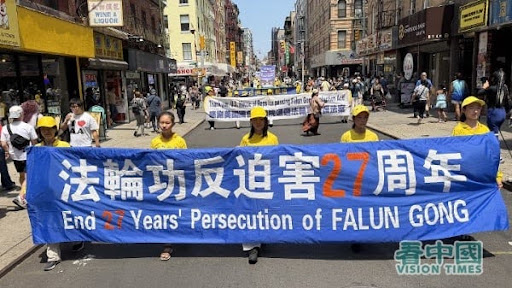
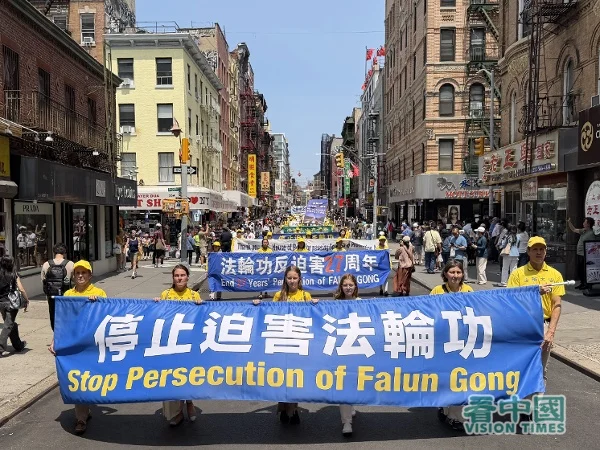
Because Falun Gong’s principles, Truthfulness, Compassion, Forbearance, offer a moral framework independent of the Party, Brownback argued that the movement inherently challenges the ideological foundations of CCP rule. Falun Gong, also known as Falun Dafa, is an ancient spiritual discipline founded by Mr. Li Hongzhi in China in 1992. Despite being peaceful in nature, the Chinese Communist Party (CCP) launched a brutal persecution campaign targeting the faith in 1999. The persecution has continued unabated for over two decades now.
He urged the U.S. government and democratic allies to work directly with Falun Gong practitioners, calling for:
- A formal recognition that the CCP’s persecution constitutes genocide.
- Official meetings between U.S. leaders and Falun Gong’s exiled representatives.
- Support for their efforts to help Chinese citizens break through Beijing’s censorship.
- Incorporation of these goals into long-term U.S. strategy on China.
A moral awakening
For Chinese audiences, the most impactful part of Brownback’s testimony was his public endorsement of the Tuidang movement — a moral and spiritual campaign initiated by Falun Gong practitioners to encourage Chinese people to symbolically renounce ties to the CCP. “Falun Gong has successfully registered millions of Chinese who have quit the Chinese Communist Party,” he said.
RELATED: Landmark ‘Falun Gong Protection Act’ Clears House With Unanimous Approval
In reality, the numbers are far larger. According to the Global Service Center for Quitting the CCP: Over 454 million people have declared their withdrawal from the Party and its youth groups, and more than 5.06 million have signed a global petition calling to “Eliminate the CCP Demon.”
Despite severe censorship inside China, millions have accessed uncensored literature — including Nine Commentaries on the Communist Party and How the Specter of Communism Is Ruling Our World — prompting them to make a moral break with the regime. Brownback described these declarations as acts of “spiritual awakening” and “moral choice,” foundational for “peacefully dismantling the machinery of totalitarianism.”
A war on faith
Condensing his years of research into a single thesis, Brownback said: “The CCP is at war with faith — and at war with us. We must stand firmly on the side of its opponents.” He explained that because communism replaces faith with Party supremacy, religion becomes the most powerful force capable of undermining authoritarian rule. This, he said, is Beijing’s greatest vulnerability.
RELATED: Communist China Ramps Up Efforts to Intimidate Shen Yun With Sabotage, Unhinged Threats of Violence
Brownback outlined a concrete national-security strategy for the U.S. and its allies, including:
- Formally integrating China’s religious-freedom crisis into U.S. national security objectives.
- Building an international coalition to support religious freedom for the Chinese people.
- Harnessing existing laws, including the Frank Wolf International Religious Freedom Act, to impose real sanctions on CCP officials who persecute religious groups.
- Ensuring the incoming administration will meet with the exiled leaders of persecuted communities, including: Falun Gong practitioners, Chinese Christians, Uyghur Muslims, Tibetan Buddhists, etc.
He emphasized that since the U.S. designated China a “Country of Particular Concern,” Beijing has “paid no price — not even a cent” for its religious-freedom violations. “This zero-cost persecution must end,” he said. Brownback concluded with a sobering reminder: the CCP’s war on faith is not only a domestic issue inside China — it is an ideological battle over the future of human dignity.
As more than 454 million people formally renounce the CCP, and as global awareness grows, he argued that the world is witnessing the early stages of a peaceful unraveling of communist totalitarianism.
“The United States and the free world must place China’s religious freedom at the center of national security strategy,” he said, “because in this struggle, the stakes are nothing less than the future of human freedom.”
For more information on the Global Center for Quitting the CCP, please visit the official site here.