By Fu Longshan, Vision Times
When the Bo Xilai scandal erupted more than a decade ago in 2012, international media flooded headlines with stories about “red princelings,” luxury villas, mistresses, Neil Heywood’s poisoning, and Bo Guagua’s champagne-soaked student life abroad. But at the same time, a series of heavyweight investigations — accusing the Chinese Communist Party (CCP) of torture, secret police black rooms, and forced organ harvesting — remained largely relegated to the margins.
But why did global coverage center on terms like “CCP palace intrigue” rather than the very allegations that cut to the heart of the regime’s legitimacy?
Bo Xilai built his early reputation through carefully choreographed public appearances, especially in Liaoning, where a few high-profile events helped elevate him as a rising reformist face. Once he became commerce minister, he leaned even harder into CCP theatrics. But to then–Vice Premier Wu Yi, the performance was style without substance, or worse, a “political liability.”
RELATED: Bo Xilai’s Fatal Arrogance: Words that Sealed the Fate of China’s ‘Billionaire Princeling’
A hidden machinery of power, violence, and organ harvesting
Success
You are now signed up for our newsletter
Success
Check your email to complete sign up
One of the most retold stories in Beijing political circles occurred at the Great Hall of the People. Before a major diplomatic meeting, Bo was dazzling foreign guests with polished English and effortless charm. Cameras loved him; he knew how to pose, smile, and command the room. When Wu Yi entered, Bo neither stood nor paused to let her assume the senior position. He simply kept performing. Wu Yi shot him a glance so cold that aides later described it as “cold as the Hai River in December.”
As the two transitioned between events, she reportedly said quietly but cuttingly: “Leadership is not performance.” The remark spread quickly. By 2007, Bo’s expected promotion to vice premier evaporated, and instead he was sent to Chongqing — a move wrapped in official praise but understood inside the Party as a controlled downgrading.
RELATED: Bo Xilai, Organ Harvesting, and the Mystery of China’s Pregnant Body Exhibit
Publicly, the Chongqing model was sold as a triumphant blend of “red culture,” anti-mafia campaigns, and social reforms. Inside the system, however, it operated as a tightly sealed dual-layer machine: A political spectacle above, and a coercive, largely unmonitored security apparatus below. Bo gave near-total control of local public security to Wang Lijun — a figure who was not simply a police chief but a hybrid operator of special investigations, surveillance, forensics, and even biomedical projects.
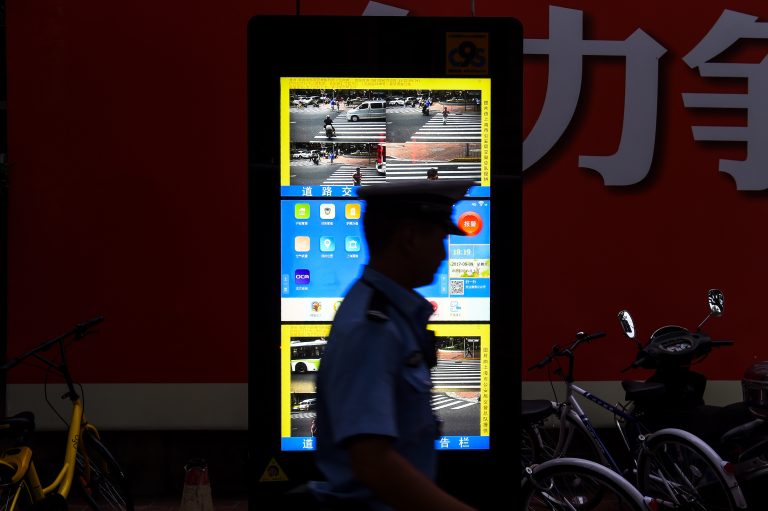
Under his watch, Chongqing expanded high-density surveillance networks, operated secret interrogation facilities, coordinated cross-provincial “technical experiments,” and handled sensitive cases entirely outside public scrutiny. Wang frequently boasted that Chongqing’s criminal-fighting technology “led the nation,” a claim that seemed ominously plausible once defectors later described methods involving prolonged sleep deprivation, water-based punishment cells, psychological coercion, and confinement.
Disturbing allegations of forced organ harvesting
Human rights researchers long noted unusual transplant activity in Chongqing during the 2000–2010 period. Hospitals such as Chongqing’s Daping Hospital saw transplant numbers surge, even though official donor programs could not possibly account for the volume. International investigators pointed to symptoms of a much deeper problem: exceptionally short wait times, donor “availability” that defied medical norms, and cases where families were denied access to bodies or autopsy results.
Wang Lijun himself raised international alarm when he publicly claimed that a “biotechnology center” he oversaw in Liaoning had “contributed to thousands of transplant operations.” His own words triggered scrutiny that later connected policing units with transplant facilities in ways medical ethicists found deeply irregular.
RELATED: University of Toronto Hosts ‘State Organs’; Viewers Demand Action Against Crimes Against Humanity
The Kilgour-Matas report, authored by former Canadian Secretary of State David Kilgour and human rights lawyer David Matas, concluded in 2006 that large-scale, non-consensual organ extraction from prisoners of conscience, especially Falun Gong practitioners, had “occurred and continues to occur.” Their findings were reinforced by DAFOH (Doctors Against Forced Organ Harvesting) and later by the 2019 International China Tribunal, which ruled that forced organ harvesting in China was “committed for years, on a significant scale, and constitutes crimes against humanity.”
These were not fringe voices. Their work has been cited in the U.K. Parliament, the Australian Senate, and academic ethics publications worldwide.
Turning a blind eye
Despite the weight of these investigations, international media overwhelmingly focused on the more salacious details (Ferraris, foreign lovers, power struggles, and family excess) while ignoring the obvious red flags. Human rights advocates have criticized this imbalance for years. Three dynamics explain it, experts note:
1. Scandal is easier to package than systemic crime.
A princeling’s fall from grace, complete with mansions and intrigue, is immediately digestible. A 100-page forensic analysis of unexplained transplant data is not.
2. It’s safer to report what Beijing is willing to tolerate.
Beijing has no issue with the world thinking “Bo was corrupt and the Party punished him.” But reporting on torture, black jails, or organ sourcing challenges the legitimacy of the entire political structure.
3. Investigating human rights abuses carries real risk.
Foreign correspondents often face visa pressure, surveillance, or expulsion. Newsrooms weigh access against coverage choices. The result is a global narrative engineered (whether intentionally or not) to protect the CCP’s structural vulnerabilities.
Bo’s fall from grace
For those who study the CCP’s security apparatus, Bo’s downfall was more than a corruption case. It posed an existential question: What would the world uncover if Bo had risen any higher?
After Wang Lijun fled to the U.S. Consulate in 2012 and spilled secrets, observers finally glimpsed how close Chongqing had come to becoming a semi-autonomous fiefdom: surveillance, propaganda, police power, public mobilization, and finances — all consolidated under Bo. “Bo Xilai’s fall allowed the Party to shut the door before anyone could look inside,” said one independent commentator.
Had Bo remained in power, deeper investigation into torture, black sites, or organ procurement systems could have triggered a legitimacy crisis for Beijing itself. Bo’s downfall became one of Beijing’s most successful exercises in redirecting global attention:
- To foreign audiences, it was framed as a political drama worthy of serialized storytelling.
- To domestic audiences, it was touted as proof that “no one is above the Party.”
- To the system itself, it conveniently deflected scrutiny away from policing abuses, organ sourcing irregularities, and systemic violence.
For researchers and survivors, however, the pain lies in what went unexamined. Years of testimony, data comparisons, and expert reports were overshadowed by a story more theatrical than consequential. As one medical ethicist lamented: “The tragedy is not that the crimes were hidden — it’s that the world chose not to look.”
If global audiences continue to consume “Chinese palace intrigue” as entertainment while ignoring the underlying machinery of abuse, then the CCP’s greatest ally is not its censorship system — it is the world’s own appetite for spectacle.
And with that blind spot, the same machinery remains fully intact, waiting to be turned on ordinary citizens, dissidents, believers, Hongkongers, Taiwanese, or anyone else who crosses the wrong line at the wrong time.
Editorial note: Views expressed in this article are the opinions of the author and do not necessarily reflect the views of Vision Times.