By Ran Xiao
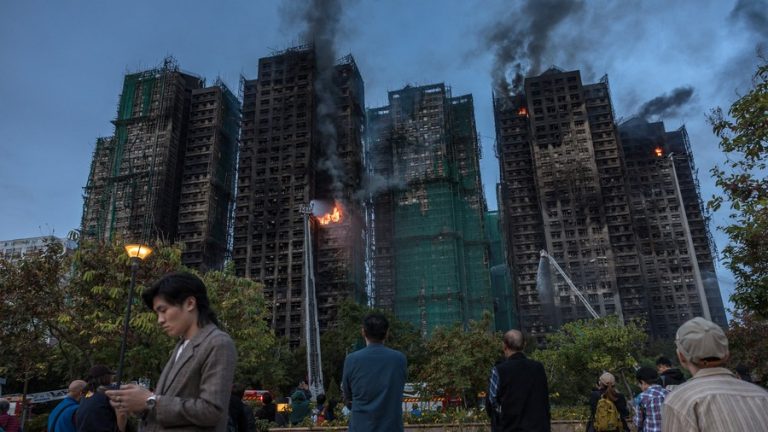
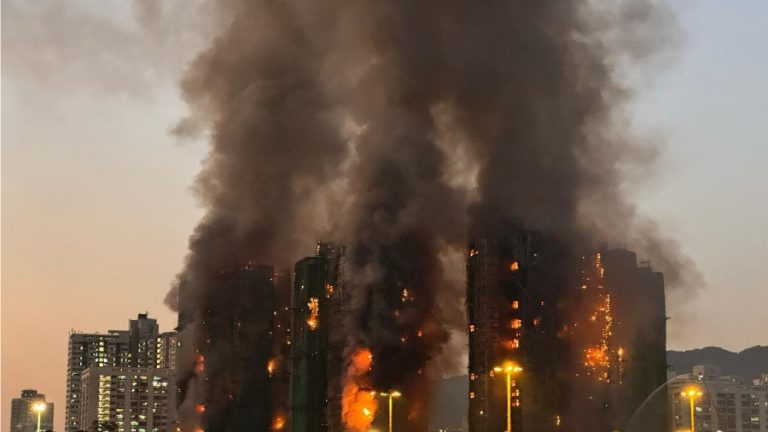
Hong Kong’s deadliest fire in recent memory tore through Tai Po’s Hong Fook Court on Nov. 26, killing 128 people and injuring 76. One firefighter and two Indonesian domestic workers were among the victims. Roughly 200 others remain unaccounted for, including 89 whose remains have yet to be identified.
The blaze engulfed seven residential blocks, spreading rapidly up the building exteriors. Temperatures remained dangerously high, preventing firefighters from approaching for hours. The alarm level rose to the highest tier at 6:22 p.m.
Fire Services officially concluded rescue and suppression efforts at 10:18 a.m. on Nov. 28.
The Hong Kong government has declared three days of mourning. Flags across government buildings were lowered to half-staff beginning Nov. 29, and condolence books were opened in all 18 districts.
Success
You are now signed up for our newsletter
Success
Check your email to complete sign up
The Independent Commission Against Corruption (ICAC) simultaneously launched a probe into suspected graft linked to the building’s major repair works. Eight people were arrested, including two directors of the consulting firm overseeing the renovation, two project managers, three scaffolding subcontractors, and one middleman.
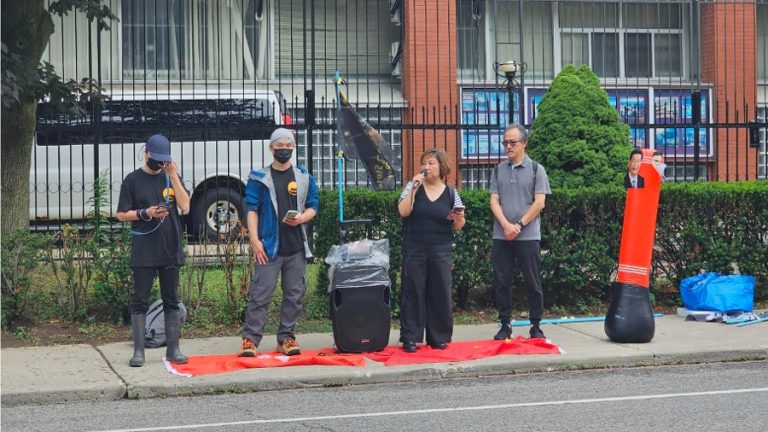
Painful memories for overseas Hongkongers
With nearly 300,000 Canadian citizens living in Hong Kong, the disaster resonated strongly among Hongkongers abroad. Many recalled the trauma of the 1996 Garley Building fire.
Former lawmaker Andrew To said he felt “deeply shaken,” citing the city’s long-standing failure to install automatic sprinkler systems in older high-rise buildings.
Leaders of the Hong Kong-Canada Association said the tragedy reflects a pattern increasingly common in the mainland—bid rigging, corner-cutting, and widespread use of substandard materials.
Authorities say the blaze began on exterior scaffolding, but experts insist the real accelerants were deeper: low-grade dust-control nets and combustible façade panels.
Hong Kong Parliamentary Assembly Speaker Kenneth Cheung told Vision Times the nets “should never have been used in an occupied estate,” noting they lacked flame-retardant properties and released toxic smoke.
Engineer Walter Wong agreed that nylon nets—not bamboo scaffolding—were the culprit. Bamboo, he noted, is not highly flammable, but nylon nets ignite quickly and intensify exterior fires.
Both said the incident highlighted systemic problems in Hong Kong’s material sourcing.
Power networks behind the repair contracts
Cheung argued that the underlying failure was not the ignition point but the system enabling dangerous materials in the first place.
He said building management committees—now dominated by pro-Beijing figures—control the multi-million-dollar repair funds collected from residents. Once political interests capture these bodies, contracts often go to mainland-linked firms using mainland materials and labor.
“This is why the quality collapses,” he said. “It’s a chain of decisions—not an accident.”
Wong added that some contractors have political affiliations, including connections to the Chinese People’s Political Consultative Conference, creating a near-total lack of oversight.
Cheung also questioned elements of the emergency response.
He noted reports of fire alarms failing to sound, the absence of water-drop support from the Government Flying Service, and the unexpected appearance of mainland fire and ambulance vehicles, despite incompatible medical and communication systems.
He warned that normalizing mainland emergency units in Hong Kong could create “serious risks,” including how victims are handled.
Cheung added that residents had complained for years about unsafe dust nets, but their reports were ignored—reflecting what he described as a system driven by “stability maintenance” rather than public safety.
Scapegoating bamboo scaffolding
After the fire, some narratives began shifting blame to bamboo scaffolding.
Cheung dismissed the claim as political spin. Bamboo scaffolding, he said, is a recognized heritage craft—flexible, durable, and still standing after the blaze—while the façade materials burned away.
He warned that if bamboo is banned, the replacement will be metal systems supplied by mainland companies, further entrenching political and commercial networks.
As the investigation unfolds, residents want answers:
- Why were non-compliant nylon nets used in a residential estate?
- Why did regulatory oversight fail for years?
- Why were fire alarms silent?
- Why were rescue protocols modified?
Overseas Hongkongers are asking a broader question: Can the city still uphold the standards that once differentiated it from the mainland system?
Cheung summarized the tragedy bluntly: “This wasn’t an accident. It was the result of many people choosing not to take responsibility.”
For Hong Kong, accountability—and a reckoning with its system—has only just begun.