By Li Zexu
Taiwan’s Legislative Yuan’s Procedure Committee met again on Dec. 9, and once more, the Executive Yuan’s proposed US$40 billion (approximately NT$1.25 trillion) special defense budget failed to make it onto the agenda.
Lawmakers from the Kuomintang (KMT) and Taiwan People’s Party (TPP) jointly voted it down, preventing the package from entering the Dec. 12 plenary session and halting its path toward committee review.
Inside the committee room, the Democratic Progressive Party (DPP) caucus attempted to move the bill forward by proposing that the Fiscal Revenue and Expenditure Division Act amendments and the Special Act for Strengthening Defense Resilience and Asymmetric Capabilities Procurement be added to the agenda.
TPP legislator Liu Shu-bin spoke in favor of submitting the draft agenda to the full chamber, while DPP legislator Fan Yun urged the committee to approve the report items and allow the proposal to advance.
Success
You are now signed up for our newsletter
Success
Check your email to complete sign up
She questioned why the Blue–White coalition continued to block the special defense budget, noting that the Executive Yuan had already discussed it with local governments and addressed many of the concerns raised earlier.
No room for substantive discussion
To her, the refusal to allow a first reading left no room for substantive discussion.
Fan also addressed the size of the budget, pointing out that although the full amount totaled US$40 billion, it was intended to be spent over eight years—around US$4.8 billion annually.
She argued that if concerns remained, lawmakers should raise them in committee, where expert review would be possible.
As committee convener, KMT legislator Weng Hsiao-ling handled the procedural sequence.
After legislators finished speaking on the report items and interpellation matters, Fan, representing the DPP caucus, proposed limiting the discussion to six bills, including amendments to the Professional Engineers Act, Telecommunications Management Act, Meteorological Act, Commercial Port Act, and Ship Act.
The vote ended evenly—nine in favor, nine opposed.
With the tie unbroken, Weng cast the deciding vote in support of Liu Shu-bin’s motion, sending the agenda draft to the plenary session.
Following the meeting, the DPP issued a press release stating that the Blue–White alliance had once again blocked the special defense budget and hindered Taiwan’s efforts to strengthen its defense capabilities.
DPP spokesperson Han Ying criticized the opposition for obstructing the bill at a time when “the threat of Chinese expansion is advancing step by step.”
She said the opposition was using excuses to stall the legislation and prevent it from entering a first reading, accusing them of echoing Beijing’s position and undermining Taiwan’s efforts to improve its defenses.
Han said the Blue–White camp continued to mislead the public by distorting the facts surrounding the bill, including the scale of the budget and its delivery mechanisms.
She argued that their claims were an attempt to obscure their own political motivations and that Taiwan needed to respond to authoritarian pressure by strengthening—not weakening—its security posture.
French lawmakers express support for proposed Taiwan budget
While Taiwan’s defense bill remained stuck in legislative limbo, several French lawmakers publicly voiced support for the proposed budget, saying they hoped Taiwan would pass and implement it to strengthen its defense and help maintain stability in the Indo-Pacific region.
National Assembly members Laurent Mazaury, Éric Bothorel, and former Assembly president François de Rugy each posted on X expressing approval of Taiwan’s efforts to reinforce defense resilience and support for President Lai Ching-te’s US$40 billion special defense plan.
Senator Olivier Cadic wrote: “Beijing brings the threat. Taiwan responds with resilience and President Lai Ching-te’s historic US$40 billion defense budget. Freedom is not negotiable—it must be defended. Freedom has a cost, but freedom is priceless.”
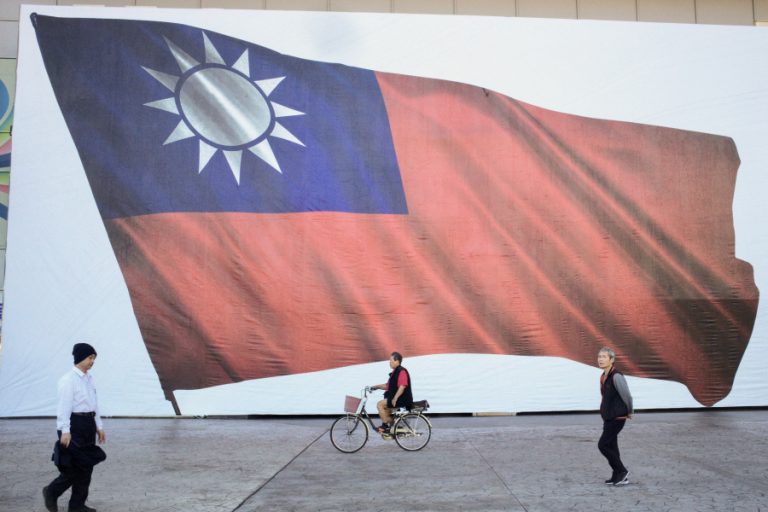
His post included an image of Taiwan’s flag and a link to Le Monde’s report on the proposal.
Brigitte Devésa, vice chair of the Senate Taiwan Friendship Group, wrote: “I commend President Lai Ching-te’s sense of responsibility. Faced with the significant threat from Xi Jinping, he is strengthening defense to protect Taiwan and stability in the Indo-Pacific region. For our security, France should strongly support this action.”
Else Joseph, also vice chair of the friendship group, added that President Lai was right to increase military investment to strengthen Taiwan’s defense capabilities.
She called it essential for freedom, democracy, regional stability, and global security.
Her post featured a photo of Lai with the words “There is no room for compromise in national security.”