By Yang Tianzi
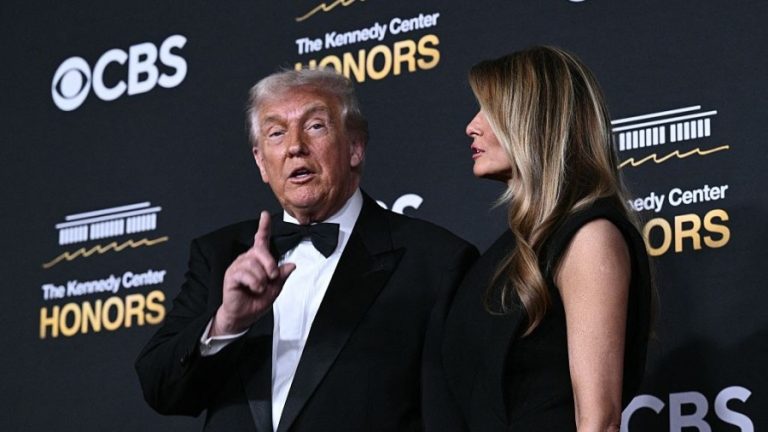
As the Russia–Ukraine conflict enters a potentially pivotal stage, President Donald Trump delivered an unusually blunt message on Dec. 7 during his appearance at the Kennedy Center Honors. Asked about the status of peace negotiations, Trump said he was “a little disappointed” that Ukrainian President Volodymyr Zelensky had not yet reviewed the latest U.S.-backed proposal aimed at ending the war.
“I must say, I’m a little disappointed, because as of a few hours ago, President Zelensky still hadn’t read the proposal,” Trump told reporters on the red carpet. His remark—soft in tone but sharp in implication—quickly drew global attention.
Trump: Zelensky’s hesitation is delaying progress
Trump emphasized that Washington is actively speaking with both Moscow and Kyiv. But he suggested the holdup is coming from the Ukrainian side.
“We’ve been talking to President Putin, and we’ve been talking to Ukrainian leaders, including President Zelensky,” Trump said. “I believe Russia is fine with it. I’m not sure Zelensky is. His people like the proposal, but he’s not ready.”
Success
You are now signed up for our newsletter
Success
Check your email to complete sign up
The comment, though brief, amounted to a diplomatic shockwave. It framed the Ukrainian leader—not the Kremlin—as the party resisting a potential breakthrough.
AFP reported that several days of talks between U.S. and Ukrainian officials concluded on Dec. 7 without clear progress, though Zelensky vowed to continue discussions “to achieve real peace.”
He later described his follow-up conversation with U.S. officials as “constructive,” noting that Ukraine remains committed to working “in good faith.”

Why Trump’s ‘disappointment’ matters
Trump’s statement was far from an offhand remark. For domestic audiences, it builds a narrative he has repeatedly leaned on: he has a plan to end the war, but Kyiv is the obstacle.
Since returning to office, Trump has spoken sharply about U.S. spending on Ukraine, questioning why American taxpayers continue to shoulder the burden. By publicly rebuking Zelensky, he positions himself as the one pushing for peace—while suggesting that Ukraine’s leadership is dragging its feet.
For Zelensky, the political risk is significant. Trump underscored that “his people like the proposal,” implying that Ukrainian public opinion diverges from its president’s stance. That framing exerts pressure both internationally and domestically.
Zelensky’s cautious response—avoiding direct confrontation—reflects the sensitive political balance he must maintain.
Meanwhile, the Kremlin was quick to express approval. Spokesman Dmitry Peskov praised the Trump administration’s new national security strategy, saying its emphasis on dialogue aligns with Moscow’s expectations.
RELATED: Rubio: Florida Talks With Ukraine ‘Productive’ as Zelensky Seeks France’s Support
Russian forces show gains on the battlefield
Trump’s remarks come as Russia appears to be making fresh territorial advances. According to DeepState, a mapping project linked to Ukrainian military observers, Russian forces seized 505 square kilometers in November—nearly twice the gains recorded in October.
Finnish defense analyst Marko Kastehelmi said Russia “clearly holds the upper hand,” while Ukraine’s forces, though not collapsing, are increasingly stretched.
This shift has given Moscow greater confidence at the negotiating table.
One key focal point is the city of Pokrovsk. After months of artillery strikes and drone and glide-bomb attacks, Russian forces broke through several surrounding settlements and pushed into the city. Hours before Trump’s comments, Moscow declared it had captured Pokrovsk—widely viewed as a calculated show of strength ahead of negotiations.
A Ukrainian drone operator, identified as Ihor, described worsening conditions: “Since September, things have slipped out of control. The lines are breaking because soldiers are exhausted. All this talk of peace progress is mostly for show. As long as Russia can keep pushing, it will.”
Trump’s criticism contains an implicit ultimatum
Trump’s remark that he is “disappointed” carries three embedded warnings for Kyiv:
U.S. aid may be tied to cooperation.
Trump has long questioned ongoing military assistance to Ukraine. His disappointment signals that future support could be scaled back if Kyiv refuses to engage with the proposed plan.
Zelensky risks diplomatic isolation.
By saying “Russia is fine with it” while Zelensky hesitates, Trump casts the Ukrainian leader as the primary barrier to peace.
Washington could bypass Zelensky.
Trump’s emphasis that “his people like the proposal” hints at pressure on Ukrainian public opinion—and the possibility of engaging actors beyond the presidency if needed.
Trump’s approach also highlights widening divisions between the United States and its European allies.
European leaders favor a slower, long-term diplomatic path paired with sustained military support.
Trump prioritizes a swift settlement and expects Europe to shoulder more of the burden.
Diplomats warn that ongoing talks remain fragile and vulnerable to shifts in U.S. policy. Trump himself has said resolving the Russia–Ukraine war is one of the most difficult foreign-policy challenges of his presidency.
A new phase of the war
Trump’s public expression of disappointment signals more than frustration—it marks a potential turning point.
It sends Zelensky a clear message: time is running short, and continued hesitation may jeopardize Ukraine’s most important alliance.
For Moscow, the message is encouraging.
For Kyiv, it raises the stakes.
And for the broader international community, it suggests that the trajectory of the war—and any possible peace agreement—may soon hinge on how Ukraine responds to Trump’s mounting pressure.