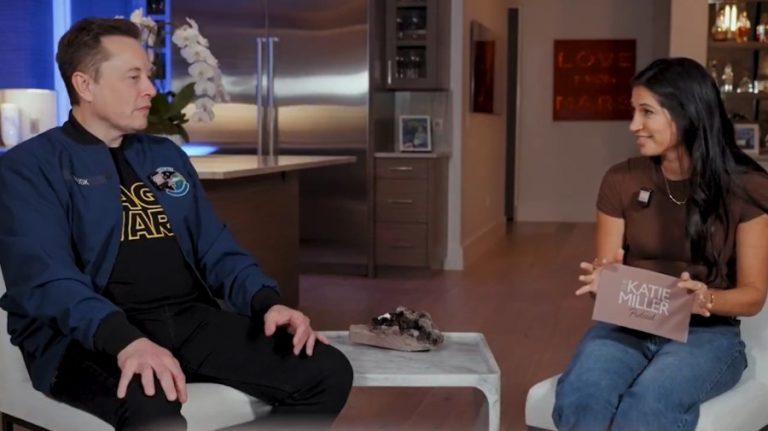
On Dec. 9, 2025, the world’s richest person and CEO of Tesla and SpaceX, Elon Musk, was interviewed by podcast host Katie Miller on The Katie Miller Podcast.
The nearly one-hour conversation covered multiple topics, ranging from political experiences and AI anxieties to personal beliefs and life philosophy. After airing on X (formerly Twitter), the episode quickly went viral, amassing millions of views and generating lively online interactions. Many praised Musk’s candor and depth, revealing a rare, serious, and reflective side of the tech mogul.
During the interview, Musk recounted his “surreal” experience earlier this year leading the U.S. Department of Government Efficiency (DOGE). Named after the Dogecoin meme, this temporary agency aimed to drastically cut government waste and bureaucracy. Musk described it as “somewhat successful,” successfully halting many meaningless expenditures. However, he admitted that if he could turn back time, he would not participate: “I would rather focus on my companies; that way, Tesla cars wouldn’t have been burned.”
Although DOGE closed early in 2025, Musk emphasized that it exposed deep corruption and conflicts of interest in the government. Once entrenched interests are challenged, pushback can be extremely fierce. This experience gave him a profound understanding of political complexity and led to periods where his companies faced boycotts and sabotage.
Regarding AI development, Musk unusually admitted that he is often haunted by AI-related nightmares, sometimes waking repeatedly for several nights. He stressed his hope that technology benefits humanity but said the rapid pace of AI growth worries him: “I’ve had many AI nightmares… If I could, I would try to slow down the development of AI and robots, but in reality, I can’t.”
Success
You are now signed up for our newsletter
Success
Check your email to complete sign up
He sees AI as a double-edged sword: both a driver of human progress and a potential threat. He also expressed fatigue over the constant pressures of the information age—managing multiple companies while facing global news and public opinion. The rapid mental switching, he said, is the true “mind killer.”
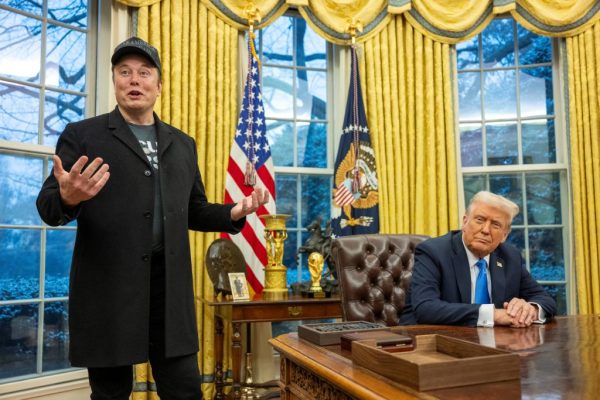
Musk jokes about Trump
On lighter topics, Musk joked that current President Donald Trump is “the most humorous person.” He praised Trump as “naturally funny, effortlessly,” citing an improvised joke during a White House meeting with New York state legislator Zohran Mamdani, which made the atmosphere both relaxed and absurd, leaving Musk laughing uncontrollably.
This segment not only showed Musk’s appreciation for Trump but also reflected their relationship evolving from early tension to later reconciliation.
The most significant part of the interview came when Miller asked Musk who he admires most. Departing from his usual humor, Musk became unusually serious and answered briefly: “The Creator.” When Miller asked about his view of God, Musk reiterated: “God is the Creator.” Asked if he believes in God, he said: “I believe this universe came from something. People have different labels.” This indicates that while Musk does not adhere to traditional religious frameworks, he firmly believes in a higher creative force behind the universe—an origin force beyond science.
This aligns with his previous pantheist or agnostic positions but is expressed here more clearly and affirmatively, sparking global discussion: how does a leading figure in technology balance rationality with faith?
Looking back on his life, Musk said the moments he most wants to relive include the birth of his children, SpaceX’s first orbital success, and Tesla cars running smoothly—highlighting his appreciation for family and achievements. He reflected on the rapid pace of the era, suggesting that the invention of short videos “may erode public consciousness” and criticized certain viral content as unnecessary.
Musk remains optimistic about human nature
Yet he remains optimistic about human nature, believing that raising human awareness and consciousness is key to understanding the universe. Musk also revealed future plans: expanding the Starbase in Texas to create new communities and industry centers, and optimizing X’s recommendation algorithm to surface more high-quality, interesting content and inject positive energy into the internet.
On a romantic note, he joked that the people he most wants to dine with are Shakespeare, Benjamin Franklin, and Nikola Tesla, with a simple cheeseburger as the menu.
This interview showcased Musk’s multifaceted personality—from political reflection to technological concern, humor to philosophical depth—while revealing a relentless entrepreneur who continues to push boundaries and contemplate humanity and the universe.
Whether discussing AI risks, government lessons, or reverence for “The Creator,” Musk’s insights are thought-provoking: in the pursuit of progress, how can we maintain inner peace and faith? This conversation has become one of the most memorable dialogues on technology and life at the end of 2025.