By Yang Tianzi
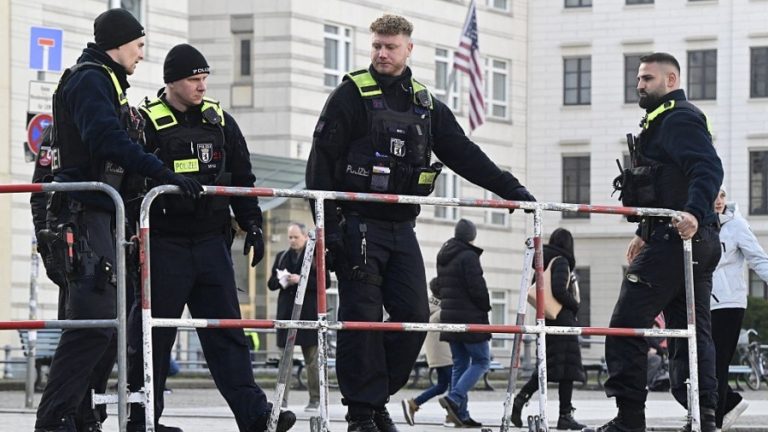
On Sunday, Dec. 14, Ukrainian President Volodymyr Zelensky announced that he will meet with representatives from the United States and Europe in Berlin, Germany, to discuss the “fundamental principles of peace.” This meeting marks a new diplomatic phase in the Russia-Ukraine conflict, with all parties actively seeking a ceasefire while attempting to secure Ukraine’s future safety and development. The Berlin talks take place in a complex context involving multiple interests, including the Trump administration’s new ceasefire plan, proposals for an expedited path for Ukraine to join the European Union, and the EU’s decision to freeze Russian assets. These developments intertwine to form the current framework for resolving the Ukraine issue.
Zelensky’s position and demands
In his statement, Zelensky emphasized that Ukraine needs “a dignified peace,” not just a simple ceasefire. This reflects the Ukrainian government’s bottom line regarding the conditions for peace. By “dignified peace,” Ukraine signals it is unwilling to make significant concessions on territorial sovereignty and will not accept any agreement that undermines its independence or national sovereignty. Crucially, Zelensky stated that any peace agreement must include reliable security guarantees to ensure that Russia, which invaded Ukraine in 2022, cannot launch another attack. This demand highlights Ukraine’s deep concern for long-term security and its distrust of a simple ceasefire agreement.
Ukraine’s concerns are not unfounded. Historically, the 2014 Minsk agreements failed to prevent Russia’s full-scale invasion in 2022, leading Ukrainian leadership to realize that peace agreements without substantial security guarantees may offer only temporary relief and cannot ensure long-term national safety. Consequently, the Zelensky government insists on concrete, enforceable security commitments in negotiations, potentially including NATO member guarantees, deployment of international peacekeeping forces, or other forms of collective security mechanisms.

The US ceasefire plan
According to the UK’s Financial Times and Agence France-Presse, the Trump administration is promoting an ambitious peace proposal, most notably arranging for Ukraine to join the EU by Jan. 1, 2026. This timeline is extremely aggressive, entirely overturning the EU’s traditional “merit-based” approach to admitting new members. EU accession normally involves 36 cumbersome stages, covering political, economic, and legal reforms, often taking years or even over a decade. For instance, Finland, the fastest acceding country, took nearly three years, while Turkey has been a candidate for nearly 30 years without formal membership.
Success
You are now signed up for our newsletter
Success
Check your email to complete sign up
The U.S. proposal aims to make Ukraine’s EU membership part of the peace agreement, effectively establishing it as a fait accompli. This seeks to provide Ukraine with long-term economic and political guarantees while potentially laying the groundwork for a future security framework. However, implementation faces significant obstacles. EU enlargement requires unanimous agreement from all 27 member states, and countries like Hungary have consistently opposed Ukraine’s membership. Hungarian Prime Minister Viktor Orbán maintains relatively friendly relations with Russia and has repeatedly blocked EU support measures for Ukraine.
Reports indicate that the U.S. strategy may involve direct pressure from President Trump on Orbán to stop vetoing Ukraine’s accession. This reflects U.S. intentions to exert a more direct influence in European affairs. Zelensky himself has said that he and his negotiation team have “adjusted our positions on several issues to align with the reality that Ukraine will eventually be an EU member,” and he believes the U.S. president has multiple leverage points to influence those blocking Ukraine.
EU internal divisions and challenges
Despite the U.S. proposal for rapid accession, EU reactions are mixed, with some clear resistance. An anonymous EU official bluntly said that 2026 is “like tomorrow” for the typically slow-moving EU, and the timeline is completely unrealistic. Even EU officials most supportive of Ukraine, such as those in charge of eastern enlargement, previously hoped Kyiv could join no earlier than 2030.
Sharper criticism comes from a European diplomat who called the plan “the Americans deciding for us,” labeling it “nonsense,” since EU enlargement requires the genuine consent of member states, which currently does not exist. This reflects European dissatisfaction with perceived U.S. overreach and the delicate tension in transatlantic relations.
Ukraine also faces substantive obstacles. Although it has sought EU membership, progress on anti-corruption reforms has been slow—key requirements for accession. Ukraine applied for membership shortly after Russia’s full-scale invasion in February 2022 and gained candidate status in June 2022, but it has yet to complete any of the 36 accession stages. French think tank Jacques Delors Institute expert Massic stated that, given the current situation, Ukraine joining the EU by 2026 is “completely unrealistic.”
Kost, responsible for EU eastern enlargement policy, noted in November that new members might require a multi-year probation period and could be expelled if democratic backsliding occurs. This shows that even if Ukraine is eventually admitted, it may face conditions and ongoing oversight, and membership would not solve all problems.
US diplomatic efforts
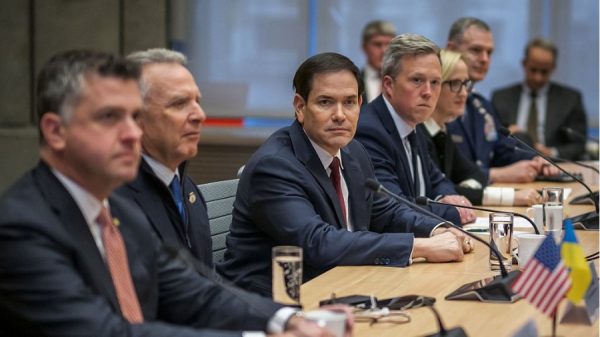
U.S. Middle East envoy Wickoff will travel to Berlin over the weekend to meet with European leaders and Zelensky, and on Dec. 14–15 will meet with counterparts from the UK, France, and Germany. This intensive diplomatic schedule shows that the U.S. government hopes to push the peace process forward quickly and bridge U.S.-Ukraine gaps on a peace plan. According to the Wall Street Journal, there are particularly large differences over territorial issues.
White House spokesperson Levitt said on Dec. 11 that President Trump is tired of “meetings for the sake of meetings” and wants to see substantive progress. Sending Wickoff to Europe indicates that the U.S. is serious about advancing the peace process, not just engaging in symbolic diplomacy. However, territorial disputes may pose the greatest obstacle. Russia currently controls about 20 percent of Ukraine’s territory, including Crimea and the eastern Donbas region. Ukraine insists on reclaiming all occupied territory, while Russia demands recognition of its control over these areas. How the U.S. balances these positions will be key to a breakthrough in peace negotiations.
EU decision to freeze Russian assets
On Dec. 12, the European Council made a major decision to indefinitely freeze roughly €210 billion of the Russian Central Bank’s assets held in EU member states. This changes the prior system, which required unanimous approval from 27 member states every six months to extend the freeze, providing a more stable legal basis for Ukraine to use these funds.
European Council President Costa stated on social media that EU leaders are committed to maintaining the freeze until the Russia-Ukraine conflict ends and Russia compensates for the damage caused. Strategically, this decision paves the way for the EU to use these assets as collateral for up to €165 billion in loans to Ukraine, called “compensation loans,” effectively fronting future Russian reparations to fund Ukraine’s 2025–2026 military and civilian budgets.
The Brussels-based international financial custodian, European Clearing Bank, currently holds €185 billion in frozen Russian assets. The EU hopes that indefinite freezing will persuade Belgium to support using the assets as loan guarantees. Ukrainian Prime Minister Svyrydenko called the EU decision “an important step toward justice and accountability,” strengthening the compensation loan mechanism.
This also prevents Russia-friendly Hungary and Slovakia from vetoing future related measures. Hungarian Prime Minister Orbán criticized the decision on Dec. 12, claiming it was passed via “qualified majority voting” (QMV) requiring agreement from only 15 member states representing 65 percent of the EU population, rather than unanimous consent, and accused EU leaders of overriding rules. Slovak Prime Minister Fico also wrote to Costa stating he would refuse to support Ukraine’s future military funding.
Russia protests EU action
In response, the Russian Central Bank declared the asset freeze illegal and filed a lawsuit in a Moscow court against the European Clearing Bank. According to The New York Times, the European Clearing Bank and the Belgian Foreign Ministry declined to comment.
Carnegie Moscow Center researcher Prokopanko, formerly with the Russian Central Bank, noted that while Moscow courts cannot compel the European Clearing Bank to comply, filing the suit leaves a formal record of Russia’s legal claims and serves as a political signal ahead of international litigation. Russia may seek to challenge the EU decision in international courts or pursue retaliatory measures against European institutions in other jurisdictions.
While the legal battle could last years, the EU currently controls the assets, making it unlikely Russia can reclaim them in the short term. More importantly, the decision signals to the international community that Western countries are willing to use economic means to support Ukraine and hold Russia accountable for its aggression.
Complexity and prospects of peace talks
The current peace process faces multiple challenges. First is the fundamental territorial dispute. Ukraine insists on reclaiming all occupied areas, including Crimea, while Russia demands recognition of its sovereignty over controlled regions. This is difficult to resolve diplomatically in the short term.
Second is the design of security guarantees. Ukraine needs reliable assurances to prevent future Russian invasions, but NATO member states remain divided over how to provide such guarantees. Some support Ukrainian NATO membership, which could provoke Russia; others propose alternative security arrangements, whose reliability is uncertain.
Third is EU enlargement. Rapidly admitting Ukraine faces technical obstacles and political will issues. Some members fear economic burdens and impacts on EU decision-making efficiency and cohesion.
Despite these challenges, there are positive signs. U.S. active involvement adds momentum, the EU’s asset freeze demonstrates substantial support for Ukraine, and the Berlin meetings create opportunities for direct dialogue.
The Berlin talks represent a key point in diplomatic efforts to resolve the Russia-Ukraine conflict. All sides are working to find a peace plan balancing competing interests, but the road ahead remains uncertain. While the expedited EU accession proposal is ambitious, it faces significant hurdles. The EU’s freezing of Russian assets and compensation loan decision provides concrete support for Ukraine but may heighten tensions with Russia.
A final peace agreement will require consensus on territorial sovereignty, security guarantees, and economic reconstruction, demanding political wisdom and compromise. For Ukraine, balancing core interests with pragmatic solutions will be critical in negotiations. For the EU and the U.S., coordinating positions and effectively pressuring Russia while avoiding further escalation will also be a major test.