By Yang Tianzi
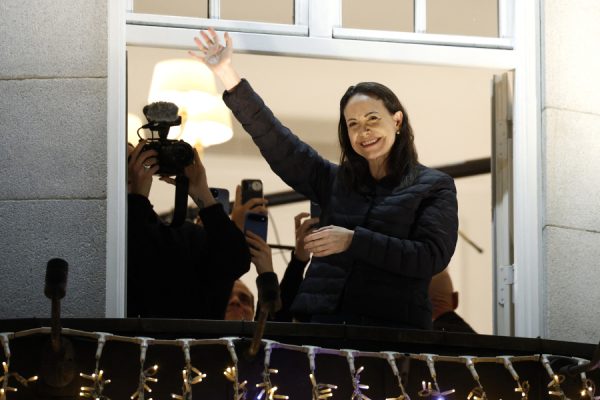
Late on the night of Dec. 10, 2025, an extraordinary scene unfolded outside Oslo’s Grand Hotel. María Corina Machado, dressed in a white suit, suddenly appeared on a balcony and smiled as she waved to supporters gathered below. It was her first public appearance in nearly two years.
“María! María!” the crowd shouted, phones raised to capture what many instantly recognized as a historic moment. The 58-year-old Venezuelan opposition leader waved, blew kisses, and sang with her supporters. In an even more dramatic moment, she crossed the security barrier and stepped directly into the crowd to interact with them. The scene added an unexpected climax to a day already marked by the Nobel Peace Prize ceremony earlier in Oslo.
Just hours before, the Norwegian Nobel Committee had said it did not know Machado’s whereabouts and could not confirm whether she would make it to Oslo. As a result, her daughter, Ana Corina Sosa, accepted the Nobel Peace Prize on her behalf during the official ceremony. Machado’s sudden appearance later that night stunned observers and underscored both her personal courage and her determination.
Nobel laureate Machado: ‘I knew exactly the risks of coming to Oslo’
When Machado stepped onto the balcony, the crowd erupted once again. Supporters chanted her name as she waved and sang along with them. The Venezuelan opposition figure—often described as the country’s “Iron Lady”—shared an emotional moment with those who had waited for her.
Success
You are now signed up for our newsletter
Success
Check your email to complete sign up
For Machado, the appearance was more than a political statement; it was also a long-delayed family reunion. For the safety of her children, she had previously sent all three out of Venezuela. In an emotional interview with the BBC, she said that for more than 16 months she had been unable to hug or touch anyone.
“I missed my children’s graduations. I missed my daughter’s and my son’s weddings,” she said. “And suddenly, in just a few hours, I could see the people I love most, touch them, cry and pray together.”
Rosaries hung around her neck—gifts from supporters outside the hotel. Each set of beads, she said, carried the prayers of Venezuelan families longing for freedom and democracy.
A Hollywood-style escape: a deadly journey through ten checkpoints
That Machado was standing in Oslo at all seemed almost impossible. The Maduro government had imposed a decade-long travel ban on her, labeled her a “fugitive,” and accused her of terrorism and treason. Just a month earlier, Venezuela’s attorney general had publicly warned that if she traveled to Norway to accept the Nobel Prize, she would face immediate arrest on charges of “plotting, inciting hatred, and terrorism.”
According to details reported by The Wall Street Journal and later confirmed by Machado herself, her escape was the result of a two-month covert operation involving multiple parties. To evade capture, she disguised herself and passed through at least ten military-controlled checkpoints.
Her final route out of Venezuela was the most dangerous: departing from a remote fishing village and crossing border waters in a rudimentary wooden boat.
The operation relied on an underground network that assists dissidents in fleeing authoritarian states—and, Machado acknowledged, on discreet support from the U.S. government. Asked directly at a press conference, she confirmed it.
“Yes, we did receive support from the U.S. government,” she said. “They say I am a terrorist and want me imprisoned for life. They are hunting me. Leaving Venezuela under these conditions was extremely, extremely dangerous. I am here because many men and women risked their lives to help me.”
Sitting beside her during a BBC interview, Norwegian Nobel Committee Chair Jørgen Watne Frydnes described the journey as “extraordinarily dangerous.”
“To see you late at night was unbelievable,” he said. “It is hard to put into words what this means for the Nobel Committee and for all of us.”
From engineer to symbol of democracy: two decades of resistance
To understand Machado’s resolve, one must trace her path from professional life into open confrontation with power. Born on Dec. 7, 1967, she holds a degree in industrial engineering and initially built a career in the private sector.
In 2002, she co-founded the NGO Súmate, dedicated to promoting electoral transparency and civic participation in Venezuela. The organization propelled her into public life and placed her on a collision course with Hugo Chávez and, later, Nicolás Maduro.
Elected to the National Assembly in 2010, Machado became known for her uncompromising criticism and direct confrontations with the government. She openly challenged Chávez’s economic policies and denounced violations of private property, earning her the nickname “the Iron Lady of Venezuela.”
The cost was high. In 2014, she was stripped of her legislative seat, barred from leaving the country, and repeatedly disqualified from running for office.
In 2023, despite being officially barred, she entered the opposition’s primary election and won more than 90 percent of the vote—demonstrating her enduring support among Venezuelans. When the Supreme Court upheld her disqualification from the 2024 presidential election, she backed substitute candidate Edmundo González.
Although exit polls showed González winning by a wide margin, the Maduro government declared victory. The election was widely regarded internationally as neither free nor fair.
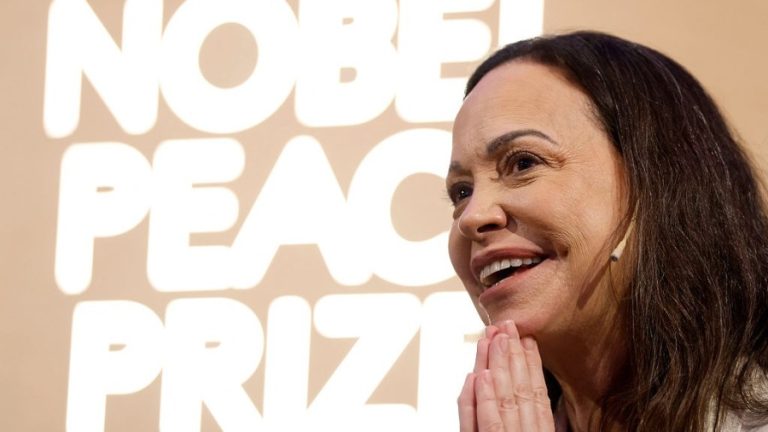
Citing her “efforts for a just and peaceful transition from dictatorship to democracy in Venezuela,” the Nobel Committee awarded Machado the 2024 Nobel Peace Prize.
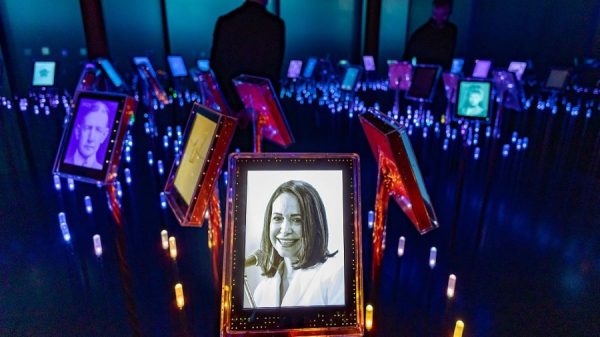
‘Not just a dictatorship, but a transnational criminal organization’
From the global stage, Machado delivered a blunt message: the Maduro regime is not merely authoritarian—it functions as a transnational criminal organization.
“We must treat this regime as a criminal structure, not just a traditional dictatorship,” she said in her BBC interview. She accused the government of sustaining itself through drug trafficking, illegal gold mining, and human trafficking, and urged the international community to help Venezuela “cut off those criminal revenue streams.”
She argued that accepting this framework would fundamentally change how the world responds to Caracas—from conventional diplomatic pressure to tougher anti-crime measures.
Machado said her team is prepared to form a government and that she had proposed talks with Maduro’s camp to discuss a peaceful transition. “They refused,” she said.
Asked whether she supported U.S. military strikes inside Venezuela, Machado avoided a direct answer, instead accusing Maduro of “handing our sovereignty over to criminal organizations.”
“We do not want war, and we are not seeking war,” she said. “It is Maduro who has declared war on the Venezuelan people.”
The Trump factor and escalating US pressure
The United States played a significant role in Machado’s journey and in the broader Venezuelan crisis. President Donald Trump’s hard-line stance has aligned, at least tactically, with Machado’s calls for tougher action.
After the Nobel announcement in October, Machado publicly praised Trump. On the same day she arrived in Oslo, Trump announced that U.S. forces had seized an oil tanker off Venezuela’s coast, accusing it of violating sanctions and participating in an “illegal oil transport network supporting foreign terrorist organizations.”
The move was widely seen as a major escalation in pressure on the Maduro government—and a real-world illustration of Machado’s argument about cutting off criminal funding.
Trump’s focus on Venezuela is also linked to migration. The country’s political and economic collapse has driven millions to flee, creating one of the worst refugee crises in the Western Hemisphere. From Washington’s perspective, supporting a democratic transition in Venezuela aligns not only with stated values but also with U.S. national interests.
The ripple effect of the ‘Oslo moment’
Machado’s dramatic appearance in Oslo had consequences far beyond the ceremony itself. It showcased the resilience and organizational capacity of Venezuela’s opposition, even under extreme repression. It also pushed Venezuela’s democratic crisis back onto the international agenda.
The episode has inspired opposition movements in other authoritarian states, offering proof that perseverance and courage can still create openings in the darkest conditions.
Latin American leaders, including Argentina’s President Javier Milei and Ecuador’s President Daniel Noboa, attended the ceremony—signaling regional support for Venezuela’s democratic cause.
‘Of course I will go back’
Despite the applause and the long-awaited reunion with her family, Machado announced a decision that stunned many: she intends to return to Venezuela.
“Of course I will go back,” she told the BBC. “I know exactly what risks I am taking. I will be where I can be most useful to our cause. Until recently, I believed I had to stay in Venezuela. Today, for our cause, I believe I had to be in Oslo.”
Her words captured the dilemma she faces. Returning almost certainly means arrest—or worse. Yet exile, she believes, contradicts her lifelong commitment to stand with her people.
One woman, one nation’s fate
Machado standing on the balcony of Oslo’s Grand Hotel—dressed in white—may become one of the most enduring images of Venezuela’s democratic struggle. The contrast between her appearance and the violence and repression she opposes was stark. The rosaries around her neck symbolized countless families’ prayers for freedom.
Her journey to Oslo was not simply an awards trip. It was a declaration of resilience and resolve, a brief emergence into the global spotlight before a likely return to danger.
Venezuela’s road to democracy remains long and uncertain. But as long as figures like María Corina Machado persist—and as long as ordinary Venezuelans continue to yearn for freedom—hope, she insists, will not be extinguished.
Her promise—“Of course I will go back”—is not only a pledge to her people, but a reminder to all who value liberty: courage is not the absence of fear, but the decision to move forward despite it.