U.S. President Donald Trump announced on Monday, Dec. 22, the launch of a new battleship program named the “Trump Class,” a centerpiece of efforts to expand naval construction and reshape a so-called “Golden Fleet,” while placing greater pressure on the long-standing problems of defense-industry production delays and cost overruns.
According to Reuters, Trump said the next-generation battleships would be “bigger, faster, and 100 times more powerful than any battleship ever before,” serving as a key symbol of the United States’ consolidation of maritime dominance. The program will begin with two vessels and gradually expand to 20–25 ships, with the lead ship to be named USS Defiant.
Trump also said he would personally participate in the ships’ appearance and design, calling it part of a broader effort to “rebrand” federal government projects.
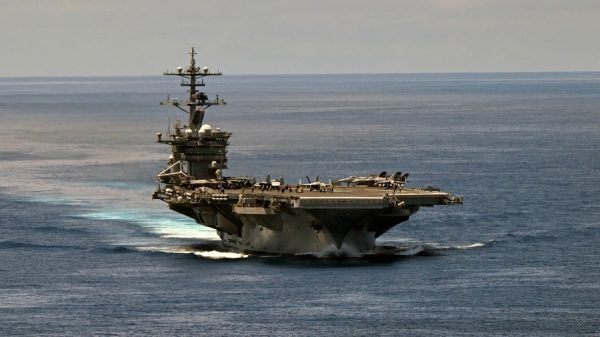
Trump Class firepower configuration and technological positioning
Trump noted that the United States has not built a battleship since 1994, and said the Trump Class would become the “most lethal surface combat platform” aside from submarines.
He said the new ships would displace more than 30,000 tons—significantly larger than current destroyers—and would be equipped with artificial intelligence systems, directed-energy lasers, and other cutting-edge technologies. Navy Secretary John Phelan added that, in addition to traditional naval guns, the ships would also be fitted with sea-based cruise missiles with nuclear capability.
Success
You are now signed up for our newsletter
Success
Check your email to complete sign up
Fox News reported that Trump, speaking at Mar-a-Lago in Florida, emphasized that the new ships would combine missiles with traditional naval artillery and could be equipped with hypersonic missiles, electromagnetic railguns, and high-energy laser systems, serving as the U.S. Navy’s flagship force.

Trump denies targeting China, emphasizes ‘all potential adversaries”
In response to interpretations that the program is aimed at China, Trump explicitly denied this. He said the fleet expansion “is not directed at China, but at all potential threats,” adding that he has a good relationship with Chinese President Xi Jinping and stressing that the goal is to “achieve peace through strength.”
However, some U.S. officials have warned that the long absence of large surface combatant construction has, to some extent, allowed China to gain advantages in scale and production capacity.
Reuters reported that Trump plans to meet with major defense contractors next week to demand faster production, tighter cost controls, and a review of whether executive compensation, dividends, and stock buybacks are affecting delivery efficiency. He said he does not want to see corporate executives earning tens of millions of dollars annually while key projects such as the F-35 face prolonged delays.
The Trump administration has elevated shipbuilding to a White House–level priority. In April, Trump signed an executive order declaring the decline of U.S. shipbuilding and the maritime workforce a national security risk, calling for comprehensive industrial reform, stable long-term funding, and strengthened workforce development.
At the same time, reforms are also being pushed within the Navy. Phelan warned that the Navy must accelerate ship and weapons production “as if at war” to address the widening gap in shipbuilding capacity between the United States and China. Currently, the U.S. Navy has about 294 warships, while China’s active fleet has surpassed 370 vessels, the largest in the world.