By Wang Jun
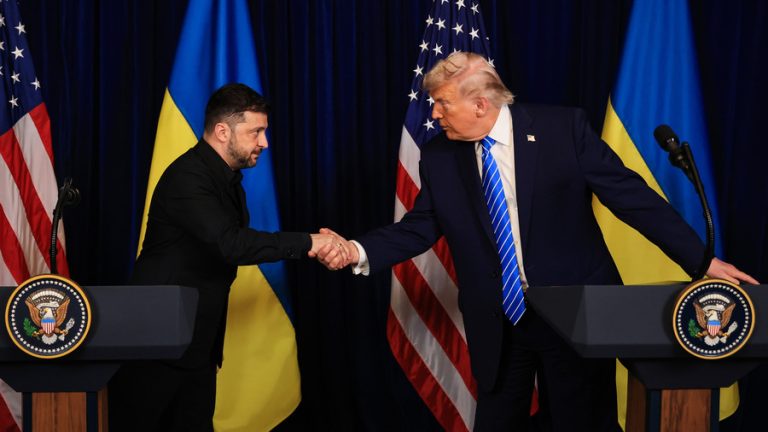
On Dec. 28, U.S. President Donlad Trump described his meeting with Ukrainian President Volodymyr Zelenskyy in Florida—which lasted nearly three hours—as “very good,” and said a peace agreement to end the Russia–Ukraine war is “quite close.” He said he would not give a percentage for the progress, but if he had to, negotiations are probably about 95 percent complete. The two sides have made clear progress on many key issues; however, the status of the Donbas region remains a difficult problem.
Speaking publicly alongside Zelenskyy at Mar-a-Lago, Trump said they discussed many issues and that he truly believes they are very close—perhaps extremely close—to reaching an agreement, and that “substantial progress” has been made toward ending the war. He also acknowledged that there are still “one or two very tricky issues” yet to be resolved.
Donbas issue hard to resolve
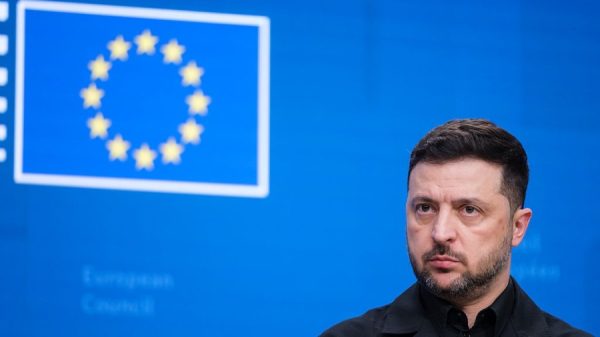
Trump noted that Russia’s demand for Ukraine to cede the eastern Donbas region remains one of the main unresolved issues. “That is of course a major issue,” he said, “but I think we are also closer to consensus on this.”
Previously, the U.S. side had proposed an idea suggesting that after Ukraine withdraws its troops, a “free economic zone” be established in parts of Donbas as part of peace negotiations with Russia. Russia has been fighting in the Donbas region since 2014, encompassing the Donetsk and Luhansk oblasts, and is now seeking—through U.S.-brokered peace talks—to achieve long-standing objectives it has not fully accomplished through military means.
Ukraine and US teams may meet again as early as next week
Success
You are now signed up for our newsletter
Success
Check your email to complete sign up
Although Trump expressed confidence in the outlook for negotiations, he emphasized that the talks are extremely complex and did not provide a clear timetable. He said, “I think in the next few weeks we’ll know whether it succeeds or fails,” while also not ruling out unforeseen variables that could derail the entire effort—“perhaps an issue you didn’t anticipate becomes the key obstacle.”
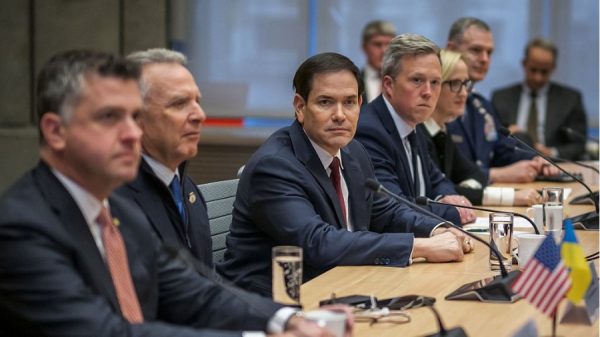
Zelenskyy later posted on the social media platform X, adding that Ukrainian and U.S. teams “may meet again as early as next week” to finalize the remaining unfinished parts of the peace plan. He said both sides have agreed that Trump will host a meeting in Washington in January next year, and that Ukrainian and European leaders have been invited.
Zelenskyy wrote: “We have discussed all layers of the peace framework and achieved important results, and we have also agreed on the sequence of follow-up actions.” He emphasized that both sides agree “security guarantees are a key element on the path to achieving lasting peace.”

Russian deputy foreign minister: Russia and US positions closer on resolving the conflict
At present, the main sticking points in Russia–Ukraine peace talks—besides Russia’s demand that Ukraine relinquish the remaining roughly 20 percent of Donetsk territory—also include disagreements over the future handling of the Zaporizhzhia Nuclear Power Plant, Europe’s largest nuclear facility currently under Russian control. Ukraine wants the plant to be jointly operated by the U.S. and Ukraine after the war, while Russia insists it must also participate in operations.
Russian Foreign Minister Sergei Lavrov said today that Zelenskyy and Europe are “not yet ready for constructive dialogue,” calling Europe the main obstacle to Russia–Ukraine peace. He said Moscow remains committed to cooperating with the United States to formulate a long-term agreement that addresses the root causes of the conflict.
In a video released on the evening of the 27th, Putin accused Ukraine of being the party obstructing conflict resolution, stating that if the authorities in Kyiv are unwilling to end the conflict through peaceful means, then Russia will achieve the objectives of its “special military operation” through military means.
On the 26th, Russia’s state news agency TASS cited Russian Deputy Foreign Minister Sergei Ryabkov as saying that on resolving the Russia–Ukraine conflict, Russia’s position is actually closer to that of the United States. However, he said it would be inappropriate to set deadlines and noted that the plans discussed between Washington and Moscow differ significantly from those publicly announced by Ukraine.