By Yang Tianzi, Vision Times
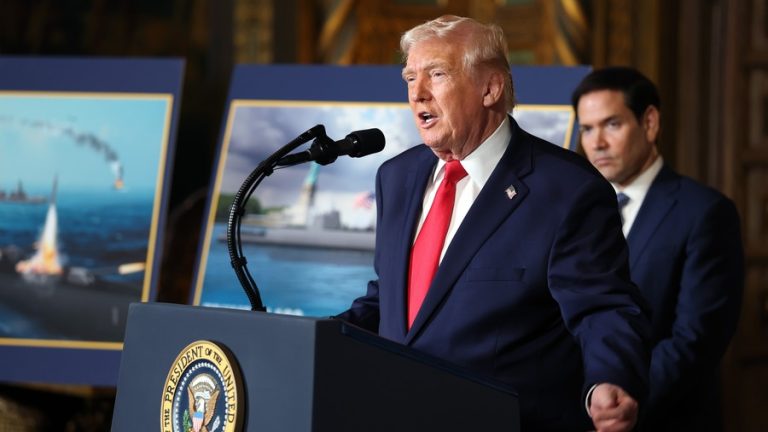
An economic protest that began in Tehran’s commercial district has, in just one week, evolved into an international crisis that could reshape the Middle East. On Jan. 1 local time, U.S. President Donald Trump issued a stern warning via his social media platform, Truth Social, stating that if Iranian authorities use lethal force against peaceful protesters, the United States will “go to their rescue.” This statement instantly pushed Iran’s domestic economic crisis to the brink of geopolitical confrontation.
Trump’s warning came shortly after the first reported deaths in the Iranian protests. According to Iranian media, at least six people were killed on Jan. 1 in clashes across three Iranian cities. This bloody turn not only marks a major shift in the Iranian government’s stance toward the protests but also foreshadows further deterioration in U.S.-Iran relations.
6 deaths trigger international crisis, Iran protests at the end of 2025 escalate into geopolitical confrontation
“We are ready to act.”
Trump’s statement on Truth Social was firm and direct: “If Iran opens fire and violently kills peaceful protesters, as they always do, the United States will go to their rescue.” He added, “We are ready to act. Thank you all for your attention to this matter!”
Success
You are now signed up for our newsletter
Success
Check your email to complete sign up
The statement carries multiple implications. Trump explicitly characterizes the Iranian authorities as a regime that habitually uses violence for suppression, linking the current crisis to Iran’s past record of crackdowns through the phrase “as they always do,” providing a form of moral justification for potential intervention. The phrase “ready to act” suggests the U.S. may already have concrete response plans in place, serving both as a warning to the Iranian government and a strong show of support for the protesters.
However, what “going to their rescue” actually entails remains open to interpretation. From a policy perspective, possible options include:
- Economic and diplomatic measures: Increasing sanctions on Iran, especially targeting officials and institutions involved in the crackdown; pushing for stricter resolutions at the UN and other international organizations; freezing Iranian overseas assets to further cut its ties with the global financial system.
- Technical and information support: Providing communication technology to help protesters bypass internet restrictions; increasing investment in Persian-language media to amplify protesters’ voices; using cyber operations to disrupt Iranian government command and communication systems.
- Military deterrence and limited strikes: Increasing military deployments in the Persian Gulf; conducting precision strikes on Iranian security facilities; establishing some form of “no-fly zone” to protect protesters; possibly supplying arms to anti-government forces.
Notably, Trump deliberately kept the policy vague, allowing the U.S. operational flexibility while maximizing its deterrent effect on Iran.
Bloody turn: 6 deaths change the game
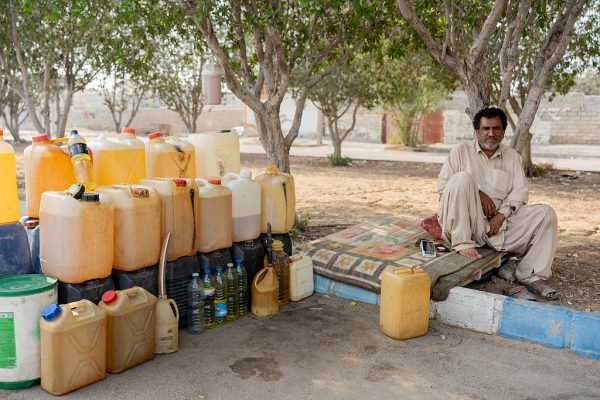
The immediate trigger for Trump’s warning was the first reported deaths in the Iranian protests. According to Iranian media, at least six people were killed on Jan. 1 in Isfahan, Shiraz, and other cities. While official explanations for the deaths were vague, videos circulating on social media showed security forces using live ammunition and tear gas in multiple locations, clashing violently with protesters.
The emergence of these deaths indicates a major shift in the Iranian government’s protest response strategy. In the days preceding the protests, authorities took a relatively restrained approach, avoiding inflammatory labels such as “rioters” in state media, while President Masoud Pezeshkian promised dialogue with protest representatives. However, as protests grew in scale and political demands became more radical, hardline forces may have begun to assert themselves.
This bloody turn recalls the “Hijab Revolution” of autumn 2022. The death of Mahsa Amini sparked months of nationwide protests, ultimately claiming hundreds of lives. History now seems to be repeating itself, but this time, the U.S. president has clearly drawn a “red line.”
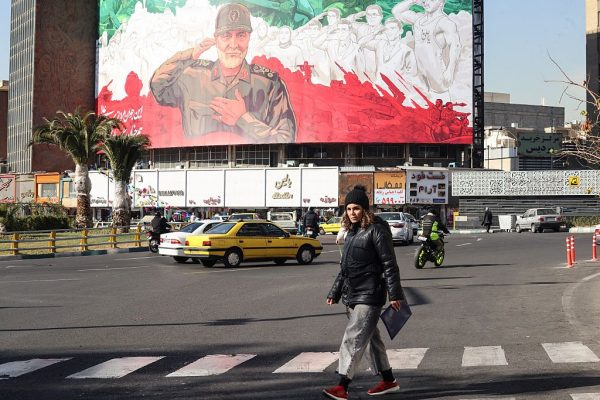
Crisis origin: from currency collapse to nationwide protest in 72 hours
To understand the severity of the current crisis, it is necessary to review the origins and rapid evolution of this protest wave.
At the end of December 2025, Iran’s economy was on the brink of collapse. On Dec. 27, the rial hit a historic low of 1 USD to 1.38 million rials, falling further to 1.44 million rials on Dec. 28. Depreciating nearly 50 percent over the year, with inflation hitting 50 percent in December, ordinary citizens saw their purchasing power halved in just twelve months.
For Tehran mobile phone vendors, highly dependent on imported goods, this dramatic devaluation meant business collapse. On Dec. 28, desperate merchants made a historic decision: they collectively shut their shops and took to the streets.
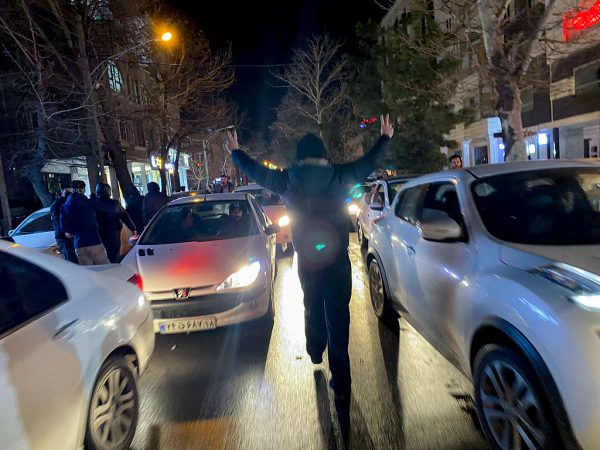
Protests spread nationwide at remarkable speed. Tehran resident Yasser recalled, “Merchants in the clothing district pulled down their shutters, shouted slogans, and marched. The crowd quickly grew to hundreds, urging other businesses to close as well. Those who refused were cursed, while those who joined were cheered.”
By Dec.29, protests had appeared outside Tehran, including on Qeshm Island in the Persian Gulf, and in western cities such as Sanandaj and Hamadan. By Dec. 30, the wave of protests had engulfed major cities including Kermanshah, Shiraz, and Isfahan. Participation also rapidly broadened: from merchants to students, workers, and other sectors, forming a cross-class movement.
A notable feature of these protests is that they were initiated by traditional merchants. In Iran’s political-social structure, bazaar merchants have long been seen as an important support base for the regime. The Washington Post noted that it is rare since the 1979 Islamic Revolution for protests to be initiated by traditional merchants, showing that severe economic hardship has crossed class lines, with even traditional allies of the regime rebelling.
Protests quickly expanded from economic issues to targeting the ruling class. A video from an indoor mall in Tehran on Dec. 29 showed people chanting “down with the dictator,” while other footage captured crowds praising the former Pahlavi monarchy. By the evening, university students, key drivers of past protests, had joined, followed by truck drivers’ guilds issuing statements of support.
Deep-rooted crisis: the heavy burden of war
The current protest wave is not a spontaneous event but the culmination of years of structural problems.
Since Trump’s first term withdrawal from the Iran nuclear deal in 2018 and the resumption of sanctions, Iran’s economy has been suffocating. Sanctions targeted oil exports, the banking system, and foreign exchange channels, causing Iran’s foreign currency revenue to collapse and blocking normal access to international financial networks. In September 2025, European nations began preparing to reinstate UN sanctions, citing Iran’s violations of the nuclear agreement, further isolating the country internationally.
The June 2025 “Iran–Israel 12-day conflict” not only caused military facility losses but also drained the treasury due to massive war expenditures. Ongoing war threats have driven foreign capital withdrawal, worsening economic hardship. Ordinary citizens face dual pressure: shrinking incomes and the constant threat of bombs.
Trita Parsi, deputy director of the Quincy Institute for Responsible Statecraft, noted that President Pezeshkian publicly admitted being “powerless” regarding economic issues before the protests, an unusual candidness that further heightened public panic. When government leaders admit helplessness, public trust in the system collapses.
Tehran’s strategic dilemma: the choice between suppression and compromise
Facing Trump’s “red line warning,” the Iranian government is in an unprecedented strategic dilemma.
According to the regime’s usual logic, the only response to survival-threatening protests is iron-fisted suppression. However, Trump has clearly drawn a red line. A large-scale crackdown could trigger direct U.S. military action. After the June conflict with Israel, Iran’s military defenses have not fully recovered, leaving it unable to withstand an attack.
If authorities refrain from suppression, protests will likely continue to expand. Merchants’ strikes have already heavily impacted the economy, and ongoing street movements could paralyze governance. More dangerously, protesters are chanting slogans in support of the Pahlavi monarchy, directly challenging the legitimacy of the Islamic Republic.
So far, Iran’s response appears hesitant. While official stances have remained firm during the first four days of protests, state and pro-government media have avoided labeling protesters as “rioters,” a contrast to past disturbances. The president has attempted a “listening” role, promising dialogue and reform. However, Supreme Leader Ayatollah Ali Khamenei remains silent, a significant political signal. Last night’s bloodshed indicates that hardline forces may have lost patience and begun taking more aggressive action.
International maneuvering: complex struggles among multiple powers
Trump’s warning has pushed this crisis onto the international stage, triggering chain reactions.
For the U.S., Iran’s internal turmoil is both a challenge and an opportunity. Supporting Iran’s pro-democracy movement aligns with U.S. strategic interests, providing a chance to weaken the regime’s influence and showcase America’s image as a defender of democracy and human rights. However, Washington is well aware that full military intervention carries high costs and may lack domestic support. Therefore, the U.S. is more likely to employ a “high-profile statements + multi-layered indirect pressure” strategy rather than immediate deployment of troops.
Israel, Iran’s main adversary, may play a key role behind the scenes, providing intelligence and technical support to anti-government forces. Gulf Arab states, while wanting Iran weakened, also fear regional instability, likely opting for “verbal condemnation + cautious observation.” Russia and China, as Iranian allies, may diplomatically support Tehran against “foreign interference,” but will cautiously weigh relations with the West and economic interests, unlikely to risk everything for Iran.
Three possible paths
Following Trump’s warning, the Iran crisis could unfold along several trajectories:
- Path one: limited compromise and technical relief
The Iranian government may make limited concessions—release some detainees, implement technical economic measures (subsidies, minor exchange rate adjustments, tax cuts), and engage in dialogue with protest representatives—to ease tensions. At the same time, it could maintain “small-scale, selective suppression” to avoid large-scale killings. The goal is to keep the crisis manageable, but the balance is fragile, and deep social dissatisfaction and structural economic problems remain unresolved. - Path two: bloody crackdown and escalation of international sanctions
If hardliners prevail, they may suppress the protests regardless of Trump’s warning. This could trigger the U.S. “rescue” commitment, including military strikes and harsher sanctions. Street unrest may be temporarily contained, but long-term costs would be enormous, leaving permanent cracks between the regime and society and plunging the country into a vicious cycle of “sanctions–crackdown–poverty–rebellion.” - Path three: regime crisis and fundamental change
If protests continue to expand, particularly if splits occur within the military or Revolutionary Guard, Iran could face a true regime crisis. In the most extreme scenario, ongoing strikes, student boycotts, and prolonged merchant shutdowns could trigger a “multi-point collapse” akin to 1979, leading to regime change or structural reconstruction. While not a short-term mainstream prediction, as bazaar merchants and the middle class join the opposition, it is no longer merely theoretical.
History at a crossroads
When Trump warned on social media, “We are ready to act,” he was not only speaking to the Iranian government but declaring to the world that the U.S. is prepared to intervene in this crisis. This statement transforms Iran’s domestic crisis into an international game, potentially reshaping the future of the Middle East.
For merchants, students, and workers protesting on Tehran’s streets, their initial aim was simply to maintain basic livelihoods, prevent further currency depreciation, and curb inflation. Yet the current events have propelled them onto a larger and more dangerous stage. What began as a protest over “how much the rial is worth” has become a fundamental question of whether the regime can continue ruling as it has and whether the international community will once again intervene in a sovereign country under the banner of “human rights” and “democracy.”
Trump’s warning may become a historic turning point determining Iran’s fate. Regardless of the outcome, this protest movement, sparked by a currency collapse, has become a key case for understanding 21st-century Middle East politics. It demonstrates how economic hardship can evolve into political crisis, domestic conflicts can escalate into international confrontations, and in a globalized era, internal unrest can quickly affect the entire region and beyond.
The coming days—or even hours—could decide Iran’s and the Middle East’s trajectory for years to come. In this uncertain historical moment, reason, restraint, and respect for human life should guide all decisions. History is being written before our eyes, and every choice may alter the course of the world.