By Zhang Yuming
A former section chief surnamed Zhang once told me that when the mass rally was convened to execute Zhao Ziyang’s father, he pretended to be suffering from stomach illness and refused to attend. When asked to sign off on the execution, he said that one signature from the team leader would be sufficient. Too many people, he said, had already been beaten or killed during struggle sessions. Who, he asked, had ever signed for them?
In the early years of the War of Resistance against Japan, Communist leaders such as He Long, Lü Zhencao, and Song Renqiong moved from northern Shaanxi through Shanxi into Hebei Province. Using the Taihang Mountains as a base, they roamed across the plains of central and southern Hebei.
Operating under the banner of the Eighth Route Army, Communist forces recruited soldiers and seized property from merchants and relatively prosperous farming families. They even coordinated with Japanese forces to attack or ambush anti-Japanese troops and government offices of the Nationalist government still operating in Hebei, including units led by Lu Zhonglin, Zhang Yinwu, and Ding Shuben.
Under sustained pressure, the Hebei provincial government was forced to retreat toward Luoyang. At that time, Xu Zhongyuan, then a senior provincial education official, organized refugee schools to shelter children displaced by the war. I was among the students taken in by such a school in the spring of 1941.
Success
You are now signed up for our newsletter
Success
Check your email to complete sign up
One afternoon, a mail carrier delivered a letter to Cai Qingrong, a teacher from Baoding. The letter was from her husband, Liu, then the county magistrate of Huaxian County in Henan.
Magistrate Liu had led local forces resisting the Japanese and was well known in the region. He was known locally by the nickname “Liu the Pockmarked.” I stopped reading and listened as the two teachers discussed the contents of the letter. The letter revealed that Zhao Ziyang, then a student at Kaifeng High School, had joined the Communist Party and had persuaded several hundred young men from local militia groups to defect to the Communist Eighth Route Army.
Provincial Party authorities ordered Magistrate Liu to arrest Zhao Ziyang and deliver him to Luoyang. Instead, Liu used a pretext of seeking medical treatment to warn Zhao’s father, a traditional physician. Zhao fled in time, escaping arrest and almost certain execution..
After the Communist takeover, however, during the campaign to suppress so-called counterrevolutionaries, Magistrate Liu—the very man who had genuinely resisted the Japanese and protected young students—was executed by the Communist authorities.
Zhang Xueyong, now a professor and director of gastroenterology at the Fourth Military Medical University, later told me that he had been Zhao Ziyang’s classmate and close friend at Kaifeng High School. Zhao led a communist student group of more than ten members.
Zhang protected him repeatedly and helped him establish contacts with Communist Party members, delivering letters, passing messages, and relaying oral instructions. At the time, he did not always understand the meaning of what he was conveying. He did it simply to help a close friend.
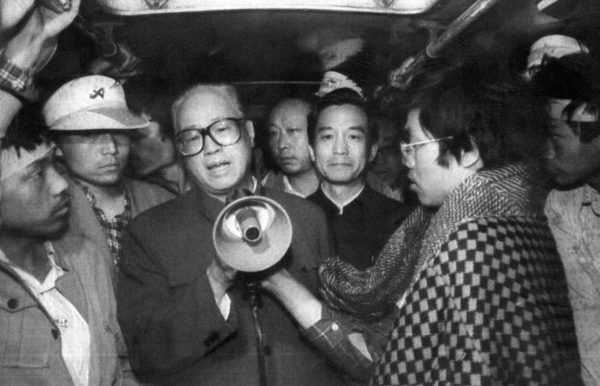
Zhang Xueyong becomes a repeated target
After the communist victory, Zhang Xueyong became a repeated target in successive political campaigns. Because he came from a landlord family background and had graduated from a prestigious medical school, his “ideological problems” were never considered fully resolved.
He once asked Zhao Ziyang to testify that before liberation he had been sympathetic to the communist cause and had assisted Zhao in various ways. Zhao acknowledged only that they had been classmates and claimed to remember nothing else. He refused to provide further confirmation.
As a result, Zhang Xueyong suffered greatly and endured many injustices. Looking back on those years, he sighed and said that the Communist Party’s deep mistrust and casual humiliation of intellectuals during political movements had gone far beyond what was reasonable.
A decent classmate, he said, could become utterly devoid of human feeling once he joined the Party and rose to office. That communism failed to protect good people was, in his view, a fundamental problem.
After graduating from medical school in 1954, I was assigned to work at Henan Medical College. There I again encountered the former section chief surnamed Zhang, a fellow townsman from Baoding. During land reform in Zhao Ziyang’s home area, he had served as leader of a land reform work team.
He told me that during land reform, the Party relied on so-called poor and lower-middle peasant activists who were in reality village hooligans—people who neither worked honestly nor abided by basic rules. These individuals were allowed to beat, torture, and kill those labeled as landlords at will. He found it unbearable and wanted to quit. The county committee demoted him to deputy leader, and only then did he reluctantly remain.
He gave me an example. Zhao Ziyang’s father was a gentle old man, a traditional physician and lifelong village teacher who worked year-round. Every morning he rose early, carried a basket to collect night soil from the streets, and read books as he worked.
The work team repeatedly tried to incite villagers against him, but there was genuinely no popular resentment. He was widely regarded as a kind and decent elder.

Villages had to ‘see blood’
Yet the county committee issued rigid orders. Every village had to “see blood.” One percent of the population had to be killed. Even those with no wrongdoing or popular hatred were to be executed. This, they said, was necessary to push the revolution forward and manufacture class hatred.
Party documents even praised Central Committee member Chen Yu for personally shooting his own father, holding him up as an example for all Party members to follow.
At the rally convened to execute Zhao Ziyang’s father, the former section chief again pretended to be ill and refused to attend. When asked to sign the execution order, he replied that one signature from the team leader was enough.
After witnessing so many deaths without accountability, his heart, he said, grew completely cold. He could never again muster genuine enthusiasm.
A few months later, during another political campaign, he himself was accused, beaten, arrested, and later released after being proven innocent.
Years later, speaking quietly to me as a fellow townsman, he said that with such baseless provocation, deliberate creation of conflict, oppression of the decent, and persecution of the innocent, nothing could ever improve.
Even in ten thousand years, he said, Communism as written in books would never be achieved. So people learned to keep their heads down, remain silent, follow the crowd, enough food to survive, and try to survive a few more years.
He said it was fortunate that Mao had died. Had Mao still lived, even if he could only lie in bed breathing, imperial edicts would still have been read from his lips. Under such conditions, ordinary Chinese would have had no chance of living in peace.
After the fall of the Gang of Four, he said, Heaven finally opened one eye. People could eat a bowl of coarse grain porridge and catch their breath. That alone was reason enough to give thanks.
Few leaders meet good ends
What this elderly cadre—once a poor peasant and lifelong Communist Party member—said in his later years carried heavy meaning.
Looking across Communist history, few leaders met good ends. Among Lenin’s Central Committee members, most were later killed by Stalin. Nor did many of Stalin’s own comrades fare better. Among the CCP’s general secretaries, Politburo members, and Central Committee members—from Chen Duxiu and Qu Qiubai to Hu Yaobang and Zhao Ziyang—few enjoyed favorable outcomes.
Jiang Qing once repeated Mao Zedong’s words that Zhou Enlai appeared loyal but was in fact deeply treacherous. Before his death, Zhou reportedly wept bitterly. In her later years, Deng Yingchao said that Zhou had told her he still had a belly full of words left unsaid.
Top Communist leaders, in my view, resemble a jar filled with centipedes, scorpions, and vipers. How could there ever be peace? The fate and lives of hundreds of millions of Chinese have long been held in the hands of such ruthless figures. If catastrophe has not yet fully arrived, it is not because the danger has passed.
As Mao himself once said, such upheaval was to return again and again. With a population far larger today, the consequences, I believe, may be even more severe. The worst may still lie ahead.