By Yang Tianzi, Vision Times
In the early hours of Jan. 3, U.S. Delta Forces carried out a swift, meticulously-planned military operation in Venezuela, successfully capturing longtime dictator and Venezuelan President Nicolás Maduro. The strike not only reshaped Latin America’s political landscape but also signaled a dramatic shift in Washington’s global posture under President Trump’s second term.
Maduro was nabbed alongside his wife Cilia Flores before he could retreat into a steel-reinforced safe room at the presidential palace of Miraflores in the capital, Caracas. The pair is currently being held at the Metropolitan Detention Center in Brooklyn, where Maduro has pled “not guilty” to all charges.
From the raid in Caracas, to Secretary of State Marco Rubio’s hardline ultimatum to Venezuela’s interim leadership, and finally to Defense Secretary Pete Hegseth’s forceful remarks delivered at a major U.S. shipyard, the episode has revealed a coherent strategic message: The U.S. is reasserting dominance through unmistakable military deterrence, and the international order is entering a period of profound recalibration.
RELATED: US Military Escorts Maduro to NY Trial as Drug Trafficking Charges Come Into Focus
Hegseth: China and Russia ‘would not dare test’ the US
Success
You are now signed up for our newsletter
Success
Check your email to complete sign up
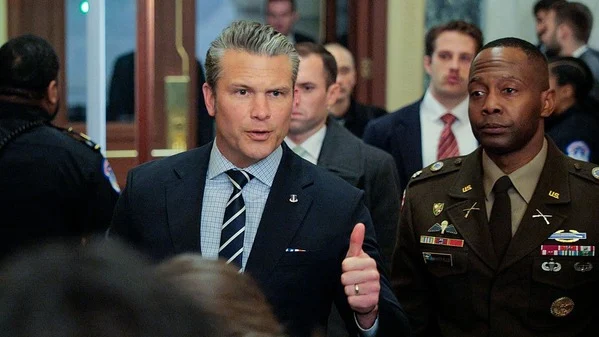
On Jan. 5, U.S. Defense Secretary Pete Hegseth delivered a high-profile speech at the Huntington Ingalls Industries shipyard in Newport News, Virginia — the largest military shipyard in the United States and a powerful symbol of American naval strength. The venue itself underscored the strategic intent behind his remarks.
Hegseth declared that the United States is rebuilding “absolute and unquestionable military deterrence.” He said that during previous administrations, doubts had emerged about America’s ability to lead the world, but those doubts had now been “completely erased.”
RELATED: China Suffers Major Setback in LATAM Energy Push as Sino-US Rift Widens
“The operation in Venezuela proves it,” Hegseth said, arguing that the U.S. retains the capacity to conduct precise military actions far from home while maintaining overwhelming technological superiority. He also mocked Russian air-defense systems, quipping: “It seems Russia’s air-defense systems didn’t perform very well.”
The remark was widely interpreted as a warning to countries that rely on Russian weapons systems not to overestimate their real-world effectiveness.
Hegseth described the current era as a “new age of great-power competition” and a generational struggle to “preserve peace through strength.” He emphasized that Washington’s objective is not reactive defense but proactive deterrence, making adversaries think twice before challenging U.S. resolve.
Referring directly to China and Russia, Hegseth said that after Washington’s display of military capability in Venezuela, both powers would not dare “test” the United States. He attributed this confidence to America’s demonstrated advantages in intelligence gathering, special operations, technological suppression, and, most critically, the political will to act decisively.
Rubio’s ultimatum: clearing out foreign influence
Just minutes after Maduro was placed aboard a U.S. naval vessel, Secretary of State Marco Rubio placed a call to Venezuela’s acting president, Delcy Rodríguez. The timing and substance of the call were deliberate, signaling that Washington intended not merely to remove Maduro, but to remake Venezuela’s political and economic alignment.
RELATED: Maduro Indicted on Multiple Felonies, Including Cocaine Conspiracy
Rubio delivered two core demands. First, he insisted on the immediate expulsion of all official advisers, military personnel, and intelligence operatives from China, Russia, Cuba, and Iran — countries that had long propped up Maduro’s regime. While Washington would allow a minimal diplomatic presence from each, all security- and intelligence-related personnel were ordered to leave.
According to a classified congressional briefing Rubio delivered on Jan. 6, this requirement was non-negotiable.
Second, Rubio laid out President Trump’s expectations for Venezuela’s oil sector: the country must restore oil trade with the United States, roll back or abandon nationalization policies, and compensate U.S. energy firms whose assets had been seized. Given that Venezuela holds the world’s largest proven oil reserves, Washington’s demands were widely seen as both economic and strategic, aimed at reshaping global energy leverage.
A shockwave through global geopolitics
The Venezuela operation marks a sharp departure from decades of cautious multilateralism toward a far more unilateral and force-forward American approach.
In Latin America, the move sends a stark warning to left-leaning governments that align too closely with Washington’s rivals. In Beijing, it represents a direct blow to China’s Belt and Road ambitions in the Western Hemisphere. Venezuela had been one of China’s most important regional partners; the demand to expel Chinese personnel effectively declares that Beijing’s influence is unwelcome in America’s strategic backyard.
For Russia, the episode is equally damaging. Moscow had supplied Venezuela with extensive military hardware and training, yet proved unable to shield its ally from U.S. intervention—raising doubts among other states dependent on Russian security guarantees.
Delta force raid: speed, precision, and dominance
According to the “South China Morning Post,” U.S. Delta Force units carried out the high-risk raid on January 3, targeting the presidential compound in central Caracas. Notably, the facility was guarded not by Venezuelan troops, but by Cuban security forces, a revealing sign of Maduro’s distrust of his own military.
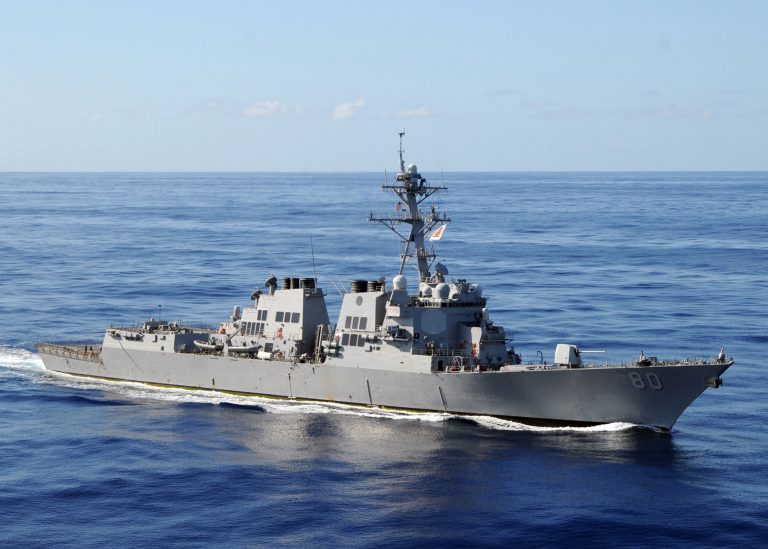
After a brief but intense firefight, U.S. forces overwhelmed resistance, detained Maduro and his wife Cilia Flores, and extracted them to a U.S. warship offshore. The operation bypassed Venezuela’s Russian-supplied air-defense systems entirely, reinforcing Hegseth’s later criticism of their effectiveness.
Maduro and Flores were swiftly transferred to New York to face federal charges, including drug trafficking, corruption, and human-rights abuses. The case marks a rare moment in modern international law: a sitting head of state captured through military force and brought before a foreign court.
Critics argue the operation violated principles of national sovereignty. The U.S. government counters that Maduro’s regime lost legitimacy after fraudulent elections and systematic repression, framing the action as enforcement of justice rather than aggression.
While Washington scored a decisive tactical victory, Venezuela’s future remains uncertain. Acting president Rodríguez faces an impossible balancing act — full compliance with U.S. demands risks domestic backlash, while resistance could invite further pressure.
What is clear, however, is that the Venezuela operation has redefined deterrence. As Hegseth made plain, Washington intends for the message to resonate far beyond Caracas.
Editorial note: Views expressed in this article are the opinions of the author and do not necessarily reflect the views of Vision Times.