By Yang Tianzi
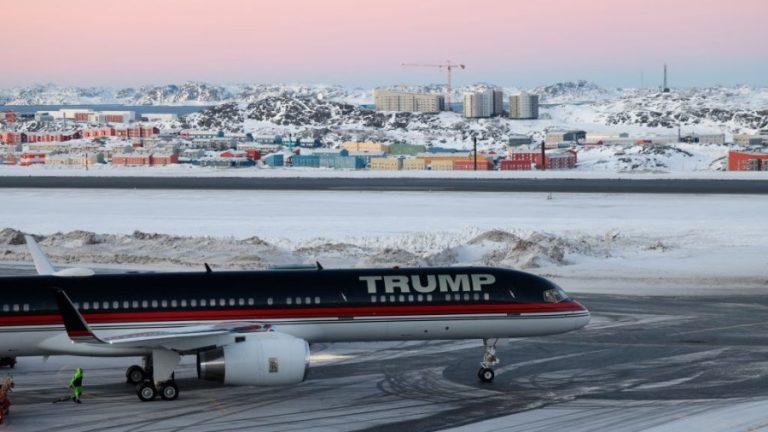
U.S. President Donald Trump recently once again made it clear that the United States must take action regarding Greenland, or Russia or China could occupy this strategic territory. His remarks have caused ripples in international diplomatic circles and prompted NATO to accelerate its military deployment plans in the Arctic region.
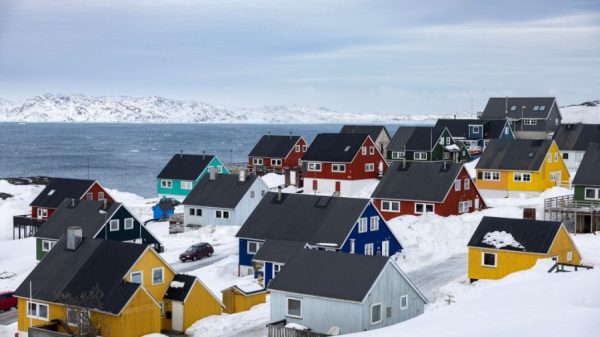
Greenland, the world’s largest island, covers over 2.16 million square kilometers but has a population of only about 56,000. Administratively, it belongs to the Kingdom of Denmark but enjoys a high degree of autonomy. This land is rich in rare earth minerals and other strategic resources. More importantly, its key location between North America and Europe controls crucial Arctic passages, giving it irreplaceable value in military strategy.
Trump’s strategic Greenland declaration: Germany leads ‘Arctic Sentinel’ plan
Trump publicly stated that the U.S. “will certainly take action regarding Greenland,” citing two major strategic competitors—Russia and China. He warned that if the U.S. does not act preemptively, these two countries could seize the opportunity to “occupy Greenland.” His statement reflects Washington’s high regard for the Arctic’s strategic position and underscores deep U.S. concerns about Russian and Chinese influence in its “backyard.”
In response to the increasingly complex Arctic situation, NATO allies have shown a proactive stance. Bloomberg, citing informed sources, reported that Germany is preparing to propose a specific military initiative under NATO’s framework. German Foreign Minister Annalena Baerbock and Finance Minister Christian Lindner visited Washington on Jan. 12. One key agenda item was to propose establishing a NATO joint task force called the “Arctic Sentinel.”
Success
You are now signed up for our newsletter
Success
Check your email to complete sign up
The “Arctic Sentinel” plan would be modeled on NATO’s “Baltic Guardian” task force launched last year, which was created to protect critical infrastructure in the Baltic Sea, including undersea cables and energy pipelines. Germany now hopes to replicate this model in the Arctic, establishing a joint force dedicated to Arctic security. Its missions would include monitoring regional activity, safeguarding key routes and infrastructure, and responding to potential security threats.
Foreign Minister Baerbock is expected to meet with U.S. Secretary of State Rubio to discuss concerns about Russian or Chinese naval activity in the Arctic and to seek joint solutions “within the NATO alliance framework.” She also drew a clear line on sovereignty issues: “When it comes to territorial sovereignty, our position is absolutely clear: Greenland’s future should be decided autonomously by the Greenlandic people.”

UK and European allies discuss military deployments
Beyond Germany’s proposal, the U.K. has also shown strong engagement. According to the British Daily Telegraph, U.K. officials have held preliminary discussions with Germany, France, and other European allies. These talks may include deploying British troops, ships, and aircraft around Greenland to protect it from Russian and Chinese actions.
U.K. Transport Secretary Hedy Alexander described these discussions as “routine measures” in response to geopolitical shifts. She stated: “Considering Russian and Chinese activities, the Arctic is becoming an increasingly contested geopolitical region. It is reasonable for us and all NATO allies to discuss how to deter Russian aggression in the Arctic Circle.” Her remarks indicate that the U.K. views Arctic defense as an essential part of NATO’s collective security system.
NATO leadership’s strategic assessment
NATO’s top military leader, General Christopher Grinkevich, confirmed at a Swedish defense conference that member states are deeply discussing Greenland’s future. Regarding Trump’s recent controversial remarks, Grinkevich took a cautious approach, declining to comment on the “political aspects of recent statements” but confirming that “relevant dialogues are ongoing in Brussels.”
He emphasized that the Arctic’s strategic importance is “rapidly increasing.” With melting ice, new shipping routes opening, and untapped resources being exposed, the region has become a focus of great power competition. He noted that Russia and China are strengthening cooperation in the area to gain more access to the Arctic. This “Russia-China partnership” clearly heightens NATO’s concerns about northern flank security.
The deeper logic of geopolitics
The disputes over Greenland and the Arctic reflect three layers of strategic competition:
- Resource competition: Greenland has abundant rare earths, oil, natural gas, and fisheries. In the context of global energy transition and technological competition, these resources are strategically critical. China, a global leader in the rare earth supply chain, shows strong interest in developing Greenland’s resources, while Western countries aim to control Greenland to reduce dependence on China.
- Control of shipping routes: As Arctic ice melts, the commercial value of Arctic shipping routes is growing, significantly shortening shipping distances between Asia and Europe. Russia sees these routes as key economic and strategic channels and has deployed extensive military facilities along the coast. China, calling itself a “near-Arctic state,” actively participates in developing Arctic routes. For the U.S. and Europe, ensuring “freedom of navigation” and preventing strategic rivals from monopolizing these routes is essential to protect their interests.
- Military security: The Arctic is the shortest path for U.S.-Russia missile warning and interception systems, making it extremely valuable militarily. Greenland’s unique location controls the gateways between the North Atlantic and Arctic Oceans, serving as a critical node for monitoring Russian submarines entering the Atlantic. The U.S. operates Thule Air Base in Greenland, a key part of its global missile defense system. Expansion of Chinese or Russian influence there would directly threaten U.S. homeland security and NATO’s control of the North Atlantic.
Europe’s balancing diplomacy
It is notable that while European countries are willing to cooperate with the U.S. on security issues, their stance on Greenland’s sovereignty is clear and non-negotiable. Germany, the U.K., and others stress that Greenland’s future should be determined by its people.
This reflects the complex position European states face: maintaining the transatlantic alliance and responding to U.S. security concerns, while upholding sovereignty principles and international law, avoiding endorsement of unilateral actions.
The “Arctic Sentinel” plan marks another major shift in NATO’s strategic focus. From post-Cold War European defense to global counterterrorism and responding to Russian threats, the Arctic has now become the alliance’s new area of attention. However, deploying military forces in the Arctic faces challenges, including harsh natural conditions, high logistical costs, and the risk of triggering an arms race.
From Trump’s tough rhetoric to NATO’s proposed “Arctic Sentinel” plan and China-Russia’s active positioning, Greenland and the Arctic have become a new frontline in great power competition. Germany and the U.K.’s active engagement shows that major European powers no longer remain absent from Arctic security, aiming to work with the U.S. to establish an “ice defense line” against China and Russia.
However, this competition is not a simple zero-sum game. The autonomous wishes of Greenland’s people, international law, and environmental challenges from climate change all introduce uncertainty. With intertwined interests and a lack of trust among parties, the militarization of the Arctic appears increasingly irreversible. Greenland is likely to remain at the center of this global strategic storm for the foreseeable future.