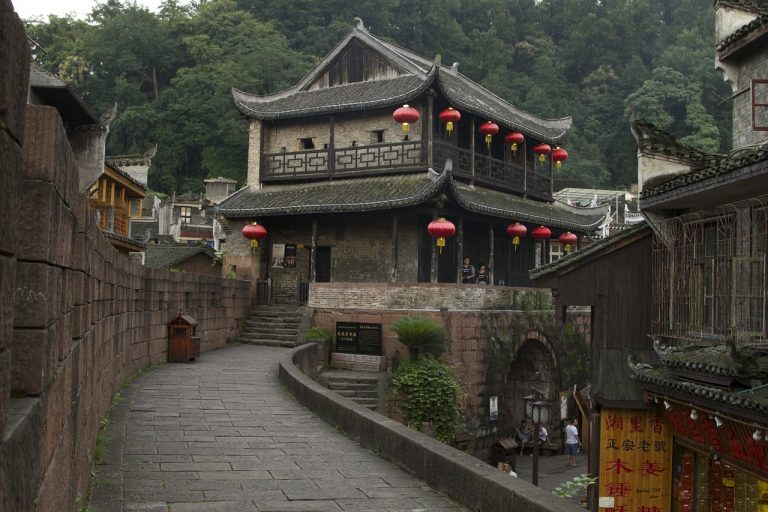
From 618 to 907 A.D., the Tang dynasty served as the pinnacle of Chinese civilization. Renowned for its refinement, cultural brilliance, and far-reaching influence, historians agree that Tang China stood at the forefront of the world as a true golden age. The term “High Tang” refers specifically to the period spanning the “Reign of Zhenguan” under Emperor Taizong to the “Kaiyuan Prosperity” under Emperor Xuanzong.
What distinguished Tang culture was its extraordinary openness and inclusiveness — an ethos of embracing hardship and growing strong through empathy and restraint. This spirit fostered political clarity, economic prosperity, intellectual openness, and a flourishing of social life, literature, and the arts to produce one of the most radiant chapters in Chinese history.
RELATED: How the Cultural Revolution Systematically Destroyed China’s Cultural Heritage
Emperor Taizong and the foundations of the High Tang
The grandeur of the Tang dynasty was laid by Emperor Taizong, whose nearly three decades at the helm of the Zhenguan governance resulted in six successive emperors. He revered the political wisdom of Yao, Shun, the Duke of Zhou, and Confucius, ruling with sincerity and moral conviction. Historical records repeatedly emphasize his compassion and kindness for the people.
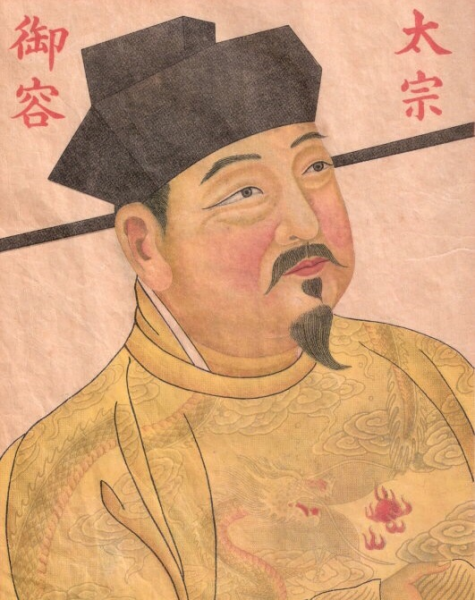
Taizong valued remonstrance and self-reflection. He believed the ruler and ministers should govern together and actively encouraged officials to speak candidly — even when criticizing the emperor himself. Such openness to direct counsel was exceptionally rare in Chinese imperial history.
Success
You are now signed up for our newsletter
Success
Check your email to complete sign up
He also sought talent without prejudice, appointing capable and honest officials regardless of background or past allegiances. Wei Zheng, once aligned with the rival crown prince Li Jiancheng and even implicated in plots against Taizong, was nevertheless entrusted with high office. After defeating the Eastern Turkic Khaganate, Taizong appointed surrendered Turkic generals to Tang military posts, demonstrating remarkable magnanimity.
By curbing extravagance, streamlining government, lightening taxes, simplifying laws, and promoting production, Taizong enabled the people to live securely and prosperously. The state grew strong, foreign nations submitted, and the realm achieved peace and order, described in historical texts as a time when “the sun and moon shone upon the heavens.”
Confucianism, Buddhism, and Daoism in harmony
The Tang dynasty represented a high point for Confucianism, Buddhism, and Daoism, which flourished side by side. Emperor Taizong honored Confucian learning while also supporting Daoism and Buddhism, allowing the three traditions to illuminate one another.

He commissioned scholars to compile the “Correct Meaning of the Five Classics,” establishing Confucian texts as the foundation of the imperial examination system and as moral guides for society. At the same time, Daoist thought permeated elite culture, while Buddhism reached its zenith.
RELATED: Preserving the Heritage of Chinese Martial Arts: The Method of Master Yang Longfei
The monk Xuanzang spent seventeen years traveling to the Western Regions, returning with 657 Buddhist scriptures, all translated into Chinese with imperial support. Taizong personally wrote the preface to The Sacred Teachings of the Great Tang Tripitaka.
A comprehensive system of state rituals honored Heaven, deities, and ancestors. With reverence for the divine and belief in moral causality, society upheld clear standards of right and wrong. As a result, Tang society maintained a remarkably high moral level. According to historical records, in the fourth year of Zhenguan rule, only 29 people nationwide were sentenced to death. Livestock roamed freely, doors were left unlocked, and the realm enjoyed peace, courtesy, stability, and abundance.
A marvel in the history of poetry
Tang literature vividly conveys the grandeur and spirit of the age. The Complete Tang Poems includes works by over 2,200 poets, totaling more than 48,000 poems, an unparalleled phenomenon in Chinese literary history. Early Tang masterpieces include poems by Wang Bo, Chen Zi’ang, and many others:
“The setting sun and the solitary wild duck fly together;
The autumn waters merge with the boundless sky.”
— Wang Bo, “Preface to the Pavilion of Prince Teng”
“No ancients before me, no followers after;
Facing heaven and earth alone, I weep.”
— Chen Zi’ang, “Song of Ascending Youzhou Terrace”
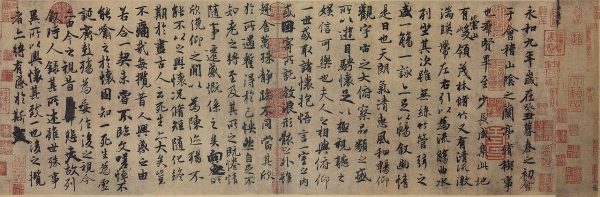
The High Tang era also produced a galaxy of literary giants: Li Bai, the “Immortal of Poetry,” whose lines surge like the Milky Way; Du Fu, the “Sage of Poetry,” whose verses mourn the world with deep compassion; the serene elegance of Meng Haoran and Wang Wei; the heroic frontier poetry; and later masters such as Bai Juyi, Li Shangyin, and Du Mu. Their works remain the unsurpassed summit of classical Chinese poetry.
Blazing new paths in calligraphy, art
Emperor Taizong placed exceptional importance on calligraphy. He established the Hongwen Academy, appointed master calligraphers as instructors, and required officials of rank to study calligraphy there. He promoted the study of Wang Xizhi, praising his style as “perfect in goodness and beauty,” which led to a flourishing of great calligraphers.

Tang regular script evolved from Ouyang Xun, Yu Shinan, and Chu Suiliang to the celebrated styles of “Yan’s strength and Liu’s bones.” When Emperor Muzong asked Liu Gongquan about calligraphy, Liu replied: “The brush follows the heart; if the heart is upright, the brush will be upright.” This phrase went on to become a classic maxim in the art world.
In painting, over 200 renowned artists are recorded in historical sources. Wu Daozi, revered as the “Sage of Painting,” created more than 400 mural halls in Chang’an and Luoyang temples. His works conveyed divine majesty and celestial brilliance. His “Transformation Scenes of Hell” so vividly depicted karmic retribution that viewers reportedly refrained from wrongdoing. It was said he painted “with strokes swirling like the wind,” as if divinely inspired.
Tang painting and sculpture, with their dynamic forms, bold structures, and rich colors, embodied a majestic and dignified aesthetic.
Embracing all nations
Tang music and dance absorbed the finest traditions of earlier dynasties while incorporating instruments and styles from Central Asia and neighboring regions. Grand in scale, graceful in movement, and resplendent in costume, Tang performance art combined poetry, song, rhythm, and movement into a living image of national harmony, ethnic integration, and prosperity, an age when “all nations came to pay tribute.”
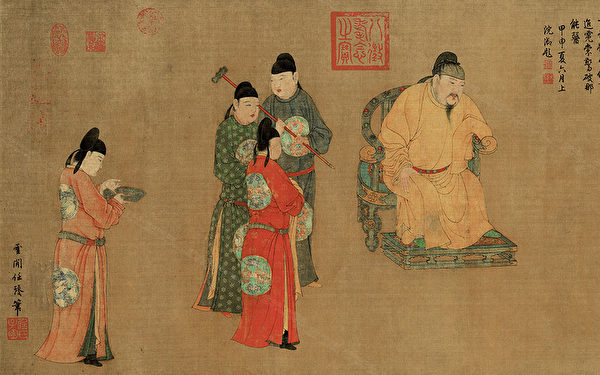
Emperor Taizong was also known for advocating a policy of “embracing all nations with benevolence.” More than 300 foreign states and tribes maintained diplomatic relations with Tang China. Drawn by the fame of the Zhenguan governance, kings, envoys, students, monks, artists, and merchants from across the world flocked to Chang’an, then the world’s largest international metropolis. The Imperial Academy (Guozijian) became the most esteemed center of higher learning.
Upon returning home, these visitors spread Tang culture widely. Legal systems, examinations, technology, Buddhism, and education in many regions, especially Korea and Japan, were modeled closely on Tang institutions, effectively creating miniature reflections of Tang civilization.
When people today look back on and yearn for the High Tang, they naturally admire Emperor Taizong’s sincerity, justice, benevolence, and broad vision. They also encounter the Tang people’s faith, morality, aesthetics, and cultural traditions.
Only by reclaiming these essential values — returning to the roots, rebuilding humanistic spirit, and cultivating moral character — can a society rediscover the true conditions that once gave rise to China’s golden age.