U.S. Trade Representative Jamieson Greer said on Jan. 16 in Avon Lake, Ohio, that Canada’s decision to allow up to 49,000 Chinese electric vehicles (EVs) into its market at low tariffs is concerning and could cost Canada in the future.
In an interview with CNBC, Greer stated bluntly: “I think this is a problem for Canada. The reason the U.S. sells almost no Chinese-made cars is that we protect American workers and consumers through tariffs.”
He noted that Canada is attempting to trade this EV arrangement for concessions on agricultural tariffs, but in the long run, this deal may not be favorable for Canada.
US emphasizes cybersecurity standards; Chinese cars face barriers
Greer also emphasized that the U.S. introduced new safety regulations in January 2025 for connected vehicles and navigation systems, creating substantial obstacles for Chinese automakers.
“I think it will be difficult for them to operate in the U.S.,” he said. “The U.S. has strict regulations on vehicle cybersecurity and system security, and Chinese companies will find it challenging to meet these standards.”
Success
You are now signed up for our newsletter
Success
Check your email to complete sign up
Nonetheless, U.S. President Donald Trump reiterated this week his long-standing position: Chinese automakers are welcome to set up factories in the U.S.
“If they are willing to build factories in America and hire you and your neighbors, that’s great, I welcome it,” Trump said during a speech at the Detroit Economic Club on Jan. 13. “Let China come.”
Carney visits China to promote breakthroughs; Canada seeks less dependence on the US
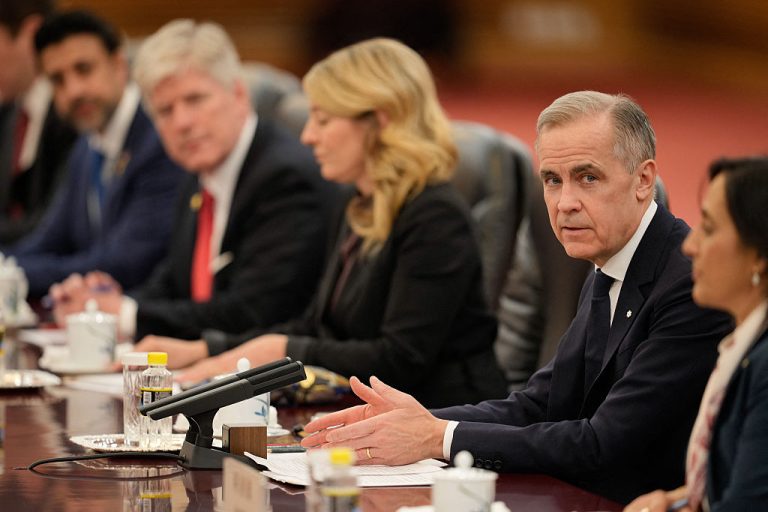
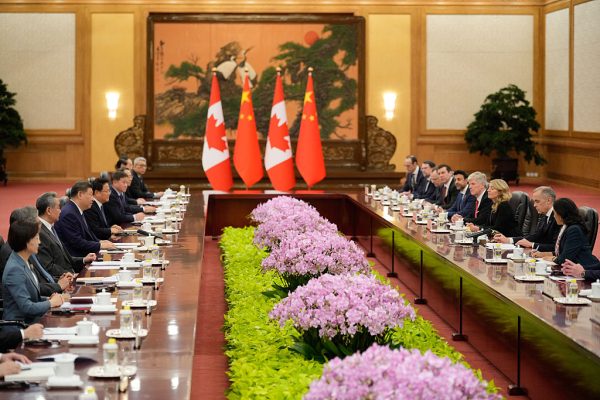
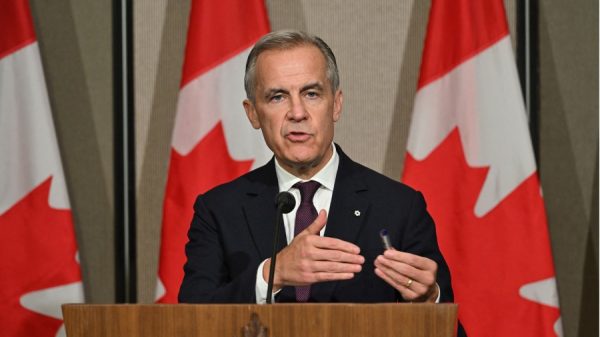
The Guardian reported that Canadian Prime Minister Mark Carney visited China this week, facilitating what he called a “preliminary but landmark” trade agreement, and for the first time explicitly suggested that countries are entering a “new world order.”
This is the first official visit to China by a Canadian prime minister in nearly a decade. Former Canadian Ambassador to China Guy Saint-Jacques noted that the visit’s core goal was to recalibrate Canada-China relations and reduce Canada’s heavy reliance on the U.S. market.
“This adjustment is happening at an extremely delicate moment,” he said. “Canada’s dependence on its southern neighbor has become increasingly risky.”
Data show that about 70 percent of Canadian exports go to the U.S.
Just before Carney arrived in Beijing, Trump publicly stated that “America does not need Canadian products,” further intensifying Ottawa’s concerns.

Canada-China EV agreement sparks strong domestic debate
Canada and China eventually announced a “temporary agreement:”
- Allow 49,000 Chinese EVs to enter the Canadian market.
- China will lower tariffs on Canadian canola, lobster, seafood, and peas.
- Both sides commit to “reducing but not completely eliminating” tariffs on key industries.
Vina Nadjibulla, Vice Chair of the Asia Pacific Foundation of Canada, called this a “strategically significant breakthrough,” but also very risky.
However, domestic opposition in Canada is strong.
Conservative Party leader Pierre Poilievre questioned Carney’s inconsistent stance: “He said during the campaign that China was the greatest security threat, and now he announces a strategic partnership.”
Ontario Premier Doug Ford warned that China could use this opportunity to squeeze Canada’s auto industry.
Beijing welcomes ‘adjustment;’ experts warn risks remain
Chinese President Xi Jinping told Carney that the meeting “opens a new chapter of positive adjustment in China-Canada relations.”
But former Canadian diplomat and International Crisis Group senior adviser Michael Kovrig warned: “Almost every government believes it can handle China well, but history shows this often goes through a cycle of optimism—friction—correction.”
He emphasized that China is not an ordinary trading partner, but a country that uses economic and trade relations as a political tool.
Carney himself acknowledged that Canada has “red lines” in cooperating with China, including human rights and election interference, but he said: “We must face the real world, not an ideal world.”