By Li Jingyao, Vision Times
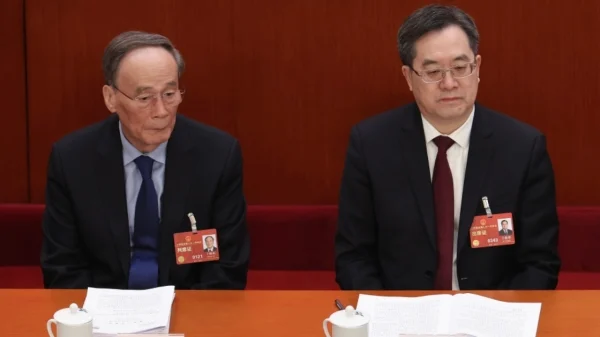
A communiqué issued at the Fifth Plenary Session of the 20th Central Commission for Discipline Inspection (CCDI), the Chinese Communist Party’s top anti-corruption and internal disciplinary body, has revealed that China’s entire education system, overseen by Vice Premier Ding Xuexiang, has been placed on the list of “key rectification targets” for 2026.
The campaign marks a significant escalation, expanding beyond universities to encompass all levels of education, and coincides with a growing wave of investigations into senior education officials nationwide.
RELATED: China’s CCDI Plenum Signals Power Rebalancing as Xi’s Authority Is Curtailed
A nationwide purge
According to state mouthpiece Xinhua News, the CCDI communiqué released on Jan. 14 removed earlier special campaigns targeting the pharmaceutical industry and higher education from the 2026 agenda. In their place, two new focus areas were added: “education” and “academic societies and associations.”
Success
You are now signed up for our newsletter
Success
Check your email to complete sign up
The same day, Yang Yu, deputy director of the Ministry of Education’s Education Supervision Bureau, was placed under investigation for suspected serious violations of discipline and law. Yang spent most of his career within the ministry, previously serving in senior finance and supervision roles, including deputy director of the Office of the State Council’s Education Supervision Committee.
RELATED: Xi’s Power Wanes Amid Sweeping Party Purge and Succession Uncertainty
On Jan. 15, Jin Donghan, an academician of the Chinese Academy of Engineering and former president of both Shanghai University and Tianjin University, was stripped of his status as a municipal people’s congress representative and removed from the official list of academicians. Jin served as president of Shanghai University from July 2015 to September 2017, then as party secretary and president until May 2019, before leading Tianjin University from May 2019 to January 2025 in a post carrying vice-ministerial rank.
That same day, the CCDI announced an investigation into Wang Yonglin, a former vice-department-level official at Qiannan Minzu Preschool Teachers College in Guizhou Province. Two days later, Jiangsu provincial disciplinary authorities reported that Zhang Chunfu, deputy secretary of the Party Leadership Group and vice chairman of the Changzhou Municipal Committee of the Chinese People’s Political Consultative Conference, was also under investigation for suspected serious violations.
Official statistics indicate that 44 senior university officials were investigated in 2025 alone, including figures such as Ren Yuzhong, vice president of Peking University, and Zhang Yaoxue, former president of Central South University. In early 2026, major institutions, including Renmin University of China, Xiamen University, and Central South University, saw rapid leadership turnover, with party secretaries or presidents replaced in quick succession.
Ding Xuexiang’s portfolio under scrutiny
China’s education system falls squarely under Ding Xuexiang’s authority. A longtime confidant and key aide to Chinese President Xi Jinping, Ding rose through the Party’s inner circles after serving as Xi’s chief of staff in the CCP Central Committee’s General Office. In 2022, he entered the Politburo Standing Committee, and in March 2023 he was appointed first-ranked vice premier, overseeing a sweeping portfolio that includes education, science and technology, economic planning, environmental protection, taxation, statistics, intellectual property, and climate policy.
RELATED: Senior Xi Ally Ma Xingrui Vanishes as Purges Spread in China
Critics argue that under Ding’s supervision, the education system has increasingly blurred the line between governance and ideological enforcement. During the 2023 national college entrance examination, a Chinese-language exam drafted by the Ministry of Education required students to write essays based on “quotations from Xi Jinping,” prompting widespread controversy.
Reports have also surfaced of intensified ideological indoctrination courses, compulsory physical examinations, and requirements that students swear pledges committing to organ donation, measures that have alarmed parents and educators alike.
Growing number of missing teens
Concerns have intensified as reports of missing teenagers circulate online. Media cited by Yahoo note that since “China’s Regulations on Human Organ Donation and Transplantation” took effect in 2024, Red Cross-affiliated organ donation pledge campaigns have increasingly appeared on school campuses. In some cases, even elementary school students — despite being minors — have reportedly been required to take organ-donation oaths.
RELATED: Wave of Teen Disappearances in China Raises Alarm of Organ Harvesting
As these campaigns expanded into middle and high schools, accounts of compulsory physical examinations and teenage disappearances became more frequent, fueling parental suspicion and public anger. Critics have questioned whether schools are being transformed into “organ supply depots.”
Several cases have drawn particular attention. On Jan. 15, a 16-year-old girl surnamed Cai went missing; her body was found the next day at an abandoned dumping site, with both kidneys missing. A 14-year-old girl surnamed Kong disappeared on Jan. 12 after undergoing a school physical examination earlier in the month; when her body was discovered on Jan. 14, her heart and kidneys were missing. In Heilong Township, Henan Province, a 13-year-old boy surnamed Wang vanished on the morning of Jan. 12 while walking to school; his body was found the following day three kilometers away, with his corneas and kidneys missing.
RELATED: Henan Student’s Suspicious Death Sparks Outrage as Family Reportedly Goes Missing
Another case in Xincai County, Henan Province, has drawn nationwide scrutiny. On Jan. 8, a 13-year-old boy surnamed Zhu died in his school dormitory. The school’s handling of the incident, which included reportedly clearing the scene, refusing to release surveillance footage, and forcibly moving the body, triggered a confrontation with the family. Observers noted a “nail-sized” hole in the left side of the boy’s chest, leading medical professionals to question the official explanation and to suspect possible illegal blood extraction or organ harvesting. Authorities ruled out any suspicion of foul play.
In the wake of the Xincai case, parents reportedly flooded school gates during pickup and drop-off times, clogging nearby roads as families sought to personally escort their children. Additional reports of missing children soon followed from other parts of Henan.
Separately, a resident of Anhui Province said a young relative injured in a traffic accident months earlier was allegedly pressured by hospital staff to sign an organ donation consent form while receiving treatment.
An X account using the name “Israel War” offered a dark metaphor that quickly went viral: “When an old car can’t be fixed, you just take parts from someone else’s new car and swap them in.”