By Qing Yu
Editor’s Note: This article draws on historical records, documentary materials, declassified archives, and firsthand recollections cited in public sources. Casualty figures and wartime accounts vary across sources and are presented here as estimates or claims attributed to the author.
In October 2021, the Chinese Communist Party released the political propaganda film The Battle at Lake Changjin. In the film, a devastating episode from the Korean War—one in which three entire companies of Chinese soldiers froze to death—is recast as a heroic military triumph, intended to inflame nationalist sentiment.
A review of historical documents and contemporaneous documentary footage, however, tells a starkly different story. The defeat of the Chinese People’s Volunteer Army at the Battle of the Chosin Reservoir reveals not valor, but the Chinese Communist Party’s ruthless disregard for the lives of its own soldiers.
Mao Zedong’s Personal Ambitions and China’s Entry into the Korean War
On June 25, 1950, North Korean forces crossed the 38th parallel, occupying nearly 90 percent of South Korea within two months. In response, the United Nations Security Council passed a resolution on July 7 authorizing the creation of UN forces to repel the invasion. U.S. General Douglas MacArthur was appointed commander of American and allied troops. After a series of successful counteroffensives, Seoul was retaken, Pyongyang captured, and UN forces advanced toward the Chinese–Korean border.
Mao Zedong told Chinese troops that this was a war to “Resist America and Aid Korea, Defend the Homeland.” In reality, the Chinese Communist Party entered the war to assist North Korea’s invasion of South Korea. Chinese “volunteer” soldiers were dispatched as expendable cannon fodder.
Success
You are now signed up for our newsletter
Success
Check your email to complete sign up
According to official CCP figures, approximately 180,000 Chinese soldiers died in the war. Declassified Soviet archives place the death toll closer to one million, while Cheng Ganyuan, a former law professor at Nanjing Normal University, estimated that more than 800,000 Chinese soldiers perished.
At no point did U.S. forces invade Chinese territory. The war therefore had nothing to do with defending China itself. Instead, Chinese troops were deployed in support of a brutal North Korean regime carrying out aggression against South Korean civilians.
Severe Shortages of Winter Clothing and Food
North Korea’s winter climate is unforgiving, making cold-weather protection a matter of survival. An American logistics officer once asked a frontline commander whether ammunition or winter gear should be transported first. The commander replied that without ammunition, soldiers could still fight with bayonets—but if they froze to death, there would be no one left to fight. Winter equipment was therefore given priority.
The United States placed the safety of its soldiers above all else. Victory was the objective, but casualties were to be minimized wherever possible.
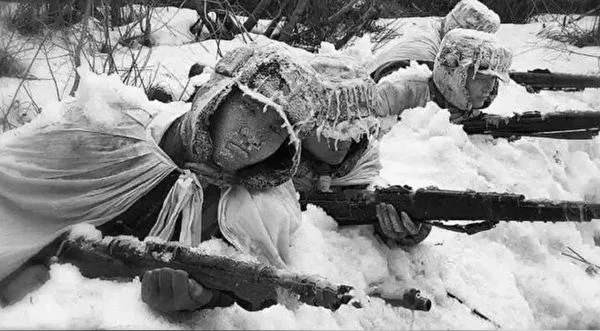
The Chinese People’s Volunteer Army’s Ninth Army Corps—numbering roughly 150,000 troops—entered North Korea wearing only thin cotton uniforms designed for southern China’s climate. These provided little protection against the extreme cold. Food supplies were equally inadequate, and soldiers often went hungry.
Despite full awareness of these conditions, Mao Zedong prioritized the transport of ammunition over food and winter clothing. This decision reflected a broader CCP practice: contempt for the lives of the Chinese people.
The Battle of the Chosin Reservoir lasted from November 17 to December 13, 1950—seventeen days in total. During this period, temperatures fell to minus 37 degrees Celsius. Lacking proper winter gear, three entire companies of the Ninth Army Corps froze to death. This catastrophe would later be glorified by the CCP as the “Ice Sculpture Company.”
In the battles that followed, hunger and cold continued to claim the lives of wave after wave of Chinese soldiers.
Fighting with Human Bodies: The “Human Wave” Tactic
The U.S. military possessed advanced weaponry and coordinated land, sea, and air power, supported by overwhelming firepower. Chinese forces, by contrast, lagged far behind in arms, communications, and logistics. Their primary tactic was the human wave assault—using sheer numbers of human bodies to absorb bullets.
During nighttime attacks on the U.S. First Marine Division, Chinese troops were met with immediate and devastating counterfire. When the first wave was cut down, the second wave advanced over the bodies, picked up the rifles of the fallen, and pressed forward. When the second wave fell, the third and fourth followed. The cycle repeated without end.
American soldiers were stunned by the scenes. Despite relentless firing, they were unable to halt the suicidal advance.
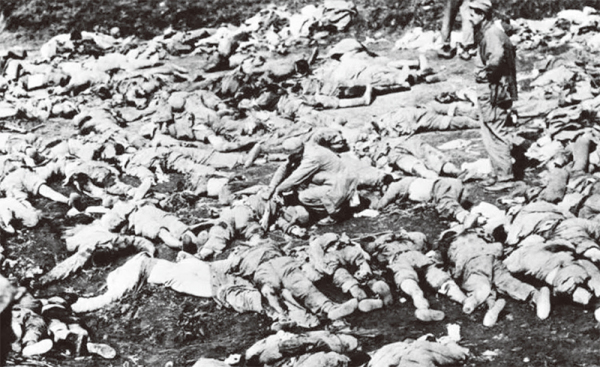
Former Chinese prisoners of war later recalled that retreat was impossible. Behind them stood discipline squads and suicide units. Anyone who attempted to withdraw was shot. Their only choice was to move forward—over piles of corpses—hoping either to survive or to be captured.
One veteran recalled:
“China fought with people; America fought with steel. We used our lives to compete with your steel. At Pig’s Head Hill, the dead weren’t lying in a single layer. They were stacked—bodies on top of bodies, several layers deep. All corpses.”
Liu Bocheng, a CCP marshal, later summarized the outcome while teaching at the Nanjing Military Academy. At Chosin Reservoir, he explained, an entire Chinese army corps surrounded the U.S. First Marine Division yet failed to annihilate or defeat it. At a cost ten times greater than the enemy’s casualties, U.S. forces withdrew in full formation, taking all wounded personnel and equipment with them.
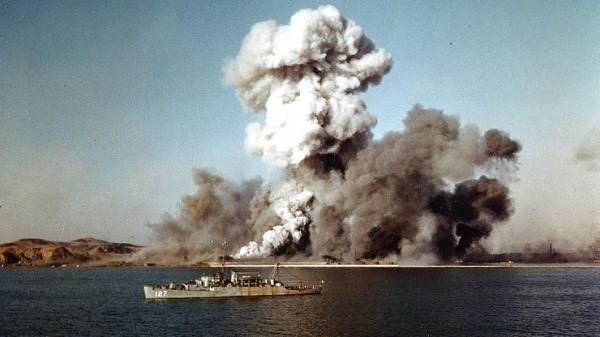
A War That Revealed American Humanitarian Conduct
As human wave assaults continued and successive engagements unfolded, the number of Chinese POWs rose sharply. Lacking air superiority, Chinese forces were forced into full retreat, breaking apart into scattered groups—effectively fleeing for survival.
Non-combat personnel attempted to escape alongside frontline troops. Some officers raised their weapons to force subordinates back into battle. Former POWs recalled that priority was consistently given to cadres, Party members, and Youth League members, while ordinary soldiers were abandoned. This, they said, was standard CCP practice in moments of life and death, and the Korean War was no exception.
With ammunition and food exhausted, many Chinese soldiers chose to surrender. As one POW recalled, superiors often spoke of unity, but in desperate conditions, they abandoned their men without hesitation.
Allied leaflets encouraging surrender also played a role. Many Chinese soldiers were already resentful at being sent to North Korea as expendable troops. Facing starvation and freezing temperatures—and hearing that POWs would be treated humanely and fed—they chose to lay down their arms.
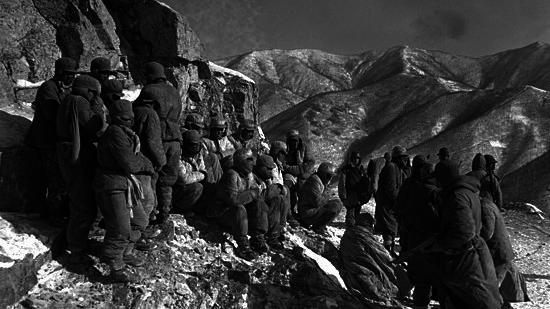
Some of those who surrendered were former Nationalist soldiers who had been forcibly conscripted and were eager to defect from the outset. Zhang Maolin, a frontline Allied interrogator, recalled that most POWs arrived in miserable condition—many without ammunition, food, or even the crude roasted grain they carried. Some expressed relief at being captured, as it meant an end to hunger.
When U.S. troops encountered these prisoners, they saw men dressed in thin cotton clothing, fingers severely frostbitten, bare feet encased in ice, ears swollen like potatoes, and bodies weakened by extreme hunger. American soldiers recognized that these POWs had endured conditions far worse than their own—and responded with genuine compassion.
Fred Kronerger, an American officer responsible for POW camp administration, recalled:
“I tried not to look down on them or treat them with contempt. I treated them as equals. Six months earlier, we might have tried to kill each other. But those days were over. We were together, and we had to coexist and cooperate. That worked to their benefit—and to mine.”
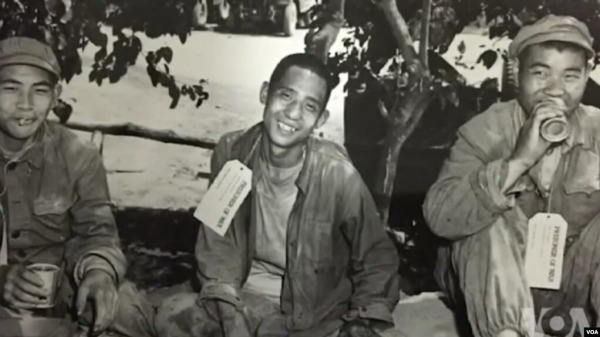
Former POW Zhang Zeshi recalled being invited to share a meal by an American officer. Embarrassed, he lowered his head, afraid others would recognize him as a captive. The officer told him that being captured did not strip him of his dignity. He was still a soldier.
The officer added that individuals have little control over their fate in war; circumstances could easily have been reversed. Zhang later reflected that it was an enemy nation that treated him with equality, while his own country did not—a contrast that left a lasting and painful impression.
(To be continued)