As tensions in the Taiwan Strait continue to intensify, a once-theoretical question has moved to the center of debate in Western security circles: What would happen if China launched a military campaign against Taiwan—and lost?
According to multiple recent studies cited by Foreign Policy, the consequences of a failed military operation would extend far beyond the battlefield. China would face not only military losses, but cascading damage to its economy, social stability, political legitimacy, and international standing—costs that could reverberate for decades.
These studies were led by the German Marshall Fund of the United States and seek to address a longstanding blind spot in war-gaming exercises. While many simulations focus on how a war might unfold, far fewer examine what China would confront after a defeat—and how such an outcome could reshape the country’s trajectory.

Two conflict scenarios: from limited clash to full-scale war
The research team modeled two plausible conflict scenarios that could emerge within the next five years.
In the first scenario, China imposes a short-term blockade and applies military pressure on Taiwan. The confrontation lasts several weeks. After U.S. intervention, the situation de-escalates. Both sides sustain casualties, but a full-scale war is avoided.
Success
You are now signed up for our newsletter
Success
Check your email to complete sign up
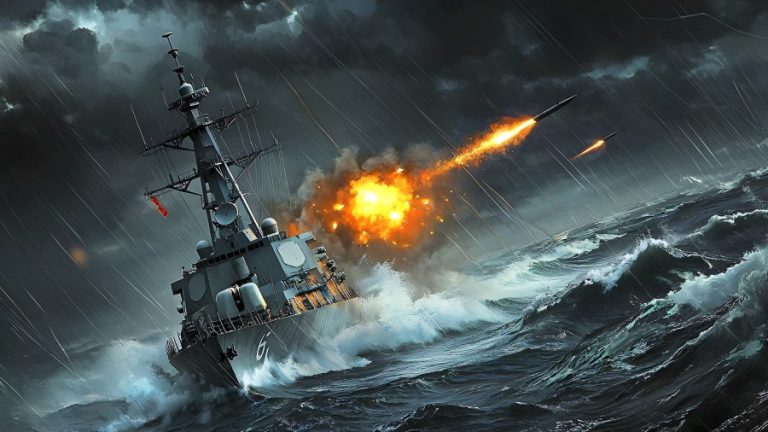
In the second scenario, the conflict escalates into an amphibious invasion of Taiwan. China simultaneously strikes U.S. military bases in Japan and Guam. After months of intense combat, the People’s Liberation Army (PLA) suffers severe losses and is ultimately forced to withdraw.
The authors stress that these scenarios are not predictions. Rather, they are analytical frameworks designed to assess the long-term consequences China would face if a military campaign were to fail.
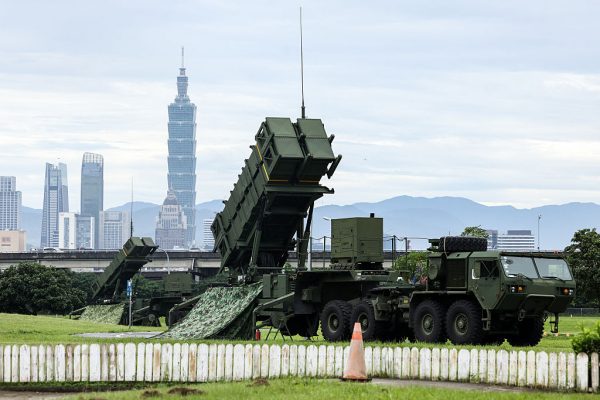
Economic shock measured in trillions
The economic consequences, the study argues, would dwarf conventional wartime costs.
Logan Wright and Charlie Vest—China economy specialists at Mizuho Group and Rhodium Group—estimate that a failed war could inflict unprecedented damage on China’s economy.
According to the report:
- Total economic losses could range from USD 2 trillion to USD 10 trillion.
- Chinese overseas assets and foreign investment inflows could be frozen or rapidly withdrawn
- Export markets and manufacturing supply chains would suffer severe disruption.
- Economic growth would become heavily dependent on domestic consumption, making long-term recovery difficult.
The study warns that if the international community imposes sanctions, China could experience what economists describe as a “nonlinear decline”—a rapid and compounding economic contraction rather than a gradual downturn.
For a country whose growth model still relies heavily on global trade, such a shock would be structurally destabilizing.

Military losses and risks to Party–Army relations
From a military standpoint, the costs would also be staggering.
Joel Wuthnow, a leading expert on the Chinese military, notes that in a large-scale conflict the PLA could face:
- Casualties ranging from tens of thousands to more than 100,000.
- Irreplaceable losses among elite units, including pilots and special operations forces.
- Long-lasting damage to morale across the armed forces.
The study highlights a particularly sensitive risk for Beijing: symbolic defeat. The sinking of an aircraft carrier or catastrophic troop losses could spark internal doubts within the PLA about the leadership’s strategic judgment.
Such doubts would carry political significance. In China’s system, the military is firmly subordinated to the Chinese Communist Party (CCP). A loss of confidence within the ranks could strain this relationship, undermining one of the regime’s core pillars of stability.
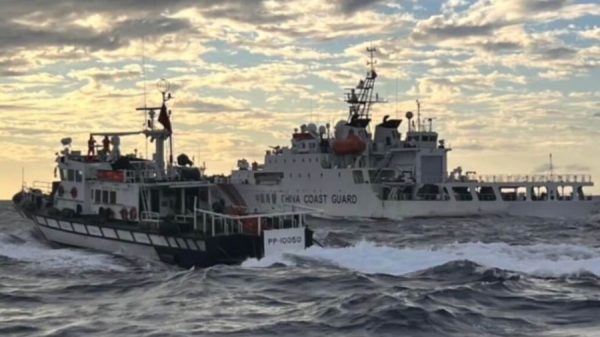
Social stability and political pressure at home
The consequences of defeat would not be confined to the military sphere.
Political scientists Sheena Chestnut Greitens and Jake Rinaldi argue that a failed war would quickly become a domestic social crisis.
The report outlines several likely outcomes:
- Economic contraction and rising unemployment would intensify public anxiety.
- Military defeat could erode the government’s authority and credibility.
- The cost of maintaining internal stability would increase sharply.
- Policy priorities would likely shift even further toward surveillance, censorship, and internal control.
In a system that places a premium on social stability, these pressures could significantly reshape China’s governance model over the long term.

Xi Jinping’s risk calculus as the decisive variable
Whether such a conflict occurs at all, the authors argue, ultimately depends on how Xi Jinping assesses risk.
Zack Cooper, one of the study’s authors and a U.S. strategic analyst, notes that Xi has closely linked the idea of “national rejuvenation” to his personal political legitimacy. In China’s highly centralized political system, major strategic successes—and failures—are inseparable from the authority of the top leader.
A military setback in the Taiwan Strait, particularly one widely perceived as a strategic defeat, could therefore weaken Xi’s political standing.
History offers cautionary lessons. Leaders frequently underestimate the costs of war. The study cites both the Korean War and World War I as conflicts that erupted after leaders misjudged their opponents’ resolve and capabilities.
The risk of miscalculation is compounded in authoritarian systems, where senior military officials may be reluctant to deliver negative assessments to the supreme leader—especially when political loyalty is valued over candor.

A failed attack on Taiwan could set China back decades
Citing the same research, IP Defense Forum presents a grim accounting of potential losses:
- PLA fatalities could exceed 100,000.
- Taiwanese military and civilian casualties could reach 100,000.
- U.S. military casualties could total around 6,000.
- Japan could suffer thousands of casualties.
- China would face prolonged sanctions, diplomatic isolation, and severe reputational damage.
The report argues that the international community could respond by freezing Chinese assets, restricting sports and cultural exchanges, and weakening the Belt and Road Initiative. Taken together, these measures could push China “back several decades” on the global stage.
The study concludes that, when assessed rationally, a war in the Taiwan Strait would be a deeply unfavorable gamble for China.
Yet history suggests that wars are rarely launched under purely rational conditions. Misjudgment, political pressure, and strategic anxiety often distort decision-making. Even when the odds of success are uncertain—or low—leaders may still choose to take the risk.
For this reason, the authors argue, maintaining credible deterrence and reducing opportunities for miscalculation remain essential to preventing conflict in the Taiwan Strait.