By Feng Zhiqiang
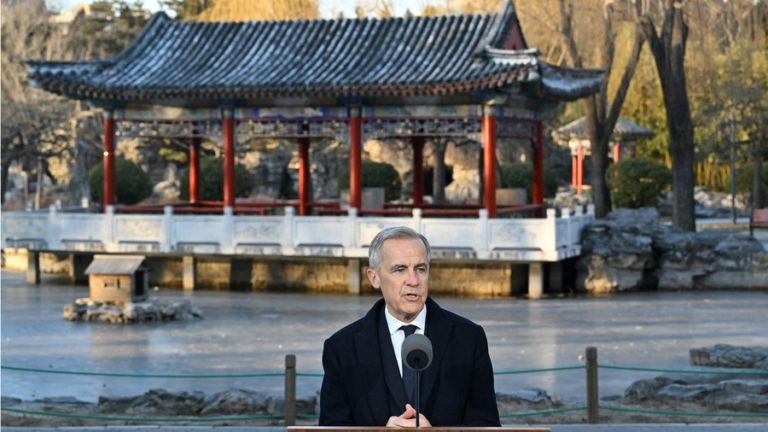
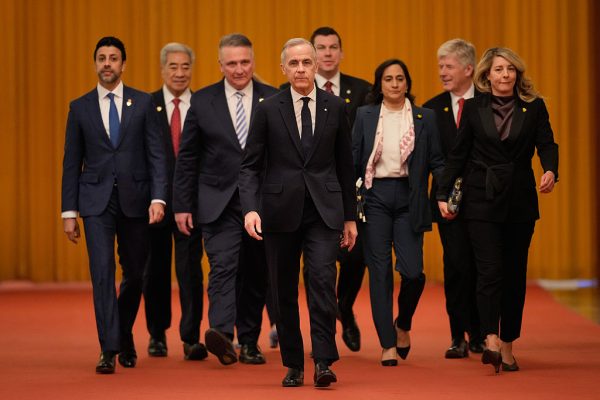
From Jan. 14 to 17, 2026 Canadian Prime Minister Mark Carney toured China. Upon his return, he descended the gangway and stepped onto his own soil, appearing calm and confident, full of self-assurance. So, what satisfactory results did he bring back for Canada and its people?
Even before this visit, Carney had a “thawing” meeting with Xi Jinping on the sidelines of the APEX Summit in South Korea in October 2025, which paved the way for this trip. On Jan. 5—less than two weeks before Carney’s visit—former Canadian Prime Minister Jean Chrétien made a private visit to China and was received by Chinese Vice President Han Zheng. After leaving office, Chrétien, Paul Martin, and former Progressive Conservative Prime Minister Brian Mulroney, all seasoned political figures, have leveraged their relationships with the Chinese leadership and used their staff to conduct broad consulting operations in China. This network of vested interests has woven a hidden influence across Canada’s political and economic spheres, shaping the direction of Canadian policy toward China.
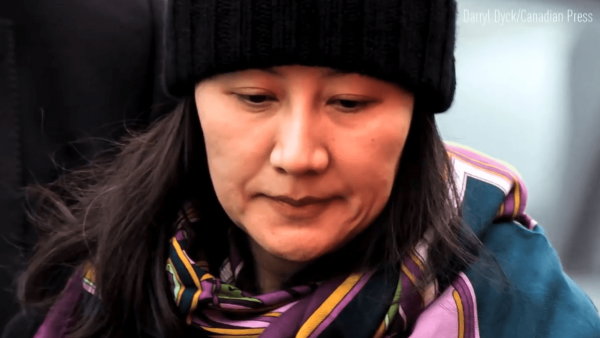
During the Meng Wanzhou extradition case, a group of former politicians publicly co-signed letters pressuring the prosecution to halt the case— revealing a glimpse of this hidden network. Thus, Chrétien risked his advancing years and the toll of travel to make that trip. One may ask: what was the point of his journey? Following the footsteps of this elite network, what significance does Carney’s visit carry?
To summarize what Carney brought back: the most highlighted achievement was the lifting of the ban on canola oil exports to China. Following this, favorable conditions have also emerged for the export of other agricultural and livestock products. In addition, exports of lobsters and seafood to China have become more accessible. What was the reason these exports were initially restricted? Precisely due to China’s retaliatory measures in response to the Meng Wanzhou case—a common tactic in China’s trade weaponization.
Canada relaxes import restrictions
Success
You are now signed up for our newsletter
Success
Check your email to complete sign up
Correspondingly, Canada has relaxed import restrictions on Chinese electric vehicles, reducing the tariff from 100 percent to 6.1 percent. However, the current limit is 49,000 Chinese-made EVs per year, with the quota expected to grow annually.
Of course, Canada could also open up LNG (liquefied natural gas) exports to China. Clean energy is a Canadian strength, and China’s appetite for energy is enormous. But will this massive trade be settled in U.S. dollars, Canadian dollars, or renminbi?
Breaking it down, Carney’s China visit included the signing of a memorandum for a third-phase bilateral central bank swap. The exact amount to be exchanged is not yet known. This arrangement is like both countries issuing each other a huge “credit card” in Canadian or Chinese currency. In trade settlements, the countries can use the swap notes as payment, bypassing the U.S. dollar. This is a concrete step toward internationalizing the renminbi, with far-reaching benefits beyond the balance sheet.
Regarding the impact on Canada-China policy: is Carney’s policy influenced by this hidden network? Can his attempt to steer away from Trump-era dominance avoid harsh retaliation? The fundamental question is: will Canada become a Trojan horse within the democratic industrial chain, undermining national security and economic development?
The influence of domestic vested interest groups is certainly at play, but that is not discussed here. In Canadian political and economic spheres, U.S. influence is pervasive. Can Carney dare to play a China card to offset dependence on the U.S.? Can he navigate the high wire of rejecting the tiger at the front door while keeping the wolf at bay in the back, maintaining Canada’s independence? Binding Canada deeply with an authoritarian country with global strategic ambitions raises serious security and sovereignty risks. How will Washington view a Canada so closely tied to its main strategic rival? This is bound to strain U.S.-Canada relations.
A very different scenario
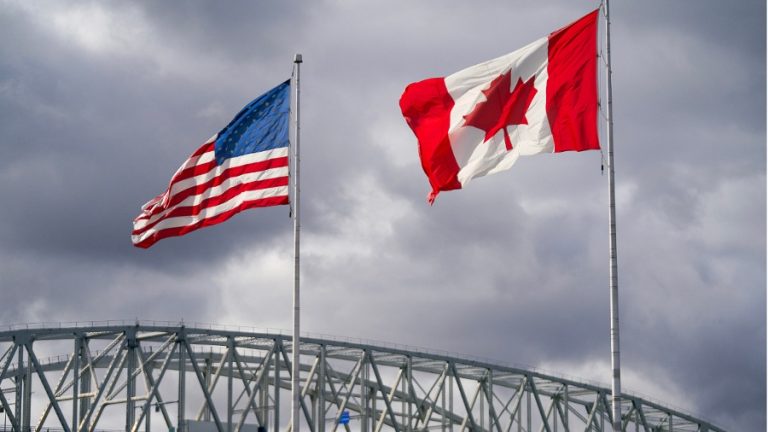
A very different scenario could arise from “successful” Canada-U.S. relations. If Ottawa and Washington engage in intensive negotiations to revise the CUSMA agreement and resolve long-standing trade frictions, providing Canadian goods with stable access to the U.S. market, the cost could be that Canada must fully align its China policy with U.S. policy.
In this framework, the U.S. might demand new tariffs on Chinese products and restrictions on Chinese investment, prompting Beijing to retaliate by expanding punitive measures from agricultural products to energy and other exports.
Facing either of these scenarios reveals an uncomfortable reality: no matter how much Canada deepens cooperation with China, the key variable in its China policy remains Washington. Even if Carney conducts high-risk diplomacy in Beijing, he could easily be caught in a U.S.-led sanctions system or face sudden economic penalties for “policy misalignment.”

(This article represents the personal views of the author and not necessarily those of Vision Times)