By Jin Yan
As artificial intelligence (AI) emerges as a central arena of global technological competition, rivalry between the United States and China has become a defining feature of the international tech landscape. Over the past two years, Chinese AI companies briefly gained global attention through open-source models and efficiency-driven innovation.
More recently, however, more cautious assessments have emerged among leading Chinese AI researchers. Chip shortages and U.S. export controls have created structural barriers, significantly narrowing China’s prospects of overtaking the United States in the near term.
A recent Wall Street Journal report noted that while Chinese companies have continued operating under severe resource constraints, the performance gap may be widening. Commentators such as analyst Jason argue, however, that the outcome remains uncertain, suggesting China could still regain momentum through domestic innovation and access to global capital.
From catch-up to stalemate: the background of the AI competition
Rapid advances in artificial intelligence have been driven by explosive growth in computing power, with advanced semiconductors serving as the industry’s core enabling technology. In the late 2010s, China launched national-level initiatives such as the “New Generation Artificial Intelligence Development Plan,” aiming to become a global AI leader by 2030.
Success
You are now signed up for our newsletter
Success
Check your email to complete sign up
The United States, meanwhile, maintained an early lead through Silicon Valley’s innovation ecosystem and massive private-sector investment, producing breakthroughs such as OpenAI’s GPT series.
Since 2024, competition has intensified. Chinese technology giants including Alibaba and Tencent, alongside emerging startups such as DeepSeek and Zhipu AI, have released multiple high-quality large language models (LLMs), achieving strong results in global AI benchmarks.
DeepSeek, in particular, drew attention within U.S. developer communities. Its open-source strategy allowed Western researchers to freely access and refine its code, temporarily boosting China’s international standing and narrowing the gap with leading U.S. models.
According to assessments by the nonprofit research group Epoch AI, the performance gap between China’s top models and the best U.S. models narrowed from an average of seven months in 2024 to just four months.

The US AI ecosystem advantage
The United States’ advantage lies in its comprehensive and vertically integrated AI ecosystem. From chip design to cloud infrastructure, U.S. companies such as Nvidia, Google, and Microsoft dominate critical technologies across the AI supply chain.
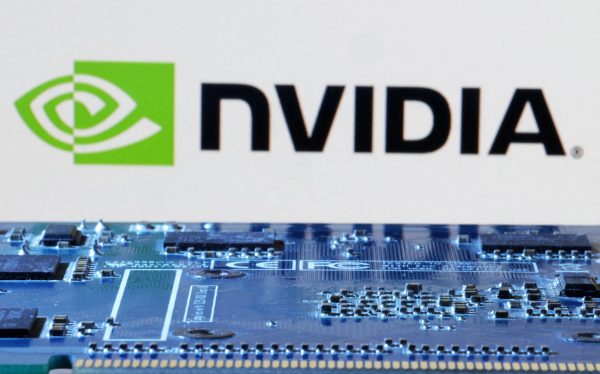
Nvidia’s graphics processing units (GPUs) effectively control the global AI training market, with the company’s market capitalization surpassing $3 trillion in 2025. China, by contrast, relies on domestic chipmakers such as Huawei HiSilicon and Cambricon, but U.S. export controls have blocked access to advanced semiconductor manufacturing processes.
As a result, Chinese AI developers face acute computing constraints. At a 2025 AI conference in Beijing, Lin Junyang, technical lead of Alibaba’s Qwen model, said that most of China’s available computing power is devoted to maintaining existing products. U.S. companies, by contrast, can allocate vast resources to next-generation research and frontier AI development.
Jason argues that this imbalance is fundamentally geopolitical. In 2022, the U.S. Commerce Department imposed export restrictions barring the sale to China of advanced AI chips below 14-nanometer processes, along with related manufacturing equipment.
These controls have forced Chinese firms to pursue indirect strategies—such as renting data centers in Southeast Asia or the Middle East—arrangements that are both costly and operationally complex.
“The chip bottleneck is not purely technical but strategic,” Jason said. “U.S. controls help preserve its lead, but they also stimulate China’s domestic innovation.”
Chip bottlenecks: China’s primary AI constraint
Semiconductor shortages remain China’s most pressing limitation in the global AI race. Nvidia’s pace of technological iteration continues to accelerate. In January 2025, the company introduced its Rubin architecture, delivering performance gains of more than 30 percent over the previous Blackwell generation.
Major customers included U.S. technology giants such as Meta and Amazon, with no Chinese firms mentioned—an omission that reflects ongoing export restrictions.
Sources say Chinese companies such as Zhipu and MiniMax have begun negotiating to rent data centers in Singapore and the United Arab Emirates to indirectly access Rubin chips. Earlier efforts to obtain Blackwell chips largely failed.
Even when third-country usage is permitted, these arrangements face regulatory risk and severe supply limits. UBS analysts estimate that Chinese internet companies spent roughly $57 billion on AI-related capital expenditures in 2024—about one-tenth of their U.S. counterparts. Microsoft alone announced more than $100 billion in AI infrastructure investment in 2025.
Widening gaps in frontier AI research
At the 2025 Beijing AI Summit, Zhipu founder Tang Jie publicly acknowledged that the gap with leading U.S. AI firms may be widening. Lin Junyang estimated the likelihood of Chinese companies surpassing OpenAI or Anthropic within three to five years at “20 percent or less.”
He noted that U.S. firms can devote roughly 80 percent of their computing power to frontier model exploration, while Chinese companies are increasingly constrained to commercial applications such as customer service automation and image recognition.
DeepSeek’s experience illustrates these structural limits. While developing its flagship model in 2024, the company initially tested Huawei’s Ascend chips but found their performance insufficient, eventually turning in part to Nvidia hardware.
Huawei’s Ascend 910B, launched in 2025, is marketed as approaching Nvidia’s A100. Analysts, however, estimate a remaining performance gap of 20 to 30 percent. Without access to advanced manufacturing from TSMC or Samsung, China must rely on domestic producers such as SMIC, which continue to lag in yield and production capacity.
Tencent AI head Yao Shunyu recently said that chip capacity remains the primary bottleneck. Although Washington permitted Nvidia to sell H200 chips to China in 2025, industry insiders say the move offers limited relief, as the H200 trails Rubin by two generations.
Nvidia CEO Jensen Huang has acknowledged strong Chinese demand, but sales remain tightly restricted to approved uses.
Jason described U.S. export controls as a double-edged sword: beneficial to the United States in the short term, but potentially accelerating China’s push toward technological self-sufficiency over time.
China’s AI resilience: open source and financing
Despite mounting headwinds, China’s AI sector continues to adapt. DeepSeek has focused on efficiency-driven innovation, developing training architectures that allow larger models to be trained with fewer chips. Two papers published in 2025 on memory optimization were later adopted by Western researchers.
Many leading Chinese models—including Alibaba’s Qwen and Baidu’s ERNIE—remain open source, lowering entry barriers compared with closed U.S. systems.
Chinese startups have also continued to attract financing. In 2025, Zhipu and MiniMax raised more than $1 billion combined through Hong Kong IPOs, with MiniMax’s shares doubling shortly after listing. Investor Alyssa Lee said valuations continue to reflect confidence in China’s long-term catch-up potential.
Huawei and other firms have made incremental progress in domestic semiconductor development. In 2025, Zhipu used Huawei chips to develop an open-source image-generation model, demonstrating technical feasibility despite persistent performance gaps.
Government initiatives such as the “Eastern Data, Western Computing” project and a new phase of the National Integrated Circuit Industry Investment Fund aim to strengthen domestic computing infrastructure.
China also leads globally in AI application deployment, with widespread use across e-commerce, healthcare, and manufacturing. According to Epoch AI, China accounted for 40 percent of global AI patent filings in 2025, surpassing the United States.
US strengths: capital, talent, and scale
The U.S. advantage rests on capital intensity, global talent mobility, and a fully developed innovation ecosystem. Total U.S. AI investment exceeded $200 billion in 2025, with OpenAI alone raising more than $10 billion to train GPT-5.
Government support through the CHIPS and Science Act and the opening of TSMC’s Arizona fabrication facility further strengthened U.S. semiconductor supply chains.
Challenges remain. Rising energy consumption and regulatory pressure are mounting concerns. Data centers accounted for an estimated 10 percent of U.S. electricity demand in 2025, raising environmental and infrastructure questions.
Who will prevail in the US–China AI race?
Looking ahead three to five years, outcomes remain uncertain. The United States is likely to retain a near-term lead through superior access to advanced chips and capital, potentially reaching artificial general intelligence first.
China’s prospects hinge on breakthroughs in alternative technologies and shifting geopolitical dynamics. Jason argues that China’s resilience in innovation and its vast application markets could allow it to close the gap by 2030, while skeptics foresee a much longer timeline.
Globally, the U.S.–China AI competition carries far-reaching implications for economics, geopolitics, and ethics. Regardless of who leads, cooperation on AI safety standards may ultimately prove unavoidable.