By Yang Tianzi
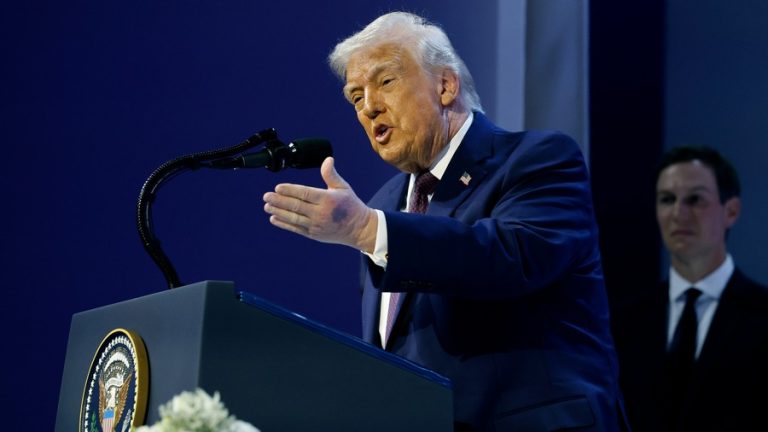
A statement made by U.S. President Donald Trump at the World Economic Forum in Davos, Switzerland, has brought a dramatic turning point to the Greenland crisis that has simmered for weeks. Known for his reputation as a master of the “art of the deal,” Trump announced that the United States has reached a “framework for a future agreement” with NATO regarding Greenland, temporarily easing concerns that Washington might resort to force to seize territory from an ally.
Behind this seemingly sudden policy shift, however, lies a deeper strategic calculation: as the Chinese Communist Party (CCP) expands its military–civil fusion activities in the Arctic, the United States is attempting to strike a delicate balance between maintaining alliance relations and safeguarding national security.
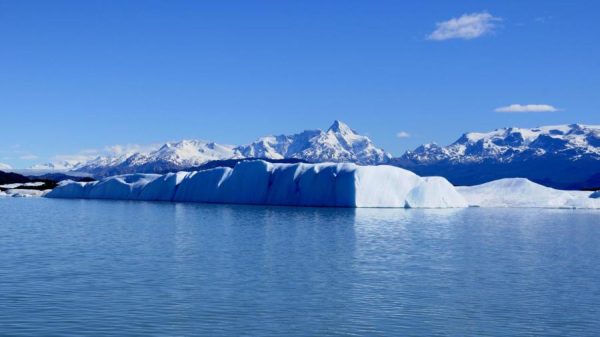
US–China Arctic rivalry enters a new phase
To understand Trump’s fixation on Greenland, one must first recognize a disruptive geographical reality. Yu Maochun, director of the China Center at the Hudson Institute, pointed out in his in-depth analysis that Greenland is closer to New York (about 2,900 km) than it is to Denmark’s capital, Copenhagen (about 3,500 km). This is not merely a cartographic detail, but a core logic of modern strategy.
In the era of ballistic missiles, the shortest path between any two points on Earth is a great-circle route. Intercontinental ballistic missiles launched from Eurasia toward the U.S. East Coast would optimally pass over the Arctic and Greenland. This means Greenland is effectively America’s “northern high ground,” not Denmark’s backyard.
Success
You are now signed up for our newsletter
Success
Check your email to complete sign up
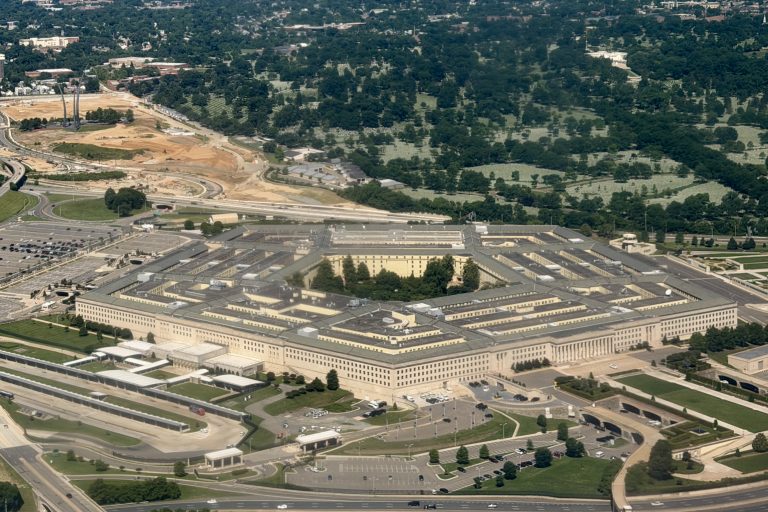
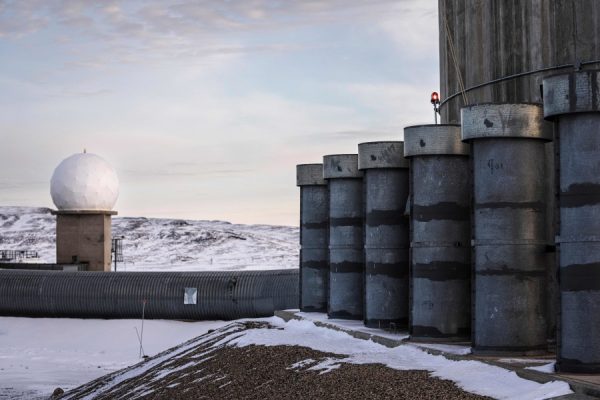
The United States operates Pituffik Space Base in northwestern Greenland, its northernmost military installation, equipped with advanced ballistic missile early-warning radar and space surveillance systems. It is a critical node in America’s homeland defense network.
At Davos, Trump revealed that Greenland is essential to his planned “Golden Dome” defense system, intended to protect the United States from missile attacks by Russia and China. His remarks confirmed Greenland’s central role in future U.S. defense architecture—upgrading it from a passive early-warning outpost to an active interception and defense stronghold.
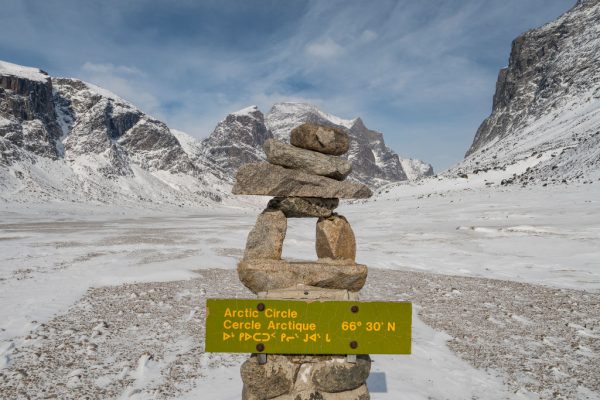
The CCP’s Arctic ambitions and hidden threats
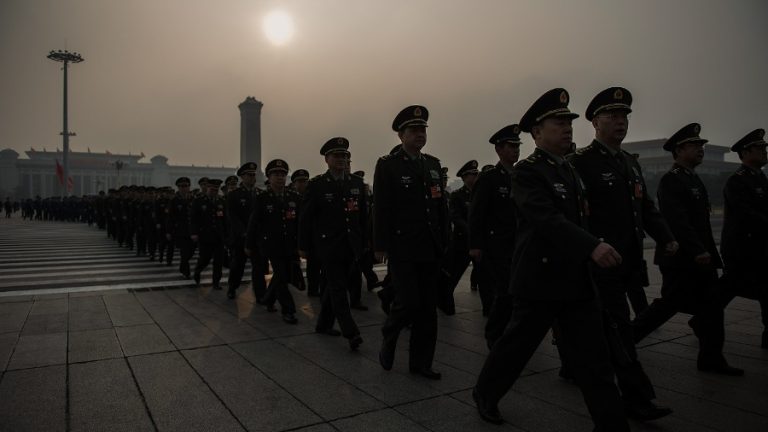
The primary driver behind Trump’s hardline stance is the CCP’s carefully designed long-term Arctic strategy. Although China lies more than 1,000 kilometers from the Arctic Circle, Beijing’s first Arctic white paper in 2018 creatively labeled China a “near-Arctic state” and set a goal of becoming a polar power by 2030.
Yu Maochun argues this is a political claim rather than a geographical fact, aimed at providing legitimacy for China’s expansion in the Arctic. Unlike Russia, which relies mainly on military deterrence in the region, China—backed by an economy roughly ten times larger than Russia’s—has adopted a more refined and long-term penetration strategy. Its Arctic ambitions encompass coordinated economic, scientific, and diplomatic efforts, using infrastructure financing and supply-chain control to gain footholds in telecommunications, satellites, and mineral resources.
The danger of this “military–civil fusion” strategy lies in its legality and concealment. Ports, mines, and undersea fiber-optic cables are normal commercial projects in peacetime, but can become strategic assets in a crisis. In the past, China attempted to purchase large tracts of land in Iceland; although the deal was blocked, Beijing has continued to exert influence through more covert means such as scientific cooperation and local investments.
When explaining his tough position, Trump explicitly cited the threat posed by Russian and Chinese vessels operating near Greenland. If China were able to establish monitoring or communications facilities in the Arctic, combined with Russia’s military presence, it could significantly shorten U.S. warning times for attacks on the homeland, posing unprecedented challenges to America’s missile defense systems.
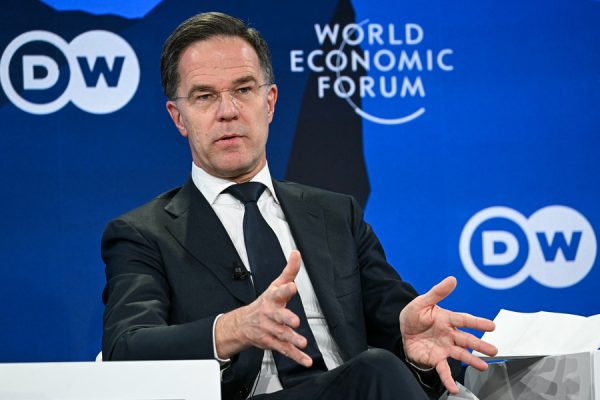
The ‘future agreement framework’
On Jan. 21, Trump announced on his social media platform Truth Social:
“Based on my very productive meeting with NATO Secretary General Mark Rutte, we have developed a framework for a future agreement regarding Greenland.”
While Rutte confirmed the call, he emphasized that Greenland’s “Danish sovereignty issue” was not discussed—an important diplomatic phrasing suggesting NATO is attempting to meet U.S. security needs without crossing sovereignty red lines.
Danish Prime Minister Mette Frederiksen was more explicit: “Danes can discuss anything, but our sovereignty is not negotiable.” Greenland’s Prime Minister Jens-Frederik Nielsen echoed this stance, calling sovereignty an inviolable “red line.”
Greenland’s Foreign Minister Vivian Motzfeldt publicly stated that her government had not authorized Rutte to “negotiate on its behalf,” only to “directly convey Greenland’s red lines” to Trump.
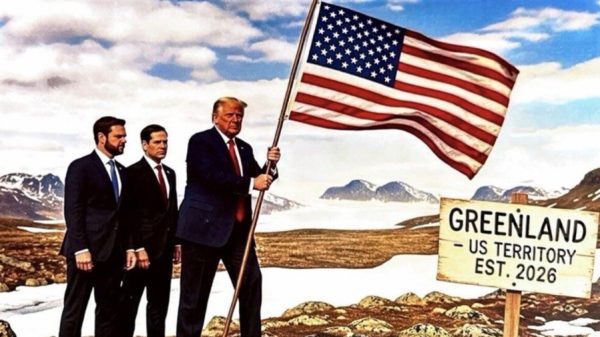
Possible models and historical precedents
If Denmark and Greenland firmly reject selling territory, what might Trump’s “future agreement framework” actually include? U.S. media, citing anonymous officials, have outlined several possible alternatives.
The Cyprus Model: Denmark could relinquish sovereignty over small areas of Greenland for U.S. military bases, similar to Britain’s sovereign base areas in Cyprus since its independence in 1960. Under this model, the U.S. would gain one or more enclaves with full sovereignty and jurisdiction.
The Guantánamo Model: Another reference is Guantánamo Bay in Cuba. Since 1903, the U.S. has exercised complete control through a “permanent lease,” retaining full jurisdiction despite Cuba’s nominal sovereignty. This could satisfy Trump’s desire for effective control while allowing Denmark to retain formal sovereignty.
The Arctic Sentinel Model: Currently the most feasible compromise. UK Foreign Secretary David Lammy has called for establishing an “Arctic Sentinel” mission, similar to NATO’s “Baltic Sentinel,” to enhance maritime surveillance. Rutte said the framework calls for NATO contributions in this area, with deployment hoped for in early 2026.
All of these options face major legal and political hurdles. Greenland’s constitution explicitly prohibits the sale of land, and any treaty involving territorial transfer or permanent leasing would require approval by Greenland’s parliament or even a public referendum.
History and reality
Yu Maochun notes that territorial transactions are not without precedent. Denmark has sold overseas territories multiple times for strategic or financial reasons: Danish India in 1845, the Gold Coast (modern Ghana) in 1850, and the Nicobar Islands in 1868. Most notably, in 1917 Denmark sold the Danish West Indies—today’s U.S. Virgin Islands—to the United States for $25 million in gold.
These examples show that Danish sovereignty over distant territories has not always been immutable. Greenland currently receives about $600 million annually in subsidies from Denmark, a heavy burden for a small country. However, modern Greenland enjoys high autonomy and strong democratic consciousness, making it fundamentally different from past colonial cases.
Beyond military considerations, Greenland’s rich mineral resources are another key element of Trump’s strategy. The island holds vast, largely undeveloped rare-earth deposits, crucial for technologies ranging from smartphones and electric vehicles to military radar and missile guidance systems.
As U.S.–China technological competition intensifies, control over rare-earth supply chains has become strategically vital. China currently dominates global rare-earth production, constraining Western high-tech industries. While Trump has not explicitly said the U.S. covets Greenland’s minerals, he has stated that American control of Greenland would put “everyone in a very favorable position, especially in terms of security and minerals.”
If the U.S. could develop Greenland’s rare-earth resources, it would help break China’s monopoly and diversify critical mineral supply chains—aligning with Yu Maochun’s concept of a “denial strategy,” aimed not only at blocking Chinese military footholds in the Arctic but also preventing adversaries from controlling key resources.
A call for clearer awareness and decisive action
Yu Maochun emphasizes that the key issue is not whether China becomes an Arctic power, but whether the U.S. and its allies can prevent Beijing from establishing covert dual-use footholds. The core of this strategy is “denial”—ensuring the northern high ground is not permanently occupied by the CCP, and that NATO’s northern deterrence does not erode as ice melts.
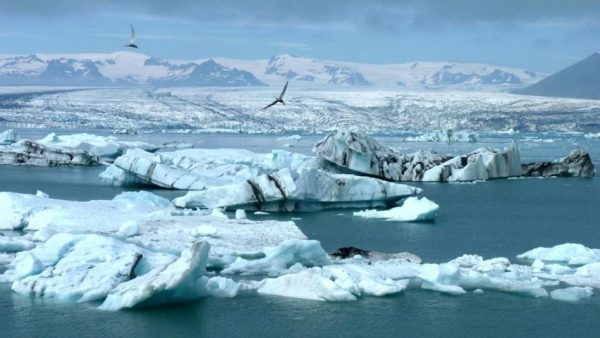
As climate change continues to reduce Arctic ice, the region’s strategic value and accessibility are rising. If China establishes lasting dual-use facilities there, it would pose a direct threat to U.S. homeland security. Greenland sits at the heart of this denial strategy, serving both as a critical node in U.S. missile early-warning systems and as a strategic chokepoint along Arctic shipping routes.
Trump’s “future agreement framework” effectively translates emotional political posturing into an actionable strategic denial plan. By working through NATO and concepts like the “Arctic Sentinel,” Washington can frame expanded military and intelligence deployments in Greenland as collective defense against China and Russia, rather than unilateral U.S. expansion.
At its core, the Greenland dispute reflects great-power competition in the Arctic in the 21st century. Through its “near-Arctic state” narrative and military–civil fusion strategy, the CCP is building long-term influence in a region once overlooked. For the United States, the Arctic is no longer a distant frontier, but a strategic frontline tied directly to homeland security.
As Yu Maochun warns, the essence of this competition is denial—ensuring the northern high ground is not permanently occupied by the CCP. In the face of Beijing’s carefully designed long-term Arctic布局, Western nations need clearer awareness and more decisive action.