By Yang Tianzi
As much of the world celebrates the rapid rise of generative artificial intelligence, a sharply different message has come from the Vatican.
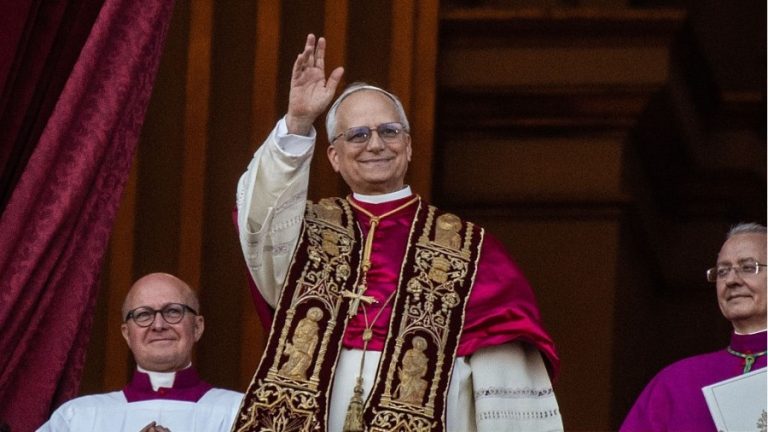
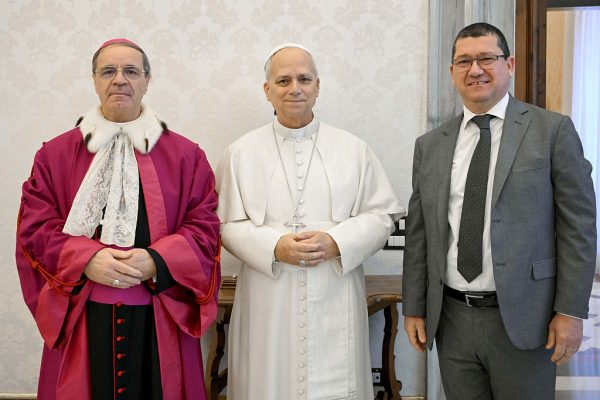
Pope Leo XIV, the first American-born pope, has warned that generative AI is quietly eroding the foundations of human identity and social relationships, posing ethical and social risks that, he says, can no longer be ignored.
In a message released on Jan. 25 for World Communications Day, the pope cautioned that the technology’s growing influence is reshaping how people understand truth, reality, and one another. His warning comes at a moment when AI-generated text, images, and video are becoming part of daily life for millions.
The pope’s remarks echo concerns that have been building since 2023, when an AI-generated image of Pope Francis wearing a fashionable puffer jacket went viral online. At the time, the image stunned viewers not because it was humorous, but because it was convincing. Since then, the line between what is real and what is fabricated has only grown thinner.

Success
You are now signed up for our newsletter
Success
Check your email to complete sign up
When probability replaces truth
In his message, Pope Leo XIV took aim at how generative AI systems work. He warned that these tools treat statistical probability as knowledge, producing answers based on what is most likely, rather than what is true.
That approach, he said, risks turning truth into a popularity contest driven by data patterns. While AI can generate fluent and persuasive responses, the pope cautioned that its outputs remain approximations, not understanding.
He warned that long-term dependence on such systems could subtly reshape human thinking itself. Human intelligence, he said, is not limited to calculation. It includes intuition, moral judgment, creativity, and lived experience—qualities that cannot be reduced to code.
Handing over too much thinking to machines, he warned, risks weakening human agency and responsibility.
AI and the shaping of public opinion
The pope also warned that AI is increasingly capable of influencing public opinion and deepening social divisions.
Unlike earlier social media tools that mainly amplified existing content, generative AI allows text, images, and videos to be produced automatically and at enormous scale. Messages tailored to specific fears, beliefs, or political views can now be generated around the clock.
The pope warned that this environment makes it easier to reinforce confirmation bias, spread personalized false narratives, and overwhelm genuine public debate. At the same time, the sheer volume of content makes verification harder, while incentives to verify information continue to weaken.
A growing crisis of reality
One of the pope’s central concerns is what he described as a growing crisis of reality itself.
Images were once trusted as records of real moments. Generative AI has broken that link. Pictures and videos no longer need to be connected to any actual event to appear authentic.
As societies are flooded with such content, the pope warned, the shared sense of objective reality that underpins trust begins to fracture. False information spreads more easily, while even accurate reporting can be dismissed as artificial or manipulated.
The result, he said, is a public increasingly divided into isolated information bubbles, each reinforcing its own version of reality.
Power concentrated in few hands
Pope Leo XIV also warned that control over AI development is increasingly concentrated among a small number of powerful companies.
Building advanced AI systems requires enormous computing power and vast amounts of data, creating barriers that few organizations can overcome. As a result, a handful of technology firms now shape tools used by billions of people worldwide.
This concentration of power raises serious concerns, the pope said. Decisions made by opaque algorithms—about what people see, what opportunities they are offered, or how they are evaluated—often remain hidden from public scrutiny. He warned that humanity’s shared knowledge risks being turned into private profit, while the social costs are borne by society as a whole.

What happens to human identity?
At the heart of the pope’s message is a question about what it means to be human in an age of intelligent machines.
Human identity has long been tied to creativity, reason, emotional depth, and social connection. As AI systems increasingly write, compose music, create images, and generate ideas, the pope warned that society may begin to undervalue human effort, skill, and experience.
He also pointed to the social consequences of job displacement, noting that work provides more than income. It offers dignity, purpose, and a sense of belonging—things that cannot be easily replaced by automation.
The quiet erosion of relationships
The pope expressed particular concern about how AI is reshaping human relationships.
Real relationships, he said, are built on mutual vulnerability, unpredictability, and shared struggle. Interactions with machines lack those qualities. AI does not need care, forgiveness, or understanding.
He warned that as people increasingly turn to AI companions, assistants, or chatbots to avoid the difficulties of real human connection, they may gradually lose the skills needed to build and sustain genuine relationships, leading to deeper loneliness rather than connection.
Military AI and moral responsibility
Pope Leo XIV also reiterated his opposition to the use of AI in warfare, warning against allowing machines to make decisions over life and death.
If an autonomous system harms civilians, he asked, who is responsible? He warned that removing human fear, fatigue, and moral hesitation from conflict could make wars easier to start and harder to stop.
Decisions to take life, he said, must remain in human hands if human dignity is to be preserved.
A call for education and governance
The pope called for stronger governance of AI and placed particular emphasis on education.
He urged societies to teach young people not only how AI works, but how it can mislead, manipulate, and shape perceptions of reality. Digital literacy, he said, must now include an understanding of algorithms and their limits.
Beyond technical skills, he stressed the need to cultivate qualities that machines cannot replicate: critical thinking, creativity, empathy, moral judgment, and the ability to form real human bonds.
Those, he said, are the qualities that will ultimately determine whether technology serves humanity—or quietly reshapes it.