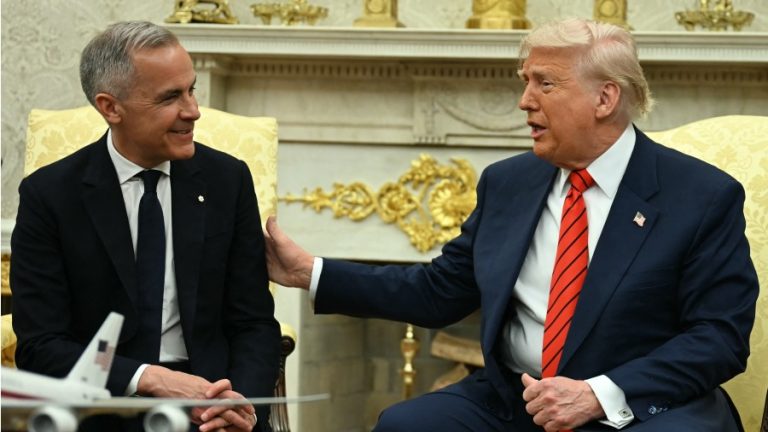
Reuters reported that Canadian Prime Minister Mark Carney spoke with U.S. President Donald Trump on Monday, Jan. 26 and explicitly retracted some of his previous remarks made at the World Economic Forum in Davos. U.S. Treasury Secretary Scott Bessent disclosed the details during an interview on Fox News’ Hannity the same day.
Bessent said he was in the Oval Office at the White House and heard the call between Trump and Carney in person. He described Carney as having “very proactively retracted some inappropriate remarks he made in Davos.”
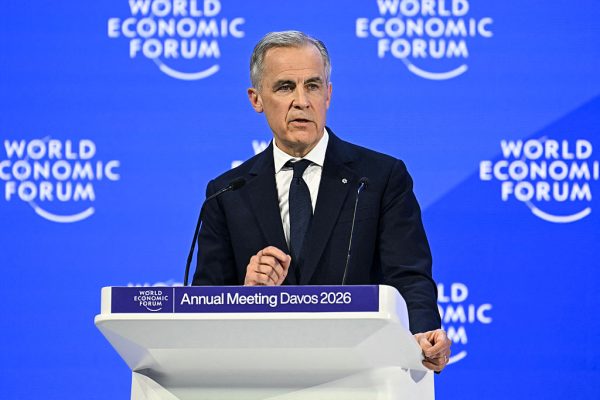
Earlier, Carney had delivered a speech in Davos calling on countries to accept the reality that “the rules-based global order is over” and noting that medium-sized countries need to strengthen cooperation to avoid being disadvantaged in great-power rivalries. The speech drew standing applause from several political and business figures at the forum but also provoked displeasure from the U.S. side.
US-Canada trade and diplomatic tensions rise
After Carney’s remarks, Trump withdrew his previous invitation for Canada to join a “Peace Committee” and warned that if Canada continued to pursue trade agreements with China, the U.S. would impose tariffs of up to 100 percent on Canadian goods.
Bessent said in the interview: “Canada certainly depends on the United States.” He also warned that further U.S. tariffs “would be catastrophic for Canada.”
Success
You are now signed up for our newsletter
Success
Check your email to complete sign up
At Davos, Carney did not mention Trump or the U.S. by name but said: “Medium-sized countries must unite, otherwise if you’re not at the negotiating table, you end up on the menu.” This statement was widely interpreted as a veiled reference to U.S. dominance in the global system.

Canadian response: remarks are part of negotiation context
According to the Associated Press, Carney said on Monday that some of Trump’s recent tough statements should be seen as “strategic positioning” ahead of upcoming trade negotiations.
He noted that the review process for the United States-Mexico-Canada Agreement (USMCA) will start this year and is expected to be a “strict but normal review.”
“The President is a tough negotiator, and these remarks should be understood within the broader context of negotiations,” Carney said.
Trump warned over the past weekend that if Canada continues to pursue trade cooperation with China, the U.S. would impose 100 percent tariffs on Canadian goods. Carney responded that Canada has no intention of signing a comprehensive free trade agreement with China.
Canada’s Minister responsible for U.S.-Canada trade, Dominic LeBlanc, said he has communicated with U.S. Trade Representative Jamieson Greer to clarify that Canada’s negotiations with China are limited to “a few economic areas.”
LeBlanc emphasized that the upcoming review is part of the established USMCA mechanism, not a full renegotiation like during Trump’s first term.
Adjustments in Canada-China trade and practical considerations for US-Canada relations
In 2024, Canada imposed 100% tariffs on Chinese electric vehicles in coordination with the U.S., and 25% tariffs on steel and aluminum. China subsequently imposed 100% tariffs on Canadian canola oil and meal, and 25 percent tariffs on pork and seafood.
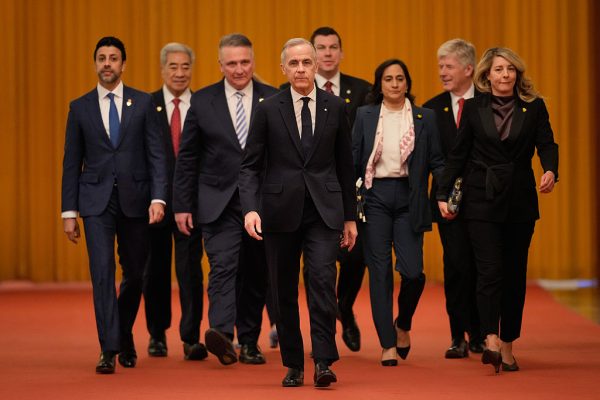
During Carney’s visit to China this month, Canada adjusted its policies, lowering the electric vehicle tariff on China to 6.1 percent and setting an annual import limit of 49,000 vehicles, to gradually increase to about 70,000 over five years. In exchange, China agreed to resume imports of certain Canadian agricultural products and promised to invest in Canada’s automotive sector over the next three years.
Carney said the quota accounts for about 3 percent of Canada’s annual car sales, a manageable level.
Meanwhile, Trump’s recent statements on Greenland have also heightened U.S.-Canada tensions. He repeatedly hinted that Canada should “integrate more closely with the U.S.” and posted a modified U.S. map on social media including Canada, Greenland, and parts of Latin America.