By Fu Longshan
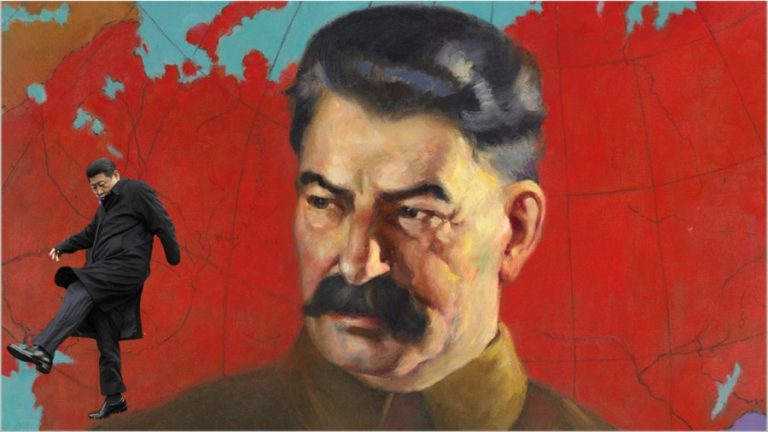
From 1937 to 1938, the Soviet military entered what historians have described as a period of “self-destruction.” During Stalin’s Great Purge, three of the Soviet Union’s five marshals were executed, including Mikhail Tukhachevsky, the mechanized warfare theorist often called the “Red Napoleon.” Of the 15 army generals, 13 were executed, leaving a survival rate of just 13 percent. All military district commanders were killed. Among mid- and senior-level officers, about 90 percent of corps commanders and 80 percent of divisional commanders were purged. In total, an estimated 35,000 to 40,000 officers were eliminated through execution, imprisonment, or dismissal.
Stalin did not purge the military because its leaders were incompetent, but because they were highly capable and therefore perceived as a threat to his authority.
As the leader of a communist totalitarian state, Stalin preferred a temporarily paralyzed army to the existence of commanders with independent judgment who were respected by their troops. This decision left the Soviet military in a near “brain-dead” condition when it confronted Hitler in 1941. One critical factor was the execution of Tukhachevsky, the leading theorist behind the Soviet Union’s most advanced “deep operations” doctrine. German forces later drew heavily on his ideas when developing blitzkrieg tactics during Operation Barbarossa, while the Soviet army, crippled by purges, reverted to rigid positional warfare.
After the purges, the military adopted a dual-command system in which all operational decisions required the approval of political officers. This system effectively placed amateurs over professionals, drastically slowing the Soviet response to the German blitzkrieg and leading to the encirclement and destruction of millions of troops within weeks.
Success
You are now signed up for our newsletter
Success
Check your email to complete sign up
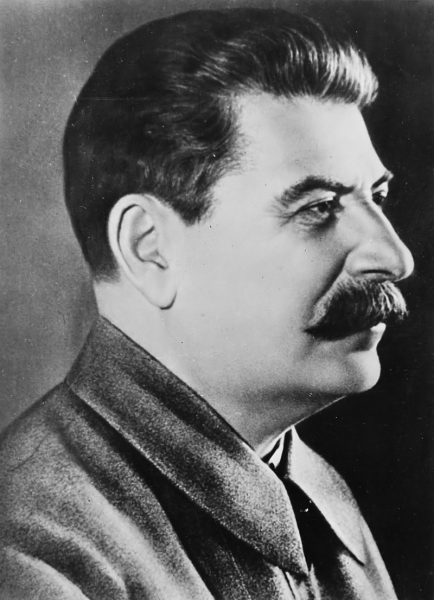
Fear permeated the ranks. Ordinary soldiers hesitated to carry out orders. Junior officers were afraid to report real battlefield conditions. When German forces attacked, Soviet border units waited for “political review” from Moscow and missed critical opportunities to respond. The bureaucratic system became little more than an echo chamber, producing a collective intelligence failure in 1941. Scholars have long cited this episode as a classic case of strategic intelligence collapse.
A climate of fear turned intelligence officers into an echo chamber
June 1941, early summer in Tokyo. Legendary intelligence officer Richard Sorge was gripped by anxiety. Embedded within the German embassy, Sorge relied on his close personal relationship with Ambassador Eugen Ott to obtain top-secret operational directives sent from Berlin.
A precise signal of disaster: On June 15, Sorge transmitted a telegram to the GRU headquarters in Moscow that would later become infamous: “War will break out in full on June 22. Germany will deploy between 170 and 190 divisions.”
When this critical intelligence reached Stalin, the “Man of Steel” was still immersed in the illusion of the Molotov–Ribbentrop Pact, which he regarded as a crowning achievement of his diplomacy. According to declassified archives, Stalin took a red pencil and scrawled a vulgar remark across the report:
“This bastard has opened a few little shops in Tokyo and now he’s stirring up trouble. Tell him to go to his fucking mother!” (Пошёл он к е… матери!)
Declassified GRU records confirm the existence of this June 1941 telegram. At the time, Stalin harbored deep suspicions toward Britain and the United States. He believed British Prime Minister Winston Churchill was eager to drag the Soviet Union into war to relieve pressure on Britain. As a result, every warning of a German attack was dismissed as “Anglo-American imperialist provocation.”
Fear compounded the problem. Filipp Golikov, head of the GRU, had seen several predecessors executed as “spies” during the Great Purge. Terrified for his own survival, Golikov appended a cautionary note when forwarding Sorge’s report, stating that the intelligence “may originate from rumors spread by Britain.”
China specialist Ming Chü-cheng has observed that under totalitarian logic, the leader can never be wrong. If reality contradicts the leader’s judgment, then reality itself becomes a “provocation.” Stalin’s humiliation of Sorge reflected a deeper fear and rejection of truth.
Stalin’s mental collapse
In 1939, Stalin signed the Molotov–Ribbentrop Pact with Hitler, viewing it as a masterstroke of statecraft. In the early hours of June 22, 1941, German artillery fire shattered that illusion.
After the invasion began, the Red Army experienced widespread desertions and defections. On the Ukrainian front, as German armored units advanced, tens of thousands of Soviet soldiers surrendered, some even guiding German troops. This was not cowardice, but resentment born of forced collectivization and political purges. According to accounts, during an internal meeting, General Georgy Zhukov privately remarked, “If Tukhachevsky were still alive, we would never have lost thousands of aircraft at the border.”
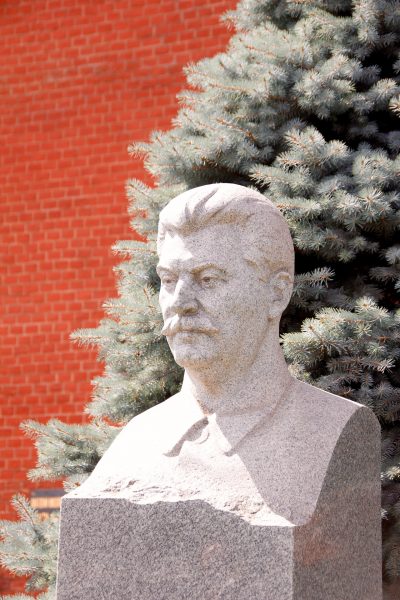
Internal oral accounts that surfaced after the Soviet Communist Party’s 20th Congress reveal that Stalin’s early wartime conduct bore little resemblance to the calm image later promoted by propaganda. Instead, it amounted to a complete psychological collapse.
1. Denial and ten days of disappearance
When reports of bombing along the border arrived, Stalin’s first order was not to retaliate. He believed the attacks might be unauthorized actions by rogue German commanders. Only after German tanks had penetrated deep into Soviet territory did he recognize that Sorge had been right and that his own judgment had been catastrophically wrong.
Accounts say that from June 28 to June 30, Stalin secluded himself at his Kuntsevo dacha, refusing phone calls and visitors. In a totalitarian state, such a power vacuum was deeply alarming.
2. “Everything Lenin built, we have ruined”
When Politburo members, including Vyacheslav Molotov and Lavrentiy Beria, cautiously entered the dacha seeking direction, Stalin reportedly sat slumped on a sofa, his face drained of color.
He is said to have suspected they had come to arrest him. Muttering to himself, Stalin said, “Lenin left us a great legacy, and we, his successors, have ruined it.”
Yu Maochun has analyzed this breakdown as stemming from a sudden loss of control. For a dictator accustomed to deciding life and death, the realization that his will could not stop enemy tanks led to a rapid internal collapse.
3. Scapegoating and concealment
To deflect responsibility for his strategic failure, Stalin moved quickly to find scapegoats. General Dmitry Pavlov, commander of the Western Front, was arrested and executed for “failure in defense.” In reality, Pavlov had strictly followed Stalin’s orders not to provoke Germany or raise alert levels, decisions that led directly to the destruction of his forces. Ming Chü-cheng has noted that in communist systems, the leader’s decisions are treated as absolute truth. Acknowledging an imminent German attack would have meant admitting the failure of the pact, a fatal blow to Stalin’s authority.
In October 1941, Sorge was arrested in Japan. Japanese authorities repeatedly suggested exchanging him for captured Japanese spies. To conceal the humiliation of having ignored Sorge’s intelligence, Stalin publicly declared, “We do not know anyone named Sorge.” This denial sealed Sorge’s fate, and he was executed in 1944.
Only after Stalin’s death did Nikita Khrushchev formally recognize Sorge as a hero in 1964 while denouncing Stalin. Dr. Cheng Xiaonong has argued that Stalin’s refusal to rehabilitate Sorge, even after realizing his mistake, stemmed from the fact that Sorge’s existence itself mocked Stalin’s claim to infallibility. In communist systems, those who witness a leader’s disgrace rarely fare well.
Through terror, Stalin trained those around him to say only what he wanted to hear. When multiple intelligence sources warned of an imminent German attack, officials, fearing they would be labeled “agents undermining Soviet–German relations,” dared not insist on the truth. This purge-induced fear was the fundamental driver of the Soviet Union’s early strategic miscalculations.
At its core, the intelligence systems of both the Soviet Union and the Chinese Communist Party function to serve the leader’s psychological expectations. Sorge’s case shows that under totalitarian rule, intelligence accuracy is subordinate to political judgment. Communist states do not lack accurate intelligence. They lack the freedom for intelligence to exist outside political winds. Leaders who appear powerful in normal times are often the first to collapse when strategic misjudgment triggers crisis. To preserve a leader’s image, millions of young Soviet soldiers were sent into German encirclement without preparation.
To this day, this episode remains a taboo subject in internal Chinese and Russian studies examining how “political correctness” can undermine national security.