By Yang Tianzi
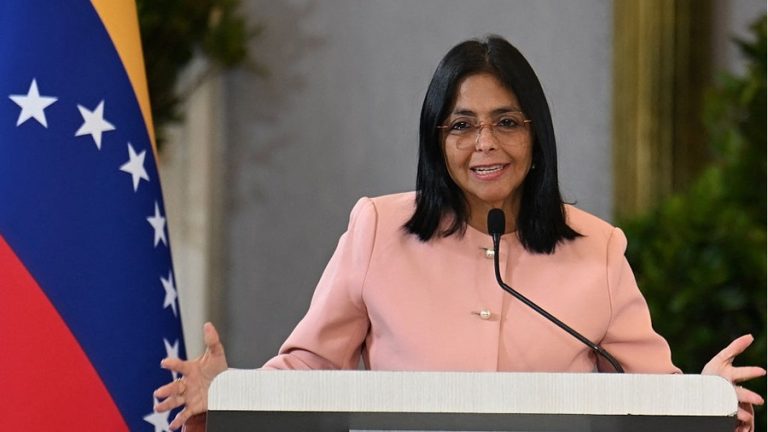
In January 2026, Venezuela experienced a political earthquake that shocked the international community. Following the lethal U.S. military operation that captured former President Nicolás Maduro on Jan. 3, the country’s political landscape underwent a fundamental shift. Former Vice President Delcy Rodríguez quickly assumed the role of interim president and, in less than four weeks, initiated a series of reform measures. On Jan. 30, Rodríguez delivered a key speech at the opening ceremony of the judicial year at Venezuela’s Supreme Court, formally marking the beginning of the South American nation’s political transformation.
At the heart of this political upheaval is the Rodríguez government’s attempt to draw a clear line with the political violence and polarization of the past two decades. Through measures such as mass pardons, judicial reform, and economic liberalization, the administration seeks domestic reconciliation and normalization of international relations. This is not only a major adjustment in Venezuela’s domestic affairs but also a significant change in the geopolitical landscape of Latin America.
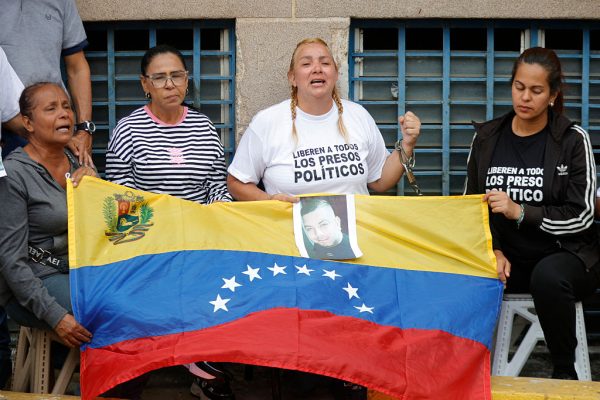
Venezuelan interim president announces mass pardons, will close prisons for political prisoners
The pardon legislation announced by Rodríguez is unprecedented in its scope, covering the period from Hugo Chávez’s rise to power in 1999 up to the present. This means that all political persecution cases during the “Bolivarian Revolution” era fall within the pardon’s scope. In her speech, Rodríguez emphasized that the law would “heal the wounds caused by political confrontation incited by violence and extremism” and help the nation “restore justice.”
The political significance of this pardon plan is profound. First, it acknowledges the systemic political violence that has existed in Venezuelan society over the past two decades. Since Chávez came to power in 1999, and particularly under Maduro after 2013, conflicts between the government and opposition have escalated, resulting in the imprisonment of numerous dissidents, protesters, and political activists. Second, by attributing responsibility to “violence and extremism,” the new government seeks to create space for political reconciliation without entirely repudiating the previous regime.
Success
You are now signed up for our newsletter
Success
Check your email to complete sign up
However, this framing has sparked controversy. Critics argue that the vague assignment of responsibility could allow actual perpetrators to evade legal consequences while placing victims and perpetrators on an equal footing. Transitional justice experts generally maintain that genuine reconciliation requires truth investigations and accountability rather than simple mutual forgiveness.

Closing the notorious El Helicoid prison
Rodríguez also announced the closure of the El Helicoid prison in the capital, Caracas, a move rich in symbolic meaning. Originally designed as a shopping center, the building was converted into a detention facility for political prisoners during Maduro’s rule, becoming a symbol of the state’s machinery of terror.
International human rights organizations have long condemned the torture and abuse occurring within the prison. Testimonies from former political prisoners detail inhumane treatment, including prolonged isolation, psychological torment, and physical abuse. For Venezuelan opposition members and human rights activists, El Helicoid had become almost synonymous with political persecution.
Rodríguez proposed transforming the facility into a “sports, cultural, and commercial center serving police families and nearby communities.” This transformation is not only a repurposing of physical space but also a fundamental shift in political symbolism. Turning a site of fear and oppression into a place for community services and cultural activities conveys the government’s intent to move from violence to reconciliation and from confrontation to cooperation.
Such measures are not uncommon in Latin America’s transitional justice practices. After the end of military dictatorships, Argentina, Chile, and Uruguay converted former detention centers into memorials or cultural facilities. However, Venezuela’s approach currently appears more focused on “looking forward” rather than “revisiting history,” and whether historical memorials or truth displays will be established remains to be seen.
Comprehensive reconstruction of the judicial system
Beyond pardons and prison closures, Rodríguez announced plans to hold a “national consultative assembly” to establish a new judicial system. This decision reflects the severe crisis facing Venezuela’s current judiciary. During Maduro’s tenure, the judicial system was frequently criticized for lacking independence and serving as a tool for political oppression.
Through nationwide consultation, the new government aims to rebuild the judiciary’s credibility and independence. While this approach carries elements of democratic participation, its effectiveness will depend on whether the government genuinely listens to all stakeholders, particularly the opposition and civil society. The success of judicial reform will directly impact Venezuela’s future political stability and democratic development.
Building an independent, fair, and effective judicial system requires time and strong political commitment. This involves not only legal reform but also changing long-standing political culture and power structures. International experience shows that judicial reform is often one of the most difficult and crucial aspects of transitional processes.
US influence and the thawing of diplomatic relations
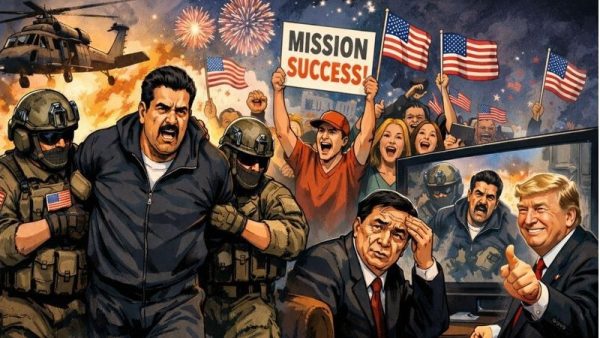
Behind this political transformation, the influence of the United States is evident. Maduro’s capture by U.S. forces marked a dramatic shift in U.S. policy toward Venezuela, from sanctions and pressure to direct military intervention. Subsequent reforms by the Rodríguez government clearly respond to U.S. expectations.
The most important economic reform is opening the oil industry to private investment. Rodríguez, working with her brother and National Assembly President Jorge Rodríguez, passed relevant legislation breaking Venezuela’s longstanding policy of state-owned oil. This move directly addressed a key U.S. demand, prompting Washington to immediately lift sanctions on Venezuela’s oil sector.
U.S. President Trump praised Rodríguez’s reforms and took several goodwill steps: lifting the ban on U.S. flights to Venezuela, preparing to re-establish diplomatic facilities, and appointing veteran diplomat Doug as interim chargé d’affaires. These measures signal a rapid normalization of U.S.–Venezuela relations.
Improved diplomatic ties are critical for Venezuela. Prolonged international isolation and economic sanctions have severely harmed the country’s economy and global standing. Normalization with the U.S. not only ends sanctions but also creates conditions for Venezuela to reintegrate into the international community and attract foreign investment.
The complex reality of releasing political prisoners
Before the pardon legislation was formally passed, the release of political prisoners had already begun. On the fifth day after Maduro’s capture, the Venezuelan government agreed to release prisoners considered political detainees by human rights organizations. The U.S. Embassy in Caracas later confirmed that all known U.S. citizens held in Venezuela had been released.
However, there are significant discrepancies in reported numbers. The government claims more than 800 prisoners have been released since last year, while the human rights group Criminal Justice Forum reports far fewer: under 400 since December, and under 300 since Jan. 8.
These discrepancies reflect several issues: differing statistical standards (the government may include short-term detentions or administrative penalties), transparency problems (lack of independent verification), and implementation challenges (large-scale releases require complex administration and security assessments).
The anxious families waiting outside prisons serve as a reminder that this is not just a political matter but also a humanitarian issue affecting thousands of households. Their candlelight vigils symbolize Venezuelan society’s yearning for reconciliation and justice.
Venezuela’s transformation holds regional significance
Opposition reactions to the government’s reforms are complex and cautious. Nobel Peace Prize laureate María Corina Machado noted that Rodríguez’s pardon proposal “is not a voluntary gesture by the regime but a response to U.S. pressure.” This comment highlights the complex motivations behind Venezuela’s political reforms.
Machado’s position reflects the opposition’s dilemma: they welcome the release of political prisoners and improved human rights conditions, but fear the reforms may be a temporary measure rather than a genuine systemic change. The moral advantage and political capital the opposition has long built could be partially diluted by the government’s proactive reforms.
Venezuela’s current political transformation is full of hope but faces major challenges. If Rodríguez’s proposed reforms are genuinely implemented, they could offer a fresh start to a country long plagued by political instability and economic crisis. However, true transitional justice requires not only the release of political prisoners and institutional adjustments but also deep reflection and reckoning with past wrongs.
The specifics and implementation details of the pardon remain to be seen. Key questions include: Will all political prisoners be covered? Will pardoned individuals fully regain civil rights? Will past abuses be investigated? These details will determine the actual impact of the pardon plan and the depth of Venezuela’s political reconciliation.
From a broader perspective, Venezuela’s transformation is highly significant for the entire Latin American region. As a major oil-producing country, Venezuela’s stability and prosperity affect not only its citizens’ welfare but also the political and economic landscape of the region. Successful democratic transition and economic recovery in Venezuela could provide valuable lessons for other Latin American countries facing similar challenges.