By Li Jingyao
After reportedly moving against Zhang Youxia and Liu Zhenli—both senior figures tied to the People’s Liberation Army (PLA), the armed forces of the Chinese Communist Party—Xi Jinping met separately with Finnish and British leaders on Jan. 27 and 29. Official state messaging projected confidence and control.
Yet a growing cluster of signals suggests that the internal balance of power within the CCP, and particularly within the PLA, may be shifting. Former president Hu Jintao and former vice premier Hu Chunhua have both reappeared in public. According to one unverified account, Hu Jintao delivered a blunt ultimatum to Xi: unless all senior Party elders were eliminated, Xi must step down.
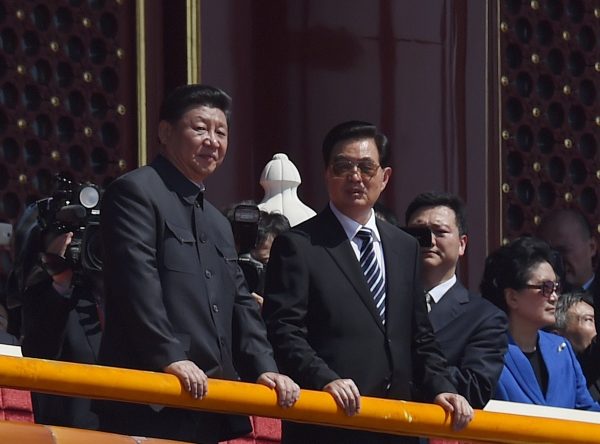
Anger across PLA theater commands leaves Xi cornered
Political commentator Tang Jingyuan pointed to multiple indicators suggesting Xi Jinping is under escalating pressure from within the Chinese Communist Party and the military.
First, recent claims allege that Liu Yuan—a retired general and son of former president Liu Shaoqi—together with Central Theater Command commander Han Shengyan, entered the headquarters of the PLA’s 82nd Group Army in Baoding, a strategic military hub near Beijing.
Success
You are now signed up for our newsletter
Success
Check your email to complete sign up
Second, Hu Jintao resurfaced publicly, alongside reports that he issued a stern warning to Xi. Third, Hu Chunhua also returned to public view. Fourth, China’s Ministry of National Defense issued an unusually direct public denial of reports claiming that Zhang Youxia had sold nuclear secrets to the United States.
Fifth, another senior official linked to Peng Liyuan’s Shandong political network—Peng being Xi Jinping’s wife—reportedly came under investigation. Sixth, online sources claim that a confidential letter written by Zhang Youxia prior to his disappearance has begun circulating.
After earlier asserting that Zhang Youxia and Liu Zhenli had been assassinated rather than detained, a current-affairs commentator known online as “An Ordinary Person Inside the Firewall” released additional claims on Jan. 29. He stated that Hu Jintao, former premier Wen Jiabao, and Liu Yuan were safe and actively coordinating behind the scenes.
According to this source, Xi Jinping ordered the move against Zhang and Liu in an effort to reassert control over the PLA and the Central Military Commission (CMC), the Party body that commands the armed forces. Had the attempt succeeded, Xi would have restored the power configuration established at the CCP’s 20th Party Congress in 2022.
“What Xi did not anticipate,” the commentator said, “was that the military this time simply stopped obeying him. Almost no one across the theater commands or service branches responded. Xi is now riding a tiger and has no way down.”
The source added that Xi’s diplomatic engagements with foreign leaders have no bearing on who actually controls the military. By late last year, when two generals were promoted, the PLA had already endured more than a year of intense internal purges. Xi’s own loyalists—especially those tied to the former 31st Group Army and the Eastern Theater Command—had largely been eliminated.
“Xi’s sudden strike against Zhang Youxia and Liu Zhenli, combined with accusations of collusion with foreign powers, failed to reassert his authority,” the source said. “Instead, the Central, Western, and Northern Theater Commands—where Zhang and Liu maintain deep-rooted networks—responded with widespread fury.”
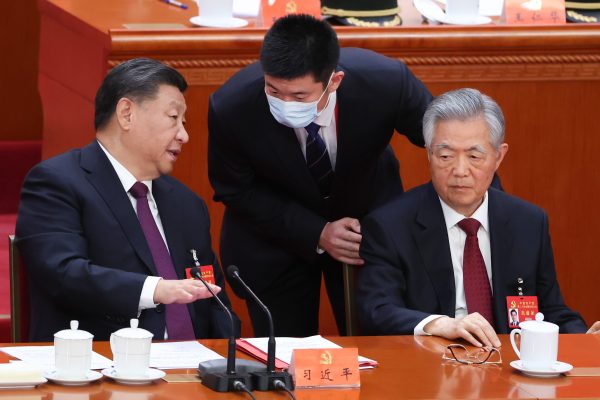
Hu Jintao’s reported ‘stern warning’ to Xi Jinping
The same source claimed that Hu Jintao, operating through Liu Yuan, Han Shengyan, and General Yang Zhibin, has effectively consolidated control over the PLA, leaving Xi unable to reclaim military authority. As a result, Xi’s camp has reportedly avoided launching any major propaganda campaign explaining the actions taken against Zhang Youxia and Liu Zhenli.
According to this account, Xi lacks the backing of conservative Party forces that historically underpinned CCP leadership. Deng Xiaoping, Hu Yaobang, Zhao Ziyang, Jiang Zemin, and Hu Jintao all relied on conservative Party elders and military factions, even as those alliances constrained political reform.
“Xi,” the source said, “turned his blade on the conservative military base itself, pushing it beyond its limit.”
By branding Zhang Youxia—long regarded as loyal to the CCP and deeply embedded among revolutionary “red families” and veteran military circles—as a traitor colluding with foreign powers, Xi was said to have recreated a Cultural Revolution–style political atmosphere. “Even red families have been shaken,” the source claimed.
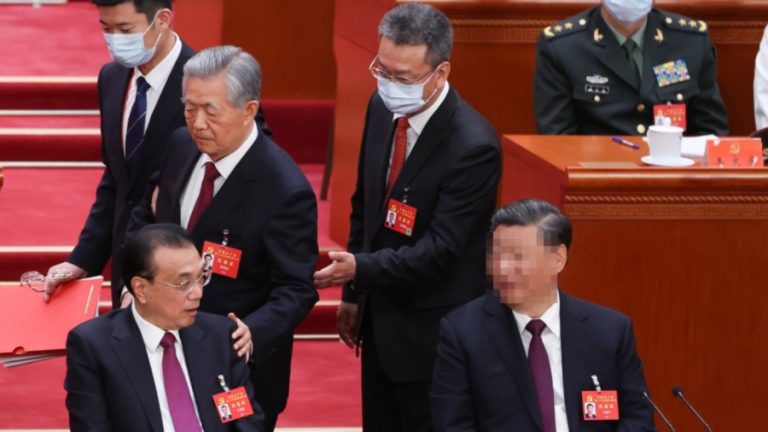
Hu Jintao’s reported message to Xi was stark: unless all senior Party elders were eliminated, Xi must step down. Any Party official who continued to support Xi’s rule, the warning said, would be treated as a public enemy of the entire Party.
Reports claim Liu Yuan moved toward Baoding
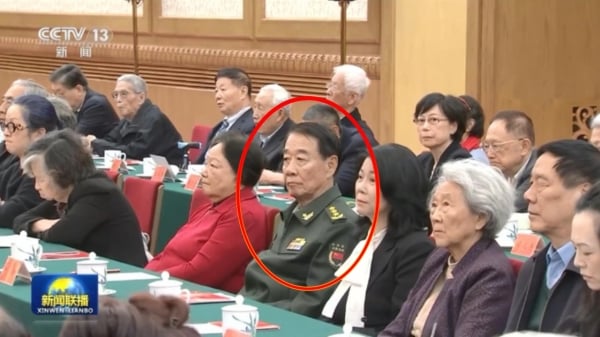
The same source asserted that Liu Yuan, acting as interim chairman of the Central Military Commission, and Central Theater Command commander Han Shengyan had arrived at the headquarters of the 82nd Group Army in Baoding.
Apart from one brigade stationed in Beijing, advance units from two additional brigades were reportedly positioned on the outskirts of the capital, awaiting instructions from Hu Jintao.
Under such pressure, the source argued, capitulation by Xi’s camp would be inevitable. “Unless Xi’s group can eliminate all Party elders—including Hu Jintao, Wen Jiabao, Li Ruihuan, Zeng Qinghong, Wang Yang, and Liu Yuan—Xi will have no option but to step down and submit to Party disciplinary handling.”
The source further claimed that Liu Yuan instructed the Southern Theater Command to monitor Xi Jinping’s family members in Shenzhen and prevent unauthorized departures. Li Qiang and Wang Huning were reportedly attempting to persuade Xi to surrender, proposing that Cai Qi, Wang Xiaohong, and Chen Xi assume responsibility.
“These may be the best terms the elders are willing to offer,” the source said.
Pressure mounts as Xi’s window narrows
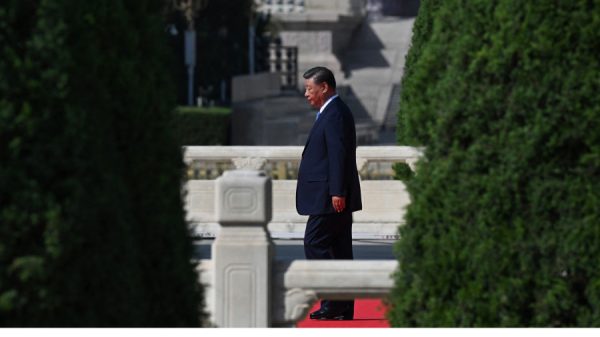
Based on the military’s reported readiness, the source claimed Xi had little time remaining—possibly only until the end of the month—before forces would be prepared to enter Beijing.
Whether Xi convenes a Politburo meeting by month’s end, the source argued, would signal his next move.
“If Xi does not call a Politburo meeting, it means he has surrendered and is bargaining for better terms,” the source said. “If he insists on convening one and openly confronting the elders, troop movements into Beijing become unavoidable.”
Zhang Youxia and Liu Zhenli remain unaccounted for, with their condition unknown. Xi’s camp has reportedly refused to produce them, fueling speculation that both may have been critically injured or killed.
“Xi cannot produce them, so he is stalling,” the source said.
According to the same account, Zhang Youxia had earlier aligned with Liu Yuan and Party elders to move against the faction led by Miao Hua and He Weidong, stripping Xi of effective military control. Xi’s subsequent decision to strike Zhang and Liu was described as a desperate attempt to reverse that loss.
“Xi spent 13 years cultivating the military,” the source said. “That entire system has now collapsed.”
Hu Jintao, the source added, sought to avoid large-scale bloodshed. With sufficient pressure, Xi’s camp would eventually recognize reality and yield. Hu was said to have urged Xi to correct his mistakes, release Zhang and Liu, and explain himself to the Party and the military before the crisis escalated further.
Hu Chunhua reemerges amid CCP power struggle
On Jan. 29, Chinese state media reported that current and former leaders—including Xi Jinping, Li Qiang, Zhao Leji, Wang Huning, Cai Qi, Ding Xuexiang, Li Xi, Han Zheng, and Hu Jintao—either visited the hospital or sent condolences following the illness and death of Liao Xilong.
The report confirmed that Hu Jintao remained alive, countering rumors that he had been removed from life support.
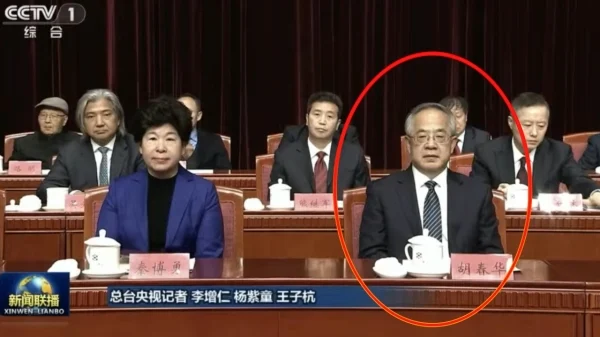
Hu Chunhua also resurfaced. On Jan. 26, the Yunnan provincial government website published a report titled “Hu Chunhua Leads CPPCC Agriculture and Rural Affairs Committee Inspection Team to Yunnan.” The Chinese People’s Political Consultative Conference (CPPCC) serves as a key advisory body within the CCP system.
The item was not reposted by central Party outlets such as Xinhua or People’s Daily and was later removed from the provincial website. However, local Party media, including Yunnan Daily and a provincial Party-building platform, retained the report. Yunnan Daily moved Hu’s name from the main headline to the subheading, while the Party-building site kept his name in the title—an indication, observers said, of heightened political sensitivity.
Tang Jingyuan noted that Zhang Youxia was reportedly taken away on the morning of January 20 at the Party School, where Hu Chunhua had attended an opening ceremony earlier that day. Hu then traveled immediately to Yunnan.
“Yunnan hosts the PLA’s 14th Group Army,” Tang said. “It was the starting point of Zhang Youxia’s military career and one of his most secure strongholds. Hu’s appearance there at such a sensitive moment was no coincidence. He was effectively sent to Zhang’s base for protection.”
Local authorities begin distancing themselves from Xi
Tang argued that these developments point to several conclusions.
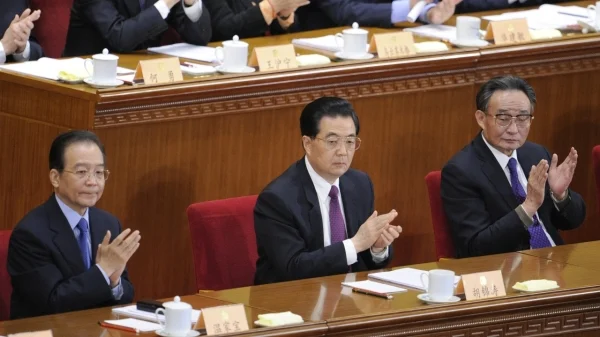
First, key figures opposed to Xi—including Wen Jiabao, Hu Jintao, and Hu Chunhua—remain safe. Second, China now appears to be operating under two competing centers of power. Central Party media remain under the control of Cai Qi, while local outlets have begun distancing themselves from Xi’s camp.
“If Xi truly controlled the situation,” Tang said, “he could order all local Party media to erase Hu Chunhua-related reports. That did not happen. This shows Xi has lost control over significant local forces—not only within the military, but across regional governments.”
Peng Liyuan network figure placed under investigation
Another major development cited by commentators was the investigation of Sun Shaocheng, former Inner Mongolia Party secretary and current deputy head of the National People’s Congress (NPC) Social Development Committee.
On Jan. 29, the Central Commission for Discipline Inspection (CCDI), the CCP’s top anti-corruption body, announced that Sun was under investigation for serious disciplinary and legal violations.
Sun is widely regarded as a key figure within Peng Liyuan’s Shandong network and maintained close ties to former Inner Mongolia chairwoman Wang Lixia, who fell last year. Both were described as staunch Xi allies. Their work in Inner Mongolia reportedly included efforts to dig up damaging material on Hu Chunhua to neutralize him politically.
Tang Jingyuan argued that Sun’s removal at such a critical moment—amid an open struggle between rival power centers—sent a clear signal.
“It shows the public that Xi no longer controls the overall situation,” Tang said. “He cannot even stop the purge of his own allies. This confirms that military authority and Party control are now split.”
Tang concluded that when the CCP faces existential crises, it is ultimately the gun that commands the Party. Whether Xi can mount a comeback depends entirely on whether he can recover military loyalty.
A separate source offered a contradictory account, claiming that senior Party elders had once again been placed under surveillance. Commentator Li Dayu said he received a tip from an alleged insider suggesting that Xi’s move against Zhang shattered the previous balance and triggered renewed monitoring of the elders.
According to that source, loyalty within the PLA has fallen to near zero, and no one is willing to assume the role of CMC vice chairman without first ensuring personal survival. The source added that while Zhang Youxia had “fallen,” he was not finished and could still return under certain conditions, though no details were provided.
None of these claims can be independently verified. China’s political system remains deeply opaque, leaving outside observers to reconstruct events from fragmentary, contested, and often conflicting reports.
Editor’s Note:
This article draws on commentary from overseas Chinese-language analysts, dissidents, and online media reports. Claims involving internal Chinese Communist Party (CCP) leadership dynamics, alleged military movements, and elite decision-making cannot be independently verified and are presented as assertions attributed to the cited sources.