By Li Zexu
A purge at the apex of power
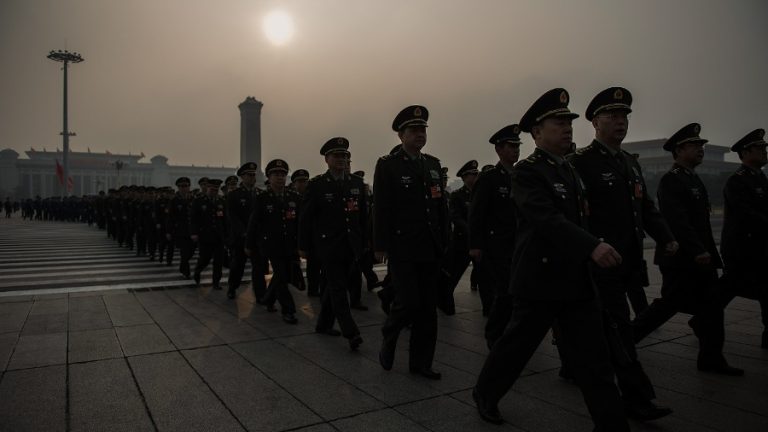
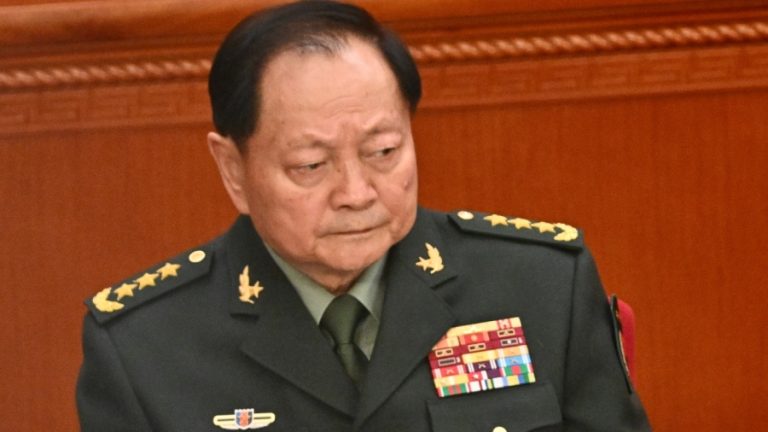
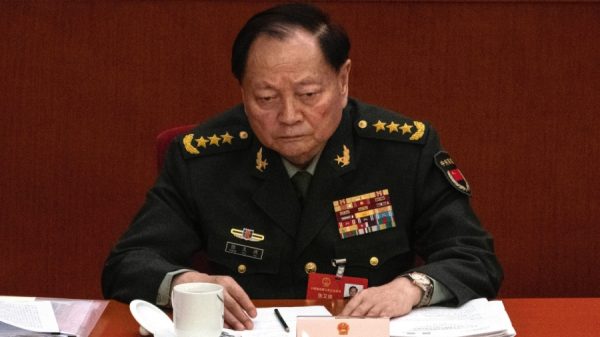
The removal of Zhang Youxia, Vice Chairman of the Chinese Communist Party’s Central Military Commission (CMC), together with Liu Zhenli, Chief of Staff of the CMC Joint Staff Department, marks one of the most consequential military purges of Xi Jinping’s rule. Beyond destabilizing the CCP’s internal balance of power, the move has triggered renewed scrutiny abroad over its implications for the Taiwan Strait and regional security.
On Feb. 2, the PLA Daily—the official mouthpiece of the People’s Liberation Army—ran a front-page commentary titled “Advancing with a Powerful Sense of Mission and Responsibility.” The article left no ambiguity: the investigation of Zhang Youxia, Liu Zhenli, and other senior figures was framed as a righteous campaign against corruption, aimed at removing “roadblocks and stumbling stones” obstructing the Party’s cause.
The message was unmistakable. “All officers and soldiers across the military,” the commentary declared, “must unify their thinking and actions with the major decisions and deployments of the Party Central Committee, the Central Military Commission, and Chairman Xi Jinping.” It further called for intensified combat readiness, accelerated realistic training, rapid development of advanced combat capabilities, and the imperative to be “ready to fight at any time—and able to win.”
Ideological discipline tightens inside the PLA
The purge was accompanied by a parallel tightening of ideological control. On Feb. 3, the PLA Daily reported that the CMC Political Work Department had issued the Regulations on the Election Work of Military Youth League Organizations, effective Jan. 30.
Success
You are now signed up for our newsletter
Success
Check your email to complete sign up
The regulations—six chapters and forty-six articles—systematically codify election procedures within PLA Communist Youth League units. They govern everything from the convening of congresses and the selection of delegates to the appointment of committee members, secretaries, and deputy secretaries, as well as approval and reporting mechanisms.
Crucially, the document mandates the “deep implementation of Xi Jinping Thought on Strengthening the Military,” including Xi’s views on youth work. It reinforces the CCP’s absolute leadership over the Communist Youth League, reasserts the principle of Party control over youth affairs, and emphasizes strict governance of League organizations through a model of Party-building driving League-building. In practice, the regulations function as another instrument for political loyalty screening within the armed forces.
This tightening follows the earlier downfall of Miao Hua, former CMC member and director of the Political Work Department, who was suspended in November 2024 and expelled from both the Party and the military in October 2025. Since then, the department has been overseen by Air Force Lieutenant General Chen Demin, underscoring the provisional and unsettled nature of the PLA’s political apparatus.

Toward a one-man military
Foreign media have been blunt about what these developments signify. The Wall Street Journal, in an article titled “Xi Jinping Consolidates Military Power, Turning Taiwan Decisions into a One-Man Show,” argues that Xi has effectively monopolized command of the armed forces through successive purges of top PLA leaders. Any internal authority capable of constraining or moderating decisions—especially during a Taiwan contingency—has been systematically eliminated.
Analysis from the Washington-based Jamestown Foundation reinforces this view. In a Jan. 26 assessment, analyst K. Tristan Tang notes that Zhang Youxia may have diverged from Xi Jinping on the timeline for PLA readiness against Taiwan. Xi has publicly pressed for joint operational capability for an attack on Taiwan by 2027. Zhang, by contrast, appears to have favored a more cautious timetable extending closer to 2035.
If accurate, this difference would help explain Zhang’s political vulnerability. In today’s PLA, strategic disagreement increasingly carries existential risk.

The rising danger of strategic miscalculation
Drew Thompson, a former U.S. Pentagon strategist now with Singapore’s S. Rajaratnam School of International Studies, warns that effective deterrence depends on Xi being surrounded by “capable generals who can provide objective advice.” That condition, Thompson argues, no longer exists.
By hollowing out the military’s top decision-making bodies, Xi has introduced severe command-and-control risks. Attempting to direct a force of millions through what amounts to a “one-man committee” increases the likelihood of error. With Zhang Youxia—one of the few remaining senior commanders with real combat experience—now gone, the risk of misjudgment at the very top has only intensified.
Under these conditions, Xi Jinping’s personal vision increasingly determines the trajectory of cross-strait relations. The PLA is racing toward the 2027 “modernization” deadline repeatedly emphasized by Xi—a target widely interpreted as preparation for a Taiwan contingency. The stakes of personalist rule could scarcely be higher.

Coercion below the threshold of war
Some diplomatic and military analysts cited in the report argue that the immediate risk of a full-scale invasion of Taiwan may have declined. Xi has now purged five of the six senior generals he personally promoted just three years ago, leaving the PLA leadership unsettled and internally focused.
Instead, Xi appears to be shifting toward a strategy aimed at breaking Taiwan’s resolve without open war. This includes persistent military pressure that remains just below the threshold of armed conflict: continuous air and naval exercises simulating blockades, designed to showcase Beijing’s hard power while waging psychological warfare.
Laura Rosenberger, a former senior U.S. national security official in the Biden administration and former chair of the American Institute in Taiwan (AIT), describes Xi’s approach as a broad coercive campaign that integrates military deterrence with economic leverage and cyber operations.
Taiwanese officials report ongoing cyberattacks targeting critical infrastructure, including energy grids and healthcare systems. At the same time, Beijing has escalated intimidation of regional actors such as Japan, seeking to further isolate Taiwan diplomatically and constrain its external support.

Taiwan still at the center
The article’s conclusion is stark. While the CCP’s military leadership remains in flux, Xi Jinping’s fixation on Taiwan has not diminished. His determination to sever Taiwan’s supply lines and grind down its economic resilience remains unchanged.
U.S. officials, for their part, say the White House is prioritizing a “denial defense” strategy anchored in the First Island Chain—a network of allied territories stretching from Japan through Taiwan to the Philippines. By raising the costs of military aggression, Washington aims to block Beijing’s expansion without sliding into open war.
Yet as power concentrates ever more tightly in Xi Jinping’s hands, the margin for error narrows. In the Taiwan Strait, the greatest danger may now lie less in deliberate escalation than in the unchecked consequences of one-man rule.