By Vision Times TV
China’s Northeast, once hailed as the industrial powerhouse of the country, is now being described by residents and online commentators as a region trapped in long-term economic stagnation, demographic collapse, and worsening hardship across virtually all job sectors.
More than two decades ago, the Northeast was hit by a massive wave of layoffs as state-owned enterprises restructured, leaving tens of millions unemployed. Many saw it as a painful but necessary turning point. Yet, critics argue that systemic reform never truly followed, and the burden has now fallen squarely on ordinary people just trying to make ends meet.
One blogger said the decline is impossible to grasp without seeing it firsthand: “If you don’t go back home and see it with your own eyes, you really don’t know how bad Meihe’s economy is right now,” he notes, adding, “Just in the past two years, Northeast China has had the most severe population loss. People are going abroad, people are leaving to work elsewhere, and you can see businesses on this street changing again and again. The real economy is especially bad.”
RELATED: Nearly Half of China’s Electric Steel Mills Halt Production Amid Industry Slump
Entire cities reduced to ghost towns
Success
You are now signed up for our newsletter
Success
Check your email to complete sign up
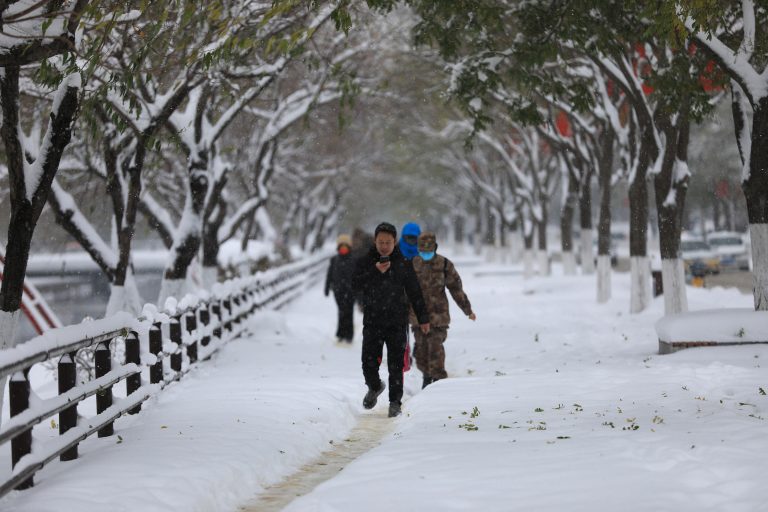
Even major cities are described as eerily quiet. “There are more than 7 million people in Shenyang, but you don’t see crowds on the streets. Shopping malls have lost their liveliness,” says the blogger. “Office buildings are no longer packed. Restaurants are no longer full. Public places don’t have people gathering anymore. Villages are even colder and emptier.”
Another voice offered a biting, sarcastic portrait of Shenyang’s hardships, said: “A friend asked me, what does Shenyang have a lot of? I tell you what Shenyang has a lot of: road construction, big potholes, scammers, unfinished buildings, and the most unemployed young people you can find on the streets… Shenyang has few flat roads, few weekends off, few people paying social insurance, and even fewer wages. Making 3,000 yuan a month is not a dream… Only people who have lived in Shenyang understand these hard truths!”
Many say the most visible sign of decline is the disappearance of young people and exodus of working professionals. “After you leave the Northeast, you realize Northeast people are everywhere, except in the Northeast, especially young people.”
RELATED: Beijing’s Economic Malaise Worsens as Youth Exodus Sweeps the Capital
A female blogger described returning home and noticing that train stations were filled mostly with older residents: “At Harbin Station, you could clearly see it was mostly middle-aged and elderly people… Harbin can still look a bit lively, but once I return to my hometown, I feel the emptiness. There are even fewer people. Even the main roads have nobody.”
She said her aunt runs an internet café in Harbin, but as the population shrinks, so does consumption. Even the once-busy markets are quieter. In her childhood, she recalled, each grade had ten classes of more than fifty students. Now, it is down to four classes of about thirty.
Over the past decade, Heilongjiang alone has reportedly lost more than seven million people, with entire families scattered across Beijing, Hangzhou, and beyond. Many elderly parents are left behind with few options.
From industrial stronghold to empty towns
Historically, the Northeast was China’s “cradle of industry,” building a complete industrial system in the 1930s and becoming one of Northeast Asia’s most advanced manufacturing bases. After the CCP took power, the region became a centerpiece of the planned economy, with major state enterprises established across Liaoning, Jilin, and Heilongjiang.
One commentator noted: “From 1950 to 1952, Jilin’s fiscal revenue was 754 million yuan, and it handed over as much as 75 percent to the national treasury. Liaoning exported 87 percent of its steel… For a long period, the three northeastern provinces supported the whole country.”
But after China’s economic focus shifted toward the southern coast, the Northeast’s resources were drained, and the 1990s layoffs became a lasting scar. “This is a pain that cannot be erased,” says one resident. “And from that point on, the Northeast’s glory came to an abrupt end.”
Corruption and bureaucracy
Despite repeated “revitalization” campaigns since 2003, the three provinces have remained near the bottom economically. “What exactly has been revitalized in these past 20 years?” asks the blogger. Critics point to entrenched bureaucracy. Former Premier Li Keqiang once cited a case where a project required 133 official stamps in eight months, with more still unfinished.
Some residents argue corruption has become normalized in daily life: “If you want your child to have it easier at school… you have to give money.” Another recalled: “Our family didn’t even pretend. Teachers’ Day wasn’t gifts; it was cash.” Healthcare, they say, is even worse: “My mother said we have to give the anesthesiologist a red envelope… The man in the next bed was screaming in pain after surgery because he didn’t give one.”
With villages emptying, farmland left to aging residents, and young people unwilling, or unable, to return, many are asking what comes next. “In the future 10 or 20 years, who will farm the land? Does anyone at the top truly care about the Northeast’s future?” asks the blogger.
For many, the region’s decline is no longer a temporary downturn, but an open-ended question about whether revival is still possible.