By Li Jingyao
Japanese Prime Minister Sanae Takaichi led the Liberal Democratic Party (LDP) to win 316 seats in the 51st House of Representatives election, securing a landslide victory of more than two-thirds and laying a solid foundation for governance. This historic win reflects public endorsement in Japan for the view that “a Taiwan contingency is a Japanese contingency” and for Takaichi’s pro-Taiwan stance. The future development of Taiwan–Japan relations is now drawing close attention from various sectors.
Following Takaichi’s victory, Japanese Foreign Minister Toshimitsu Motegi stated that Taiwan is an “extremely important partner and precious friend” of Japan. Analysts believe that under Takaichi’s leadership, Taiwan–Japan cooperation will become even closer, and progress on an Economic Partnership Agreement (EPA) is expected.

Japanese foreign minister: Taiwan Is an extremely important partner
According to Radio Taiwan International, on Feb. 10, Japanese Foreign Minister Toshimitsu Motegi was asked about the prospects for Taiwan–Japan relations after Japan’s general election. He said the Japanese government had taken note of messages from various sectors in Taiwan regarding the election results, adding that “for Japan, Taiwan is an extremely important partner and precious friend that shares fundamental values and maintains close economic and people-to-people ties.”
Motegi noted that the Takaichi administration would adhere to its longstanding position, based on the 1972 Japan–China Joint Communiqué, maintaining the basic stance of “non-governmental practical relations” while working to deepen cooperation and exchanges with Taiwan.
Success
You are now signed up for our newsletter
Success
Check your email to complete sign up
Meanwhile, Jimmy Lai, founder of Hong Kong’s Apple Daily, was sentenced to 20 years in prison for violating the National Security Law, prompting international condemnation. When asked whether Japan would follow U.S. Secretary of State Marco Rubio in calling for Lai’s release, Motegi said the Japanese government feels “grave concern” over the verdict, stating that it undermines the “freedom of speech” and “freedom of association and assembly” that form the foundation of Hong Kong’s democratic and stable development.
He emphasized that Japan hopes Hong Kong will maintain a free and open system and achieve stable democratic development. The Japanese government strongly urges the Chinese and Hong Kong authorities to respect the rights and freedoms of Hong Kong residents and will remain closely aligned with the international community in continuing its advocacy.

Progress expected on Taiwan–Japan EPA
Taiwan’s representative to Japan, Frank Lee (Lee Yi-yang), wrote on Facebook on the Feb. 9 that the LDP’s sweeping victory in the lower house election not only sets a new party record for seats but also demonstrates strong public consensus in Japan in support of Takaichi.
Lee stressed that Taiwan will move forward alongside the U.S.–Japan alliance and work with like-minded countries such as Australia, the Philippines, and South Korea to safeguard peace and stability in the Indo-Pacific region. He said Taiwan–Japan relations are expected to grow even closer, and progress in economic and industrial cooperation will create mutually beneficial outcomes.
Lin Chuan-chung, specially appointed researcher at the Institute for Advanced Studies on Asia at the University of Tokyo, believes the LDP’s landslide victory under Takaichi will facilitate substantive development of a Taiwan–Japan Economic Partnership Agreement (EPA), with more frequent interactions expected in the future.
In an interview with the Central News Agency, Lin said that before Japan–China exchanges fully stabilize, the Japanese government may keep certain moves toward Taiwan — especially high-level mutual visits — relatively low-key to avoid provoking Beijing. However, on other specific issues involving exchanges with Taiwan, Japan will seek appropriate opportunities to gradually advance cooperation.
He pointed out that joint exercises between the Japan Coast Guard and Taiwan’s Coast Guard Administration may resume first, as such cooperation is non-military in nature and carries relatively manageable political sensitivity.
Taiwan has long hoped to sign an EPA with Japan. President Lai Ching-te reiterated this request during his meeting with Takaichi last year, as did Foreign Minister Lin Chia-lung when receiving a visiting Japanese parliamentary delegation. Takaichi herself previously served as Minister in charge of Economic Security and has a political background that closely aligns with Taiwan’s strategic considerations. Lin Chuan-chung therefore believes that during her tenure, Takaichi will actively promote progress on a Japan–Taiwan EPA and further deepen bilateral economic cooperation.
Lin also noted that since Takaichi’s parliamentary remarks last year regarding a “Taiwan contingency,” Beijing has, over the past three months, employed nearly all available measures — from economic pressure and international propaganda efforts to attempts to win over neighboring countries. However, the impact of such pressure has been limited. During South Korean President Lee Jae-myung’s visit to China, Xi Jinping said China and South Korea should “join hands to safeguard the outcomes of World War II,” but Lee did not directly echo the statement.
Instead, during his subsequent visit to Japan, he appeared cordial with Takaichi, even participating in a drum performance together. Tourism-related retaliatory measures have also reportedly imposed significant losses on China, with airline stocks declining and industries affected. Yet Japanese voters remained unmoved, expressing support for the Takaichi government at the ballot box, suggesting that economic threats are not as effective as Beijing would hope.
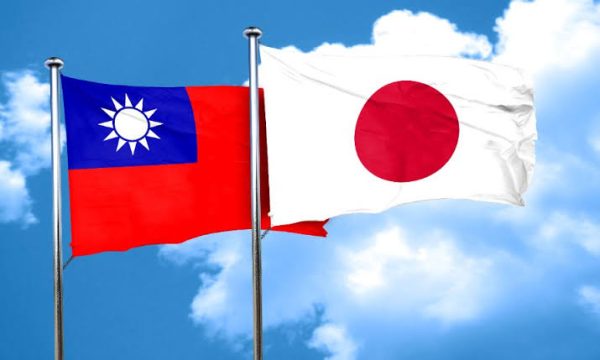
Closer Taiwan–Japan cooperation; government planning underway
Former Democratic Progressive Party Secretary-General Lin Yu-chang said in an interview on the 10th that the LDP’s overwhelming victory was due not only to the high level of trust Takaichi has earned from the Japanese public but also to public perceptions of the surrounding international environment.
Lin stated frankly that in recent years, China has imposed sanctions and pressure on Japan across economic, corporate, and tourism sectors, and has even attempted to interfere in Japan’s domestic affairs by reducing Chinese tourist flows as leverage. “The Japanese people have seen it and felt it,” he said. The election results represent a collective response by Japanese society to changes in the broader international landscape and to future Japan–China relations.
He added that with Japan’s political direction now clarified, Taiwan–Japan cooperation in culture, economics, tourism, and technology industries is expected to grow closer. Of the 17 industrial revitalization initiatives previously proposed by Takaichi, many are highly complementary to Taiwan’s strengths in high-tech and semiconductor sectors. The Taiwanese government has already begun planning and preparing for future cooperation and exchanges.