
By Gao Yun
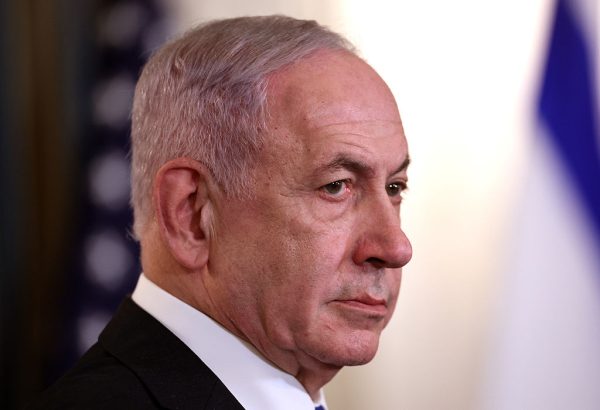
On Wednesday, Feb. 11 U.S. President Donald Trump met with Israeli Prime Minister Benjamin Netanyahu at the White House for a closed-door meeting lasting about three hours. After the meeting, Trump stated that although Israel remains cautious about U.S. diplomatic negotiations with Iran, he will continue efforts to reach an agreement with Iran.
Trump posted on Truth Social that the meeting was “very good” and that he conveyed a clear message to Israel: he hopes to resolve issues through negotiations. He emphasized that no decisive outcome has yet been achieved, but if an agreement is possible, it would be his preferred option.
He wrote: “If we cannot reach an agreement, we will just have to see what the final outcome will be.”
In the post, Trump also recalled the “Midnight Hammer” strike against Iranian nuclear facilities carried out by the U.S. last June, noting that Iran was targeted because it refused an agreement. He used this as a warning to Iran, hoping this time they adopt a “more rational and responsible” approach.
Success
You are now signed up for our newsletter
Success
Check your email to complete sign up
Trump added that the two leaders also discussed the significant progress made in Gaza and across the region.
This was the seventh meeting between Trump and Netanyahu since Trump’s return to office. According to The Times of Israel, a White House official said that U.S. Secretary of State Rubio, Secretary of War Hegseth, and senior presidential advisor Kushner attended the meeting. Trump’s Middle East envoy Witkoff was also present.
The Times of Israel reported that Netanyahu’s office issued a brief statement after the meeting, saying the two sides discussed Iran, the situation in Gaza, and regional developments. The statement emphasized that Netanyahu reiterated Israel’s security concerns and that the U.S. and Israel will maintain close coordination and ongoing communication. However, it did not mention any specific consensus on Iran.
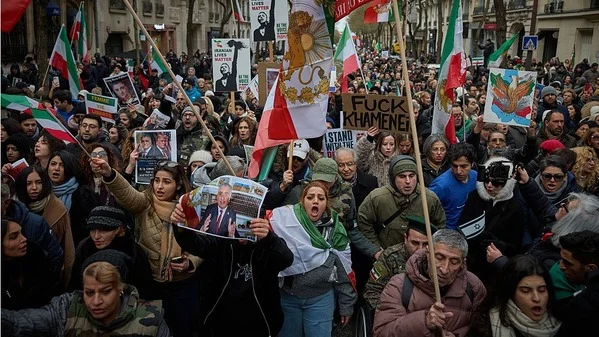
Iranian president apologizes to public over protest crackdown
Meanwhile, CNN reported that, as U.S.-Israel talks on Iran’s nuclear program were ongoing, Iranian President Masoud Pezeshkian issued a rare public apology for recent crackdowns on protests.
At a gathering marking the 47th anniversary of the 1979 Islamic Revolution, Pezeshkian expressed shame over the harm caused and pledged services for victims. However, he did not explicitly acknowledge the responsibility of security forces in the bloodshed.
According to U.S.-based Human Rights Activists News Agency (HRANA), at least 6,490 protesters have been killed in Iran since late December last year, though this figure has not been independently verified.
Iranian authorities blamed the unrest on “terrorists” with foreign links, claiming they burned markets, mosques, and cultural facilities.
Trump had previously warned about Iran’s crackdown and told Axios that the U.S. will continue to pressure Iran, and is considering sending an additional aircraft carrier strike group to the Middle East to enhance deterrence.