By Jinhuasan
Takaichi’s supermajority win reshapes Japan’s political map
Philip Luck, director of the economics program and Scholl Chair in International Business at the Center for Strategic and International Studies (CSIS), published a commentary on Feb. 9, 2026, titled “Takaichi’s Landslide Victory Highlights the Limits of China’s Economic Coercion.” The following is a translation of the Kanzgongguo article presenting his analysis.
Japan’s rare February 2026 snap election delivered a decisive verdict. The ruling Liberal Democratic Party (LDP), led by Prime Minister Sanae Takaichi, expanded its parliamentary majority to 316 seats, securing a two-thirds supermajority and extraordinary legislative authority. The result carries significant implications for Japan’s economy and for the global economic order, as Takaichi now likely holds the political mandate to pursue major, long-overdue fiscal reforms. Those longer-term economic considerations, however, fall outside the scope of this article. The focus here is a more immediate lesson: how Beijing’s economic coercion on the eve of the election backfired, consolidating rather than eroding Takaichi’s support, and what this reveals about the limits of coercive pressure against resilient democracies.

Beijing escalated economic pressure after Takaichi linked Japan’s security to Taiwan
The campaign unfolded against the backdrop of acute Sino-Japanese tensions, triggered by Takaichi’s unusually blunt public statements linking Japan’s national security to stability in the Taiwan Strait. Beijing responded with its standard playbook of diplomatic protests combined with economic pressure. The intent was transparent: to raise the political price of Japan’s stance on Taiwan and to deter Tokyo from further aligning with Washington in word or policy. The pressure coincided instead with rising domestic support for Takaichi and a strong electoral mandate for her government. While China’s coercion was far from the sole driver of Sunday’s results, the episode illustrates the limits of economic tools as instruments of foreign policy.
Economic coercion is rarely about inflicting economic damage for its own sake. The goal is to impose political costs, to force leaders to yield. In resilient democracies like Japan, however, when the public recognizes coercion for what it is, a blunt instrument of influence, it tends to produce the opposite effect. It hardens public attitudes, makes political concessions untenable, and narrows the space for compromise. Japan’s election illustrated this dynamic clearly, and it holds important lessons for American policymakers navigating a new era of geoeconomic competition.

Success
You are now signed up for our newsletter
Success
Check your email to complete sign up
Takaichi called a snap election amid high approval and rising security concerns
Prime Minister Takaichi called the snap election just months into her tenure, scheduling it for Feb. 8, 2026. The move was widely interpreted as an effort to capitalize on her high approval ratings (roughly 70 percent in late 2025), a fragmented opposition, and a political agenda increasingly shaped by national security concerns. Before the vote, Takaichi publicly described a potential conflict in the Taiwan Strait as an “existential” threat to Japan, a formulation that broke sharply with Tokyo’s traditional rhetoric on the issue, even though it simply stated what everyone already understood.
As often happens when foreign leaders discuss Taiwan in terms Beijing considers unacceptable, China reacted swiftly. Officials lodged formal diplomatic protests and escalated public rhetoric. Authorities issued travel advisories discouraging Chinese citizens from visiting Japan, a measure carrying both symbolic weight and real economic consequences given tourism’s importance to the Japanese economy. Chinese airlines canceled nearly 500,000 tickets, and the number of Chinese visitors to Japan fell from 716,700 in October 2025 to 330,000 in December 2025. Beijing also reimposed a ban on Japanese seafood imports, reversing a lifting of restrictions that had been in place only a few months following the earlier dispute over Fukushima wastewater discharge. Authorities then escalated further, tightening export controls on select dual-use and strategically sensitive goods, including rare earth elements.
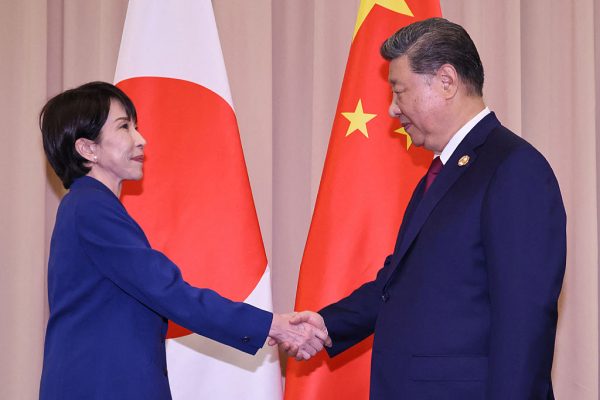
These measures were unambiguous, and they were not unprecedented. For the Japanese public, the moves confirmed longstanding concerns about Chinese behavior rather than functioning as carefully calibrated diplomatic instruments. The pressure appeared to strengthen rather than weaken Takaichi’s position. By mid-January 2026, her cabinet approval rating had climbed to roughly 75 percent, up from the start of her tenure.
Why China’s economic coercion failed in Japan
Beijing’s coercive response backfired because its economic impact was marginal while the political backlash was severe. Years of prior coercion had already pushed Japan to reduce its economic dependence on China, weakening Beijing’s tools of influence. At the same time, the pressure unified Japanese public opinion behind Takaichi, transforming what might have been a political liability into an electoral asset.
Tourism and seafood diversification blunted Beijing’s tools
The economic shock failed to materialize. While the travel advisories and seafood ban attracted attention, Japan’s booming tourism industry and diversified seafood markets absorbed the impact.
Tourist spending rose 16 percent year-on-year, climbing from $51.9 billion in 2024 to $60.1 billion in 2025, driven partly by the weak yen. Tourism sources had diversified significantly. Although China remained a major source of visitors, strong growth from Taiwan, South Korea, the United States, and Hong Kong offset the decline in Chinese arrivals. Beijing’s influence had quietly eroded.
The seafood ban barely registered. Beijing’s previous restrictions over Fukushima wastewater had been lifted only months earlier. Reimposing the ban produced no immediate shock and reinforced a deeper lesson: the Chinese market is unreliable. Japanese exporters had already drawn that conclusion. By September 2025, China’s share of Japan’s seafood exports had plummeted from 43 percent in June 2023 to just 14 percent, with ASEAN countries filling the gap to become Japan’s largest seafood market. Repeated coercion had undermined its own effectiveness.
The rare earth export controls announced in January 2026 were seen as a significant escalation. Here too, however, repeated coercion had limited the damage. Japan had spent 16 years building resilience to precisely this kind of measure since China cut off rare earth supplies in 2010. Through deliberate supply chain diversification, Japan’s dependence on Chinese rare earths had fallen from 90 percent in 2010 to roughly 60 percent to 70 percent by 2025.
Japanese public opinion hardened against Beijing, boosting Takaichi
With limited economic consequences and the pressure widely perceived as yet another act of coercion by a belligerent neighbor, the political reaction ran against Beijing’s interests. Japanese public attitudes toward China have been shaped for decades by historical memory, territorial disputes, and strategic anxiety. A 2025 Pew Research Center survey found that only 13 percent of Japanese respondents held a favorable view of China, among the lowest rates globally. In this context, coercion did not create new doubts; it deepened existing ones. National security and sovereignty dominated the election narrative, crowding out the kind of economic considerations that might otherwise have created room for de-escalation.
Beijing’s pressure also offered no viable off-ramp. Tokyo could not take any clear action to relieve the pressure without appearing to capitulate. Even leaders inclined toward stability would have struggled to identify a politically viable concession.
The pressure backfired domestically. Polls showed 55 percent of Japanese respondents found nothing objectionable in Takaichi’s statements, and concern over deteriorating Sino-Japanese relations translated into support for a tougher stance rather than compromise. The result was a political coalition that consolidated around Takaichi’s position.
Why Beijing may still consider the coercion a success
It would be a mistake, however, to conclude that China necessarily views this episode as a failure. Assessments of coercion too often focus narrowly on the immediate target while ignoring the broader audience.
China’s coercive tactics are often compared to the Chinese proverb “killing the chicken to scare the monkey,” punishing one party visibly to influence the behavior of others. From this perspective, the aim was never solely to change Japan’s policy. It was to shape the expectations of third parties, particularly smaller countries quietly considering closer ties with Taiwan or more explicit security cooperation with the United States. Even when coercion fails to produce capitulation, it can serve as a warning. This demonstration effect may deter other countries from taking similar steps, especially when the costs appear tangible and the international response from partners like the United States is muted.
In Japan’s case, the response from Tokyo’s partners was notably restrained. That restraint lowered Beijing’s reputational costs, weakened the collective signal that coercion would meet coordinated resistance, and sent a pointed message to both Japanese and Taiwanese publics.
From this vantage point, Beijing may reasonably conclude that coercive measures still serve their purpose even when they stiffen the resolve of the immediate target. This logic makes allied responses to coercion at least as important as the coercion itself.

Lessons for American strategy: supporting allies and avoiding overreach
Japan’s election carries multiple implications for U.S. strategy, both in responding to coercion and in exercising its own economic power.
Washington should build standing mechanisms to support allies under economic pressure
When partners face economic coercion, visible and ideally coordinated support serves a dual purpose. It helps the targeted country absorb the shock, and it signals to other nations that coercion will not go unanswered. Silence and ambiguity may preserve short-term flexibility, but they risk eroding trust among allies and validating an adversary’s geoeconomic strategy. Visible support, economic reassurance, diplomatic signaling, and sustained political engagement strengthen allied domestic resolve and fundamentally weaken coercion.
In Japan’s case, observers noted the absence of high-level U.S. support, and this absence was not unique. To avoid repeating such missed opportunities, the United States and its allies should establish standing mechanisms for delivering assistance when partner countries come under pressure. Clear economic reassurance strategies, coordinated diplomatic responses, and public signaling would raise the cost of coercion and reduce its deterrent effect.
The United States should avoid overreliance on coercive economic pressure
The same factors that undermined China’s coercion apply to the United States. Economic pressure aimed at shifting domestic politics tends to provoke backlash, particularly in democracies. Overreliance on coercive tools empowers leaders who resist external influence and deepens public hostility to compromise. Recent episodes involving Australia, Canada, South Korea, and Europe confirm this pattern. When U.S. pressure appears unpredictable or punitive, it fuels suspicion of American intentions and limits the room partners have to cooperate.
Consider the current transatlantic friction over digital market regulation. Policy disagreements between the European Commission and the Trump administration are real. Modest regulatory adjustments could meaningfully improve conditions for American industry without substantially weakening Europe’s ability to regulate its own markets. Broader trade tensions and deteriorating European public perceptions of U.S. leadership, however, have made these options politically toxic for European leaders. Coercion shapes the actions that elected leaders can take long after the immediate dispute ends.
Coercive strategies must therefore account for domestic political dynamics and audience effects. The political consequences often matter more than the economic impact. China learned this lesson in Japan, and the United States should absorb it when dealing with resilient democracies.

Economic coercion against resilient democracies rarely works
Japan’s February 2026 general election offers a clear lesson: economic coercion against resilient democracies rarely succeeds and frequently backfires. External pressure, rather than weakening leaders, consolidates domestic support, hardens public attitudes, and accelerates strategic resistance. The case also highlights the value of democratic resilience itself as a deterrent against coercion, while warning of the political costs of deploying such tools against other nations. Pressure intended to weaken a leader can instead solidify support, entrench hawkish public sentiment, and speed the development of strategic countermeasures. The lessons of coercion against Japan are ones that neither the United States nor China can afford to ignore.