A highly anticipated gala in Henan Province, central China, was abruptly taken off the air on the evening of Feb. 16 — this year’s Chinese New Year Eve — raising questions about censorship and the limits of cultural expression under state oversight.
The Henan Spring Festival Gala, jointly produced by Henan Television and technology giant Tencent, was broadcast live across television and major online platforms ahead of the Lunar New Year on Feb. 17. However, the livestream was suddenly interrupted, and subsequent replays were swiftly removed from platforms including Douyin and Bilibili.
The unexpected shutdown has sparked widespread speculation among viewers, commentators, and analysts about what prompted the Chinese Communist Party (CCP) authorities to intervene in one of the province’s flagship annual broadcasts.
A focus on Chinese cultural revival
While traditional themes have often been promoted in recent years, their intersection with spiritual or allegorical content remains sensitive.
- On the Traditional Chinese New Year (Year of the Snake 2025)
- Henan Gala Livestream Abruptly Cuts Off Across China: ‘What Is the CCP Afraid Of?’
- Henan Spring Festival Gala Broadcast Cut Mid-Stream as Dance Performance Triggers Political Speculation
The traditional Chinese New Year follows the ancient lunisolar calendar, with origins dating back to the legendary reign of the Yellow Emperor around 4,700 years ago. The important celebration has a variety of names, with “Chinese New Year” being typical prior to the arrival of communist rule. After taking power, the CCP rebranded the traditional New Year as the “Spring Festival” so as to give it a rustic and peasant connotation.
Success
You are now signed up for our newsletter
Success
Check your email to complete sign up
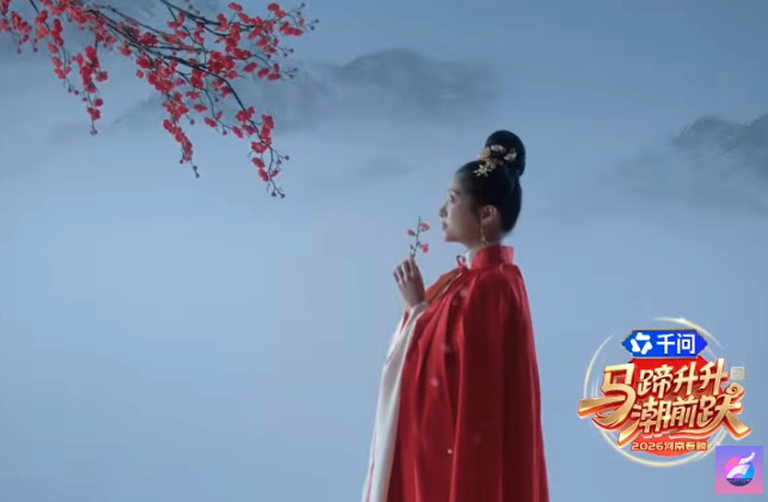
The Henan gala this year departed from the conventional Spring Festival format, which has been long been derided as crass and gaudy. Henan TV’s production featured no live host or traditional stage performances, instead relying heavily on artificial intelligence-generated visuals and storytelling rooted in traditional Chinese culture.
According to chief director Lu Hongli, speaking to Chinese outlet Cover News, the production aimed to highlight classical cultural themes, including depictions of ancient deities, celestial maidens scattering flowers, and Han Dynasty attire. One performance, “Eternal Joy,” portrayed mythological gods and goddesses, while another, “The Long Night Ends,” featured armored soldiers accompanied by lyrics suggesting the arrival of light after darkness.
Despite its cultural framing, some observers believe these elements may have triggered official concern.
Speculation over political sensitivities
Gu Feng, a China commentator, wrote in an article dated Feb. 16 that the gala’s emphasis on “divine culture” — including imagery of gods descending to Earth and references to religious art — could conflict with the Communist Party’s longstanding promotion of atheism and historical materialism as the official way of interpreting Chinese culture.
“The show heavily promoted divine culture,” Gu noted, arguing that such themes run counter to the official ideology of “Sinicized Marxism.”
Others suggested that the issue may not have been cultural content alone, but perceived political undertones.
Du Wen, a former Chinese official who served in the region of Inner Mongolia and now lives in Brussels, said during a Feb. 16 episode of his YouTube program that authorities may have reacted to public complaints accusing the show of promoting “feudal superstition.” He cited unnamed contacts in Henan and Beijing as sources.
Du also pointed to the lyrics of “The Long Night Ends,” which he interpreted as metaphorical. “The long night… will eventually pass, and the mountains and rivers will usher in the light,” he said, adding that some viewers saw this as an implicit commentary on the governance of the CCP.
Online reactions echoed this interpretation, with some viewers suggesting the performance symbolized hope for political change.
A strange–and telling–intervention
Spring Festival galas in China are typically tightly controlled productions that serve both entertainment and political messaging functions. According to Du, programs undergo multiple layers of review before being approved for broadcast.
For that reason, he argued, the decision to cut the livestream mid-broadcast was highly unusual and unlikely to have been made at the platform level.
“The order would have come from top authorities,” Du said, naming agencies such as the Cyberspace Administration of China and central Communist Party departments as possible sources of the directive.
He added that such agencies have the technical capacity to directly interrupt live broadcasts and even assume control over digital platforms if necessary.