By Xiao Ran, Vision Times
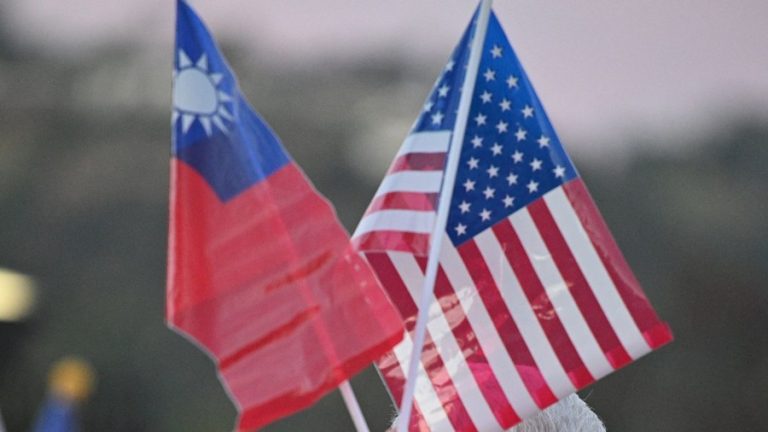
As U.S. President Donald Trump prepares for a high-profile visit to China slated for April, U.S.–China–Taiwan relations have once again moved to the center of global attention. A major U.S. arms package for Taiwan has reportedly entered a period of uncertainty, with analysts pointing to pressure from Beijing and internal limitations within the Trump administration ahead of the upcoming summit.
The delay has exposed the complexity of U.S.–China strategic competition and raised concerns about the implications for Taiwan’s longterm democratic security.
In an interview with Vision Times, economist Li Hengqing, who closely follows U.S.–China economic and geopolitical developments, argued that the situation does not represent a simple American concession to Beijing. Rather, he described it as a reflection of structural changes in bilateral relations.
Stalling negotiations
According to reporting by “The Wall Street Journal,” a previously announced $11 billion arms package for Taiwan, unveiled last December, has drawn strong objections from Beijing. A new round of potential sales, reportedly including Patriot missile systems, is now facing approval delays.
Success
You are now signed up for our newsletter
Success
Check your email to complete sign up
RELATED: Escalation or Restraint? Tensions Simmer in the Taiwan Strait as Beijing Tests Red Lines
Chinese leader Xi Jinping reportedly emphasized in a Feb. 4 phone call with Trump that Taiwan is the “most important and sensitive core issue” in U.S.–China relations and urged Washington to act with caution. On February 16, Trump acknowledged ongoing communication with Xi and said a decision would be made “very soon,” emphasizing that bilateral relations remain positive.
Li Hengqing argues that the context has shifted dramatically from past decades. After forty years of economic growth, China no longer sees itself as a junior partner in the international system. Under Xi, Beijing has promoted the concept of a “community of shared future for mankind” and increasingly positions itself as a challenger to Western leadership.
“In the era of globalization, many American companies developed deep strategic interests in China,” Li said. “These interest groups inevitably influence U.S. policy decisions.” Supply chain dependence, rare earth exports, and trade considerations have complicated Washington’s strategic calculus.
RELATED: PROTECT Taiwan Act: House Votes 395–2 to Cut Beijing Out of Global Finance Over Taiwan Threat
At the same time, Taiwan’s internal politics have contributed to the uncertainty. Reports from Reuters and Taiwanese media indicate that President Lai Ching-te’s proposed $4 billion defense budget increase has faced repeated resistance in the legislature from opposition parties, delaying procurement agreements with the United States. Taiwan’s Ministry of National Defense has sought extensions on U.S. price validity offers to avoid contract lapses.
Li noted that prolonged delays could amplify political narratives within Taiwan, particularly arguments promoted by opposition figures that “the United States cannot be relied upon,” potentially affecting domestic support for the ruling party.
Caving to pressure?
Despite the temporary stalemate, Li does not view the Trump administration as fundamentally shifting toward Beijing. “The change reflects evolving U.S.–China dynamics, not simple capitulation,” he said. American policymaking, shaped by competing domestic interests and democratic debate, differs structurally from China’s centralized long-term strategic planning.
Recent signals from Washington illustrate this balancing act. While some China-related enforcement actions have been delayed ahead of the summit, the U.S. State Department has reiterated that its commitment to Taiwan remains “unchanged for over forty years.” Officials have also welcomed Taipei’s efforts to raise defense spending above 3 percent of GDP.
Trump himself stated aboard Air Force One that a decision on arms sales would come soon, without indicating cancellation. Observers note that much of the current delay may stem from Taiwan’s legislative gridlock rather than unilateral U.S. retreat.
Though Taiwan operates as a sovereign nation, Beijing views it as a breakaway province and has vowed to reclaim the self-governing island by “any means necessary,” including the use of military force.
Risks to Taiwan’s democratic security
Li warned that prolonged uncertainty carries significant risks. At a practical level, interruptions in key weapons deliveries could weaken Taiwan’s self-defense posture. Systems such as Patriot missiles, High Mobility Artillery Rocket Systems (HIMARS), and anti-armor capabilities are considered essential in deterring potential aggression. Delays could place Taiwan at a disadvantage amid increased military activity by the People’s Liberation Army.
At the political level, perceived wavering in U.S. support may affect public confidence. Legislative deadlock over defense budgets has already slowed progress, and further delays could reinforce uncertainty.
Beyond Taiwan, the situation has implications for the broader Indo-Pacific region. Washington’s long-standing “strategic ambiguity” policy aims to deter Beijing without making explicit defense guarantees. However, unresolved delays could be interpreted as hesitation, potentially emboldening more assertive moves.
Looking ahead
Li predicts limited breakthroughs at the Trump–Xi meeting, describing it as likely to produce tactical compromises rather than structural resets. Trade issues, including agricultural purchases, tariffs, and technology controls, may dominate discussions, while Taiwan could be handled cautiously to avoid escalation.
At the same time, Li stressed that Washington’s core commitments under the three U.S.–China Joint Communiqués remain in place, and he does not expect the United States to abandon Taiwan policy fundamentals.
Whether the current impasse reflects temporary maneuvering or deeper strategic recalibration remains uncertain. As the summit approaches, the trajectory of U.S.–China competition, and Taiwan’s place within it, will continue to test the balance between diplomacy, deterrence, and democratic resilience.