Tokenization, is the process of converting ownership of real-world assets like stocks, bonds, real estate, or funds into digital tokens on a blockchain, allowing them to be traded, transferred, or programed digitally. The practice has moved beyond experimental tech circles and is now being embraced by some of the world’s largest and most established financial institutions.
A recent survey of 300 firms showed that custodians (those who hold assets) are leading the adoption, with over 60 percent already offering tokenized assets while most others are planning to do so soon.
A tokenized asset is a real world or digital asset that has been converted into a digital token on a blockchain. Each token represents ownership or a share of the underlying asset and can be bought, sold, or traded on block-chain-based platforms.
How the adoption of tokenization is accelerating
Some of the world’s largest financial institutions, including J.P. Morgan and Goldman Sachs are betting big on tokenization.
In July 2025, Goldman Sachs, in conjunction with BNY Mellon, took some major steps towards adopting the technology.
Success
You are now signed up for our newsletter
Success
Check your email to complete sign up
The companies began allowing some investors access to tokenized money market funds through the BNY platform using Goldman’s private blockchain, with BlackRock, BNY Investments Dreyfus, Federated Hermes and others participating in the launch, Investopedia reported.
J.P. Morgan is testing tokenized deposit instruments for instant settlement while asset management giants like BlackRock and Fidelity are exploring or launching tokenized products.
Financial institutions of all stripes are jumping on the technology because it allows for faster and more efficient settlement, automated processes, fractionalised ownership, and real-time transaction data.
Traditional markets are being rebuilt digitally
With major financial institutions adopting the technology, market infrastructure is adapting as well.
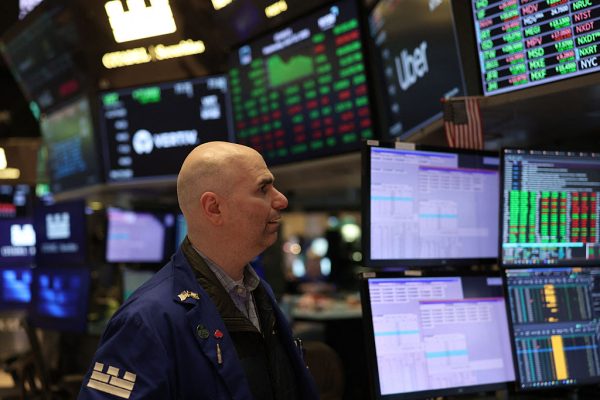
The New York Stock Exchange (NYSE) is developing a 24/7 digital trading venue for tokenized shares and the London Stock Exchange Group plans an on-chain settlement platform for tokenized securities.
The platform the NYSE is working on will enable investors to trade digital tokens around the clock, unlike traditional trading which is limited to bank hours on weekdays.
Assuming the platform satisfies regulatory scrutiny “the platform would power a new NYSE venue that would support trading of tokenized versions of company shares,” the Associated Press reported.
The platform is being developed by Intercontinental Exchange that says it is working with Citigroup, Bank of New York Mellon and others to support tokenized deposits and aims to integrate tokenized collateral in the future.
In addition, new platforms are emerging to leverage the technology including Securitize, Inc a fintech firm that enables companies to secure funding from institutional, accredited, and retail investors through a crowdfunding platform, issuing equity as blockchain-recorded digital tokens.
Securitize has raised roughly $100 million to date, including a $48 million funding round in June 2021. The platform is backed by Morgan Stanley and Blockchain Capital, with Forbes describing the investment as “Morgan Stanley’s first dedicated investment in the crypto space.”

The benefits driving the adoption
Faster settlement, lower costs, and greater liquidity and accessibility are said to be the primary benefits of adopting the technology.
Tokenization allows for faster settlement because ownership is recorded and transferred directly on a blockchain, eliminating many intermediaries such as clearinghouses, custodians, and reconciliation agents. When a transaction occurs, the update to ownership happens almost instantly on a shared ledger, reducing the need for costly manual verification and multi-day clearing cycles.
It also enables atomic settlement, meaning payment and asset transfer can occur simultaneously. This reduces counterparty risk and removes delays caused by separate processing systems, allowing transactions to settle in minutes rather than days.
It also reduces back-office overhead. Automated smart contracts can handle compliance checks, dividend distributions, and recordkeeping, minimizing manual processing, paperwork, and error correction. Fewer delays and disputes mean lower operational and legal costs overall.
In some cases, tokenization can also increase liquidity. With tokenization, assets can be divided into smaller fractional units and traded more easily. Instead of needing enough capital to buy an entire property or private investment, investors can purchase smaller tokenized shares. This broadens the pool of potential buyers and sellers, and makes it easier to enter and exit positions.
It also improves accessibility by enabling participation through digital platforms that operate across borders and outside traditional banking hours. With lower minimum investment thresholds and streamlined onboarding, a wider range of institutional, accredited, and in some cases retail investors can access markets that were previously limited or inaccessible.
What’s holding back full adoption?
While major financial institutions move forward there are still a number of factors holding back full adoption, including a murky regulatory environment, liquidity for some types of tokenized assets, and integration with existing financial systems.
The lack of clear regulations worldwide is a major hurdle for the adoption of the technology. Financial regulators in many countries have yet to establish rules on how tokenized assets should be treated, classified, traded and protected under existing laws, creating legal ambiguity for institutions considering tokenized offerings.
The lack of regulatory clarity also means forms often have to navigate multiple overlapping rulebooks from regulators, securities authorities, and fintech oversight bodies, which increases costs as well as legal risks.
Individual blockchain ledgers also do not “talk” to each other. Each system may use different token standards and protocols, making it extremely difficult for assets to move seamlessly between platforms.
Unless tokenized assets, settlement systems, and trading platforms can interoperate easily, markets will continue to struggle to scale or attract broad participation beyond niche networks.
Liquidity constraints are also a factor limiting the adoption of the technology. For tokens to function like traditional securities, they require active secondary markets where buyers and sellers can trade continuously.
However, liquidity for many tokenized assets remains low, and trading volumes are modest. Without robust platforms and broader adoption investors risk stranding assets in closed token ecosystems.
Essentially, the remaining hurdles for broad adoptions include, regulatory uncertainty, fragmented infrastructure, low liquidity, tech and cost challenges, institutional priorities, risk perception and the entrenchment of legacy systems.
Despite this, tokenization is no longer a theoretical concept confined to the crypto sector — it is steadily embedding itself into the core architecture of global finance.
While regulatory uncertainty, infrastructure fragmentation, and liquidity constraints continue to slow its full-scale rollout, momentum is clearly building among major institutions, exchanges, and fintech firms.
If those structural hurdles are addressed, tokenization could fundamentally reshape how assets are issued, traded, and settled, marking one of the most significant evolutions in financial market infrastructure in a generation.